
Mark Carp doesn’t take classes to hone his craft. Instead, the Pikesville-based novelist takes what he knows and what interests him, and spins all of that into stories.
“Maybe this is a bit cynical but if I had taken a course in novel writing, I may never have written the first word,” says Carp, owner of a commercial and industrial real estate business. “It’s just something I started doing, and I really enjoyed it.”
Carp, 70, earned a bachelor’s degree in journalism from the University of Maryland, where he was an assistant sports editor for The Diamondback, the school’s campus newspaper. But after his graduation in 1969, Carp decided to lay down his pen. He began writing again about 25 years later, reporting on sports for the Terrapin Times in the 1990s. In time, though, Carp found his enthusiasm for sports writing dwindling.
He had just begun writing stories and soon realized that fiction — not journalism — was where his passion lay. In nine months, he wrote his first novel, “Abraham: The Last Jew.” Since then, Carp has written and self-published six novels with Jewish themes, conveying the breadth of the human experience through individual stories.
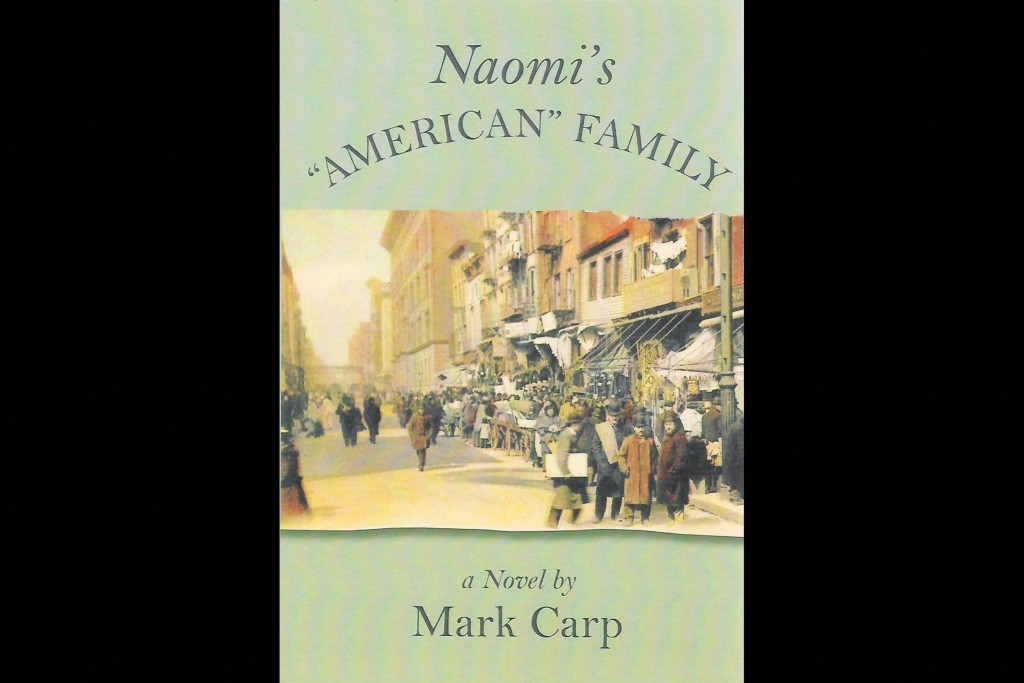
His latest novel, “Naomi’s ‘American’ Family” (Xlibris), tells the story of two Russian Jewish cousins who immigrate to the United States in the early 20th century. Naomi is the first to arrive, and some years later, her cousin Joseph joins her and her family. Each works hard to achieve the “American Dream.”
Midwest Book Review calls the book “a compelling and deeply engaging read from beginning to end.”
Carp says Judaism is important to all of his characters, yet it is not the primary theme of his novels. Rather, it is woven into the stories.
“I put Jews in particular situations where they have to relate to each other’s faith and some of the slings and arrows of outrageous fortune and the good and bad times,” he says. “How they practice, what they practice, that’s a personal decision on their part. My books aren’t overtly religious.”
A Beth Am congregant, Carp reads a lot, both fiction and nonfiction, and credits authors Irwin Shaw, Herman Wouk and Paddy Chayefsky with inspiring him. Of the latter, Carp says, “His genius was that he was great at understanding human nature and conveying it to the audience or reader.”
Carp says he writes every day between 5 and 6 a.m. “My writing is based on feel, instinct and spontaneity,” he says. “I go with my gut, I go with my instincts, I go with my knowledge, I go with what I know and what I feel.”
Carp says he is proud knowing that his novels have touched readers and also of his determination to stay true to his vision of his novels.
“I’d like to think I tell very compelling, very realistic, very hard-nosed stories that reflect real life while being very politically incorrect,” he says. “And I’m going to keep doing it until I can’t do it any longer, which I hope will be never.”
Carp’s advice to young writers? “Write about what you know and put your gut on the pages and don’t be afraid,” he says. “I hate to sound crass, but … do what you wanna do, you hear me? You do what you want to do because when you do that, you’re going to be happy with yourself.
“If it’s not a labor of love, you can’t do it.”
Vera Livshin is a Baltimore-based freelance writer.

The Jerusalem Orchestra East & West, which arranged the program for young musicians, blends Western orchestral music with Middle Eastern traditions.

Jewish community activist Jay Bernstein calls on the governor to reprimand Carter, a Maryland State Board of Contract Appeals judge, for sharing age-old tropes against the Jewish community.

Pikesville resident and entrepreneur Luna Rosendorff discusses what she's seeing these days in the world of contemporary interior design.

Jewish Community Services' upcoming "Future-Ready Workplace" event will feature a keynote address from workplace expert and bestselling author Liz Fosslien.