
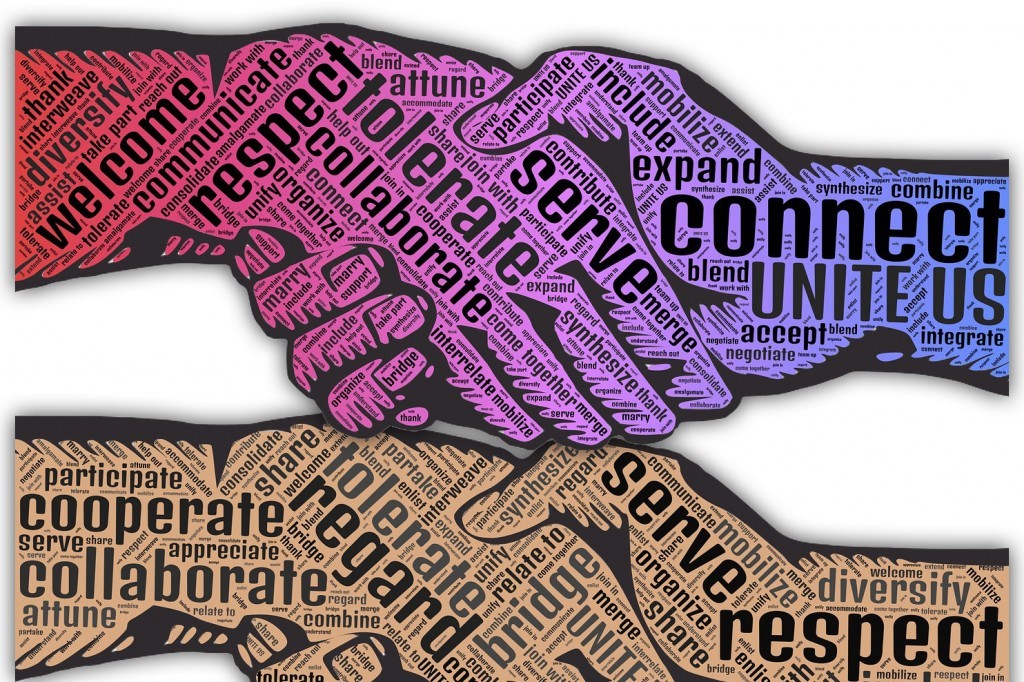
Race relations is always a touchy subject. There is a segment of the Jewish community that insists that discrimination against African-Americans has ceased, that the civil rights movement achieved all of its goals, and that black people simply need to stop complaining, focus on education and disavow the drug culture. That segment likes to point to our own community and note that we were immigrants who pulled ourselves up from poverty with education and hard work, and blacks should do the same and not blame anyone else or ask for anything more.
Unfortunately, that train of thought misses both historical and moral truths. It was amazing to hear a supposedly educated man like Dr. Ben Carson say that black slaves were immigrants. No, they were captured, taken from their families, shipped thousands of miles from home and treated as property for generations. Then, once emancipated, they were denied basic education, economic opportunities and decent housing.
Immigration assumes choice. Equating slavery to immigration is ludicrous.
Some folks like to say slavery has been gone for 150 years and “they” should get over it. The problem, as my socially conscious lawyer son Daniel likes to point out, is the system has been rigged against blacks for that 150 years. He points out that the New Deal during the Great Depression was affirmative action for white folks, but blacks and others were largely excluded from those programs by government mandate. In fact, these measures served to reduce black opportunity and employment. ( Check out https://www.cato.org/publications/commentary/why-did-fdrs-new-deal-harm-blacks.) To this day, African-Americans face uphill climbs in education, hiring, exposure to drugs, criminal justice enforcement and access to legal services.
Jews generally take no responsibility for slavery. “My people were still in Europe” is something I’ve heard often. While that for the most part is true, we as Jewish Americans still have a moral imperative to address the ramifications of slavery. During the civil rights movement, Jews were prominently involved. Two young Jewish men were murdered in 1964 in Mississippi while working for the Congress of Racial Equality. Jews were prominent in the founding and funding of many of the major civil rights organizations, including the NAACP, the Southern Christian Leadership Conference and the Student Nonviolence Coordinating Committee.
In the last 40 years, the black and Jewish communities have seen a deterioration in relations. Some Black Muslim leaders fomented anti-Semitism and anti-Zionism. Where the two communities abutted each other physically, there have been great tensions. Many Jews fear blacks, and many blacks resent Jews based on their perceptions of Jews as landlords and small businessmen in their communities. I was on a recent trip to Israel and heard a well-respected Jewish businessman use the pejorative schvartze at least 20 times in a week.
In this issue of Jmore, we feature various perspectives on the state of relations between our two communities. We hope that we make people think and examine their own hearts. In Deuteronomy, it says: “You too shall love the stranger, for you were strangers in the land of Egypt.” The Torah is telling us we have an obligation to treat non-Jews well because of the way we have been treated over the ages.
Jmore is pleased to offer this thought-provoking article, and we invite your comments.
 Enjoy and be safe,
Scott Rifkin, MD, Publisher

Jmore Publisher Scott Rifkin, M.D., reacts to President Donald Trump's latest poll numbers and the real force behind the growing decline of the Trump movement.

In honor of Jmore's "Aging Gratefully" issue, Jmore Publisher Scott Rifkin, M.D., reflects on aging and approaching retirement as part of the Baby Boomer generation.

Traditional family dishes are remembrances of the ones we love and those we have lost, writes Jmore Publisher Scott Rifkin, M.D.

Jmore Publisher Scott Rifkin, M.D., explains why he found hope in how the public responded after Jimmy Kimmel's recent suspension.