
By Fiona W., Sixth Grade Student, Krieger Schechter Day School of Chizuk Amuno Congregation
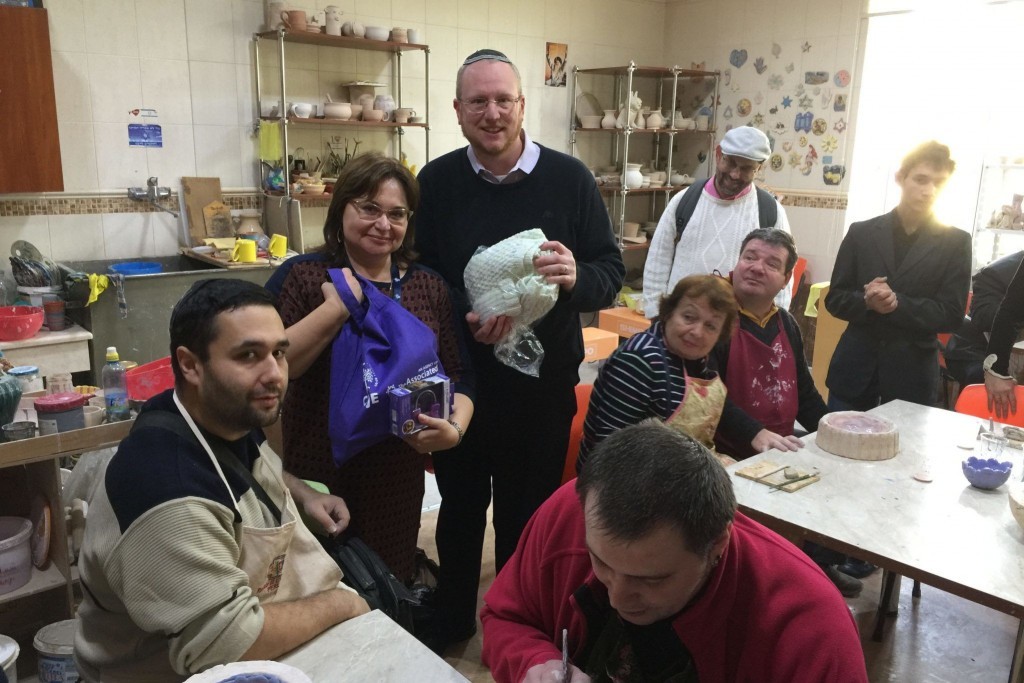
On Oct. 30, 2017, Rabbi Moshe Schwartz, head of School of Krieger Schechter Day School of Chizuk Amuno Congregation (KSDS), traveled to Odessa, Ukraine, to expand his world views and to learn about the Odessa Jewish Community. Accompanied by members of the Center for Jewish Education as well as five other Jewish educators, Rabbi Moshe visited the Beit Grand and Migdal Jewish Community Centers in Odessa. In addition to Jewish homes, he also paid a visit to the World ORT School #94, a public school dedicated to Jewish studies.
Many citizens of the former Soviet country live in poverty. “The majority of the people live on very little money, and the country is pretty run down. The buses are old, the tap water is not clean enough to drink, and they don’t get a lot of services from the government, including advanced medical care,” explained Schwartz.
Despite these challenging living conditions, the Jews of Odessa find a way to push through. “It was inspiring to see how the Jewish community takes care of its people,” Schwartz added. On the other hand, there are those who are wealthy, and they are mainly involved in government-sponsored businesses, such as the seaport and petroleum (i.e. oil and gas).
“They have millions and millions of dollars,” Schwartz stated. The discrepancy between the poor and wealthy is drastic.
This is not the first time Baltimore and Odessa have embarked on a partnership event like this. Last summer, several Odessan boys attended Camp Airy. Through the Baltimore-Odessa partnership, a program of The Associated: Jewish Community Federation of Baltimore, the boys were able to have a good time and make new friends at camp thanks to the funds raised by the Baltimore Jewish community.
Schwartz’s trip resonated on an emotional level as well. “It was so emotional to see where there once were hundreds of thousands of Jews in a thriving community and to know that so many were killed during the Holocaust,” he explained. Roughly 35,000 Jews remain today.
Clearly, Schwartz’s trip included both educational and emotional elements. Schwartz encourages all of us to continue supporting the Jewish community in Odessa whatever way we can. He said that KSDS is working on ways to forge new partnerships with the Odessa Jewish community.

Jmore Juniors Noah S. and Eli S. take a look at the differences between the Jewish communities of Baltimore and Chicago.

Madeline L., a seventh grade student at Krieger Schechter Day School, writes about the phenomenon that has been Starbucks over the past half-century.

An eighth grade student at Krieger Schechter Day School, Jmore Juniors writer Micah B answers an array of questions from his peers.

Jmore Junior Eitan Beck writes about the pros and cons of having electric cars in the future.