
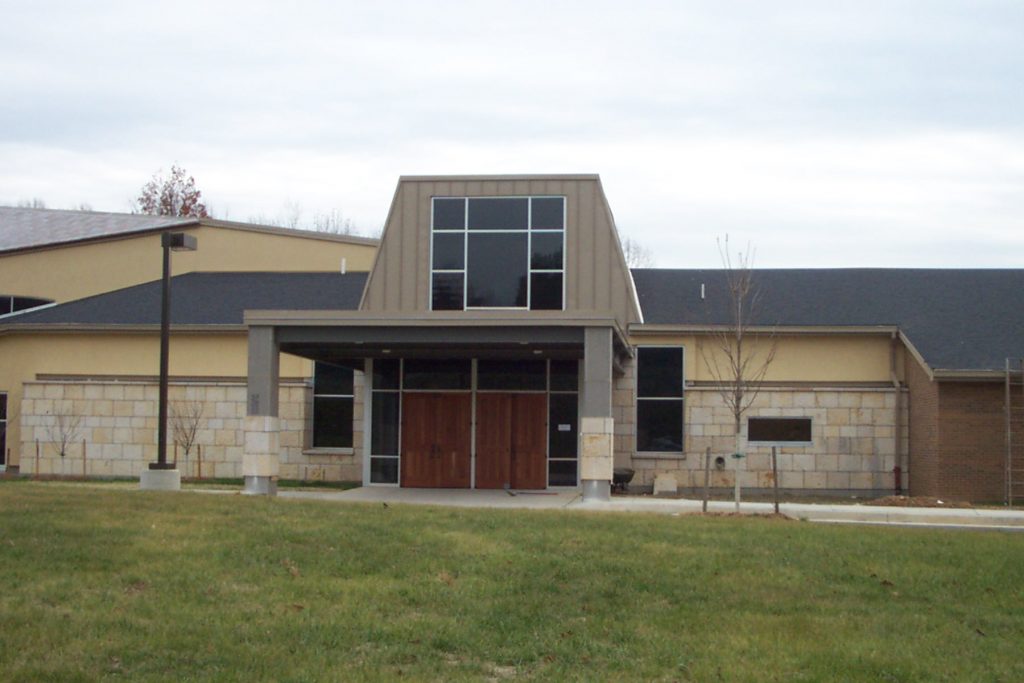
After nearly a year of deliberations, Owings Mills’ Har Sinai Congregation will “cease exploration of a merger” with Temple Oheb Shalom in Pikesville. The decision was announced recently by Har Sinai’s spiritual leader, Rabbi Linda Joseph, in the congregation’s monthly newsletter, The Connection.
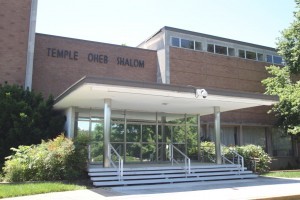
Last September, the two historic Reform congregations announced they were exploring the possibility of a merger. But in May, Oheb Shalom congregants were notified that their temple’s spiritual leader since 1999, Rabbi Steven M. Fink, was suspended with pay. According to a letter from Oheb Shalom’s leadership, the suspension came after allegations “of an improper incident of a sexual nature that may have occurred a number of years ago involving Rabbi Fink and a then teenager, who was a minor at the time.”
The letter stated that the matter was reported to Maryland law authorities as well as to the Reform movement’s Central Conference of American Rabbis, as soon as Oheb Shalom’s board of directors became aware of the accusation.
Shortly after the allegations surfaced, Har Sinai announced a “30-day pause” in exploration talks with Oheb Shalom. A couple of weeks later, Oheb Shalom’s leadership announced the temple temporarily postponed the merger exploration with Har Sinai to focus on “managing our own needs at this time.”
Instead of pursuing a merger, Rabbi Joseph wrote that her congregation will “concentrate our efforts on finding a viable road map for Har Sinai Congregation in the future.”
Reached by phone on Aug. 7, Har Sinai’s temple administrator, Dr. Valerie Thaler, confirmed to Jmore that the synagogue’s board of directors voted against the merger on July 17. Jmore also reached out to Oheb Shalom’s executive director, Ken Davidson, but was told that he was unavailable.
Founded in 1853 and located at 7310 Park Heights Ave., Oheb Shalom has a membership of approximately 625 families. The synagogue hired an interim spiritual leader, Rabbi Marc Disick, who has been leading services at the temple while the investigations of Rabbi Fink continue.
With the merger talks over, Har Sinai is now considering other means of reducing expenses and increasing revenue. In the latest issue of The Connection, Dr. Ken Bell, Har Sinai’s 2nd vice president, wrote that the 176-year-old congregation is considering whether to remain at its current site at 2905 Walnut Ave. and take steps to reduce expenses and increase revenue (such as leasing additional space in the building), or to sell the 60,000-square-foot building and move to a smaller facility.
Har Sinai, which has a membership of 260 households, is the oldest continuously Reform congregation in the United States.
Also see: Collapse of Temples’ Merger Talks Speaks Volumes about Jewry Today

Weekend Backpacks is partnering with Heritage | MileOne Autogroup for the largest corporate volunteer engagement and donation initiative in the organization's history.
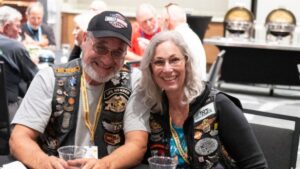
Pikesville residents David and Wendy Hefter recently joined Jewish motorcyclists from around the world to raise money for victims of the Oct. 7th terrorist attacks in Israel.

A new educational initiative helps Israel’s ethnic and religious minority communities understand their own stories and appreciate what democracy looks like in a diverse society.

The Baltimore resident taught at Johns Hopkins for five decades.