
By Sam B., 6th grade student, Krieger Schechter Day School of Chizuk Amuno Congregation
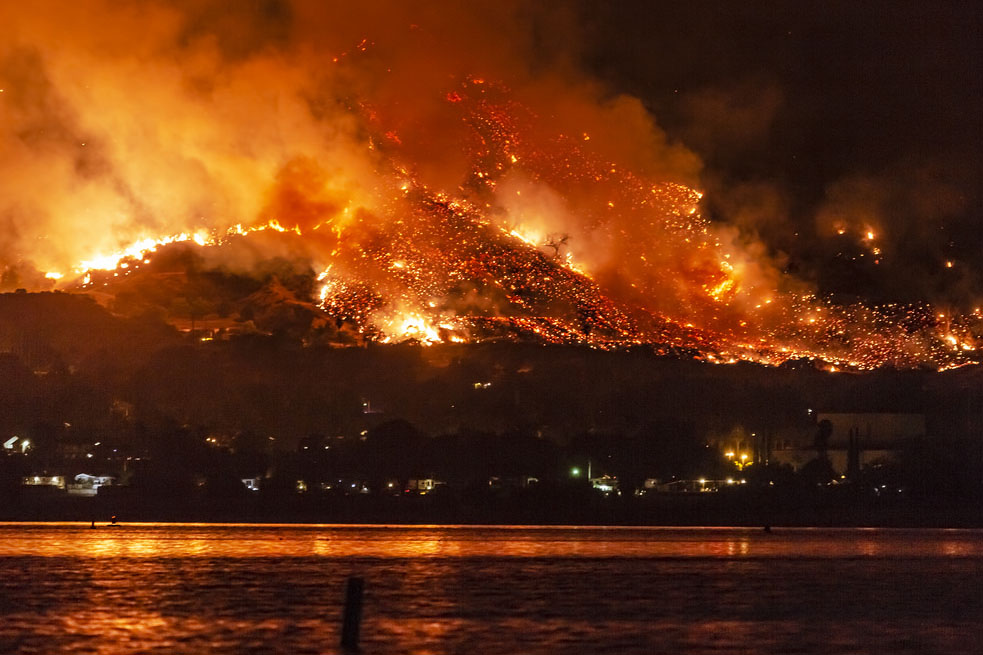
The California wildfires of the past few years have been some of the most pernicious fires in history. Over the last two summers, wildfires spanned across the entire state of California. Each summer, they grow even more destructive and dangerous. The question remains: What is exacerbating these devastating wildfires?
On Nov. 11, 2018, the Weather Channel reported that a Northern California wildfire, which started as a campfire, spread and struck the town of Paradise, leaving 29 dead and 6,700 structures destroyed. The small town of 27,000 was forced to evacuate. It surpassed the death toll of last year’s Tubbs Fire, which took the lives of 22 people. It took three days for the fire to be under control.
California’s air quality has been affected by the fires; people have been wearing dust masks since the fire. There really is no fire season in California; the fires go on year-round. According to The Weather Channel, the Nov. 11 fire was dubbed “The most destructive fire in California history.”
According to Cara Parsons, Science Department head at Krieger Schechter Day School, people in the area are partly to blame. “We’ve contributed to climate change by burning fossil fuels, which trap greenhouse gases in our atmosphere and are warming our climate and causing these changes, like droughts, more severe storms, and more severe fires,” she said, adding that the more fossil fuels and greenhouse gases people use, the more heat gets trapped inside the planet, which is one source of climate change.
Parsons adds that succulents, fleshy plants that retain water, are likely one significant factor causing these fires to spread so quickly. “In California, they have a lot of these plants called succulents that have oils in them. They’re basically like fuel. So, if there’s a buildup of a lot of this plant material, then when there is a fire, it’s going to be more severe instead of having less severe fires more frequently,” she explained.
Parsons suggests that pollution should be stopped because not only is it poisoning our Earth, but it is a financial burden.
Alex Thaler, Lower School Science Department head at KSDS, says the economic impact is already evident. In 2017, California incurred over $10 billion in damages. In 2018, the fires have been about 30 percent larger, likely prompting a tax hike for California residents over the next decade.
Thaler states that “California can expect to feel a tremendous financial drain due to the damages caused. Plus, more and more people are moving to California, and they’re building houses in high risk fire areas, so California can expect increased property damage and lives lost.” The California fires could lead to serious financial issues if the state does not use its money wisely or if there are additional fire outbreaks.
Scientists are developing ways to stop these fires. Miriam Glaser, KSDS middle school science teacher, thinks there are ways to help, like driving cars less, using more renewable energy sources, such as solar panels and windmills, and being very careful not to start fires.
California resident Leah Balter, who has experienced these fires, offers a few considerable solutions. “I think that California should provide more funding to park rangers so that they can adequately monitor human actions that may directly lead to fires, as well as remain up-to-date with daily weather precautions. I also think that California should spend more money on quality firefighters. Right now, wealthy families are able to hire their own firefighters to help if a dire situation occurs. Inevitably, this means that families with less money are disproportionately affected by these fires and are not given the same attention and help as families with more money.”
However, Thaler warns, the fires may continue. “Unfortunately, there is no real end in sight,” he says. “We as a society are not correcting climate change fast enough. So, we can expect the fires to continue every year, as they have been, and they will probably increase in size.”
Hopefully, communities and politicians will heed his words. People must start thinking about what they put in the trash and what should be recycled. The more solutions considered, the faster the deadly fires can be greatly reduced or completely extinguished. Working together as a nation is needed to end these fires for good.

Jmore Juniors Noah S. and Eli S. take a look at the differences between the Jewish communities of Baltimore and Chicago.

Madeline L., a seventh grade student at Krieger Schechter Day School, writes about the phenomenon that has been Starbucks over the past half-century.

An eighth grade student at Krieger Schechter Day School, Jmore Juniors writer Micah B answers an array of questions from his peers.
Jmore Junior Eitan Beck writes about the pros and cons of having electric cars in the future.