
There are two directions that rabbis take when dealing with our new and difficult COVID-19 reality. Both are reflected in the different forms of korbanot, or sacrifices, mentioned in our Torah portion.
The first is to think about which sins may have brought about these circumstances. Lashon hara (evil speech), speaking during davening, and disrespecting other’s boundaries are a few out of many (some much more serious) that have been mentioned.
This approach is connected to the korbanchatat, the sin offering, brought in repentance for a transgression.
I tend to distance myself from theseexplanations. Despite being a self-proclaimed “modern mystic,” I admit toknowing nothing about these calculations and am uncomfortable speaking in theseterms for various reasons.
I do think, however, there is a lot to be saidfor self-reflection and character refinement during these times, as the Talmud(Brachot 5a) puts it, “When one seesafflictions coming upon oneself, one must check one’s actions.”
A completely different direction focuses on the positive side of things, asking what we can do now, in our “quarantined” situation, to spiritually elevate ourselves.
In these days, one can find HaShem in nature, in a conversation with one’s spouse, in more intentional davening absent the rush of a minyan (see https://www.jmoreliving.com/2020/03/20/one-local-rabbis-spiritual-guide-for-covid-19/). These are all related to the korban olah, the elevation offering that is brought as one seeks to “elevate” oneself closer to HaShem.
A direction less explored is related to thethird category of sacrifices mentioned in our parshah: the korban shelamim, the peace offering.
One of the main sacrifices in this group is the korbantodah, the thanksgiving offering. It is brought when one wants to givethanks to G-d.
These days, our outside involvements have been minimized, if not neutralized altogether. As a result, we are forced to pay attention to our immediate surroundings. This is an optimal time to reflect on — and be grateful for — the basic blessings we all enjoy: food, shelter, clothing, family and more.
This has been my focus over this past week:appreciating what is usually overlooked at home due to a busy work scheduleoutside of the home.
Amidst the important sacrifices we are all making for the betterment of our health and the health of our society, let us not forget the korban todah, our sweet sacrifice of thanksgiving for the most basic blessings in life.
Here’s a short mindfulness session, to help you ground yourself in the present moment with everything going on around us:
And here are two popular seder songs to sing along with:
And click here for more.

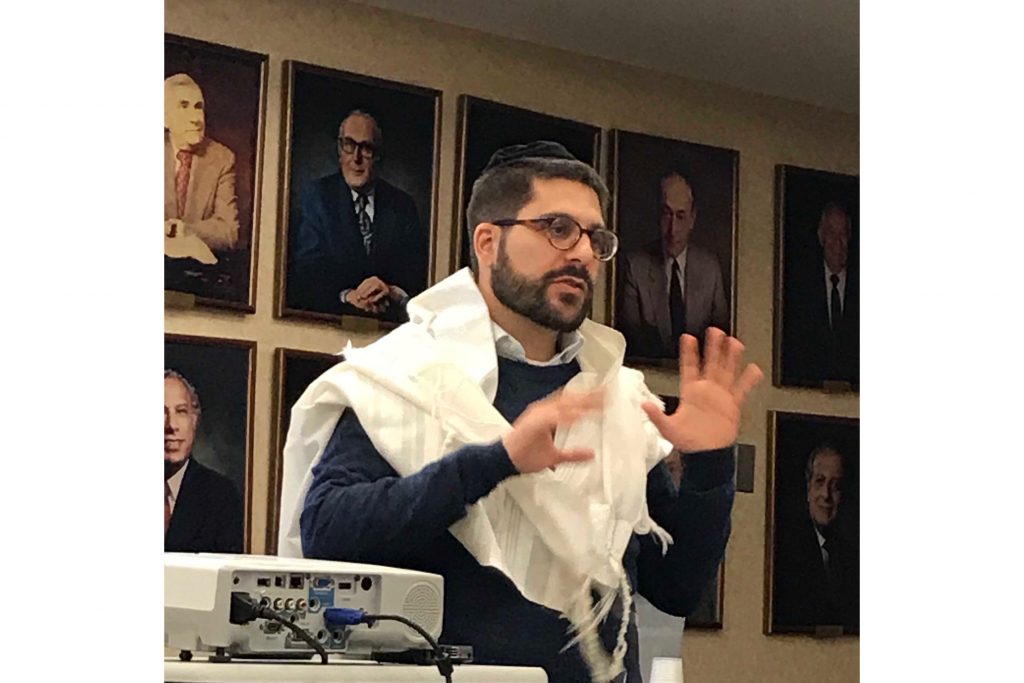
Rabbi Dr. Eli Yoggev serves Pikesville’s Beth Tfiloh Congregation.

As millions mourn the passing of Stephen Colbert from the airwaves, Michael Olesker looks back on the "institution" of late-night TV.

As he gets ready to leave for California, Rabbi Daniel Cotzin Burg looks back on his time in Baltimore and his 10 years writing for Jmore.


Michael Olesker pays tribute to WJZ’s retiring Marty Bass, a longtime fixture on local TV screens.