
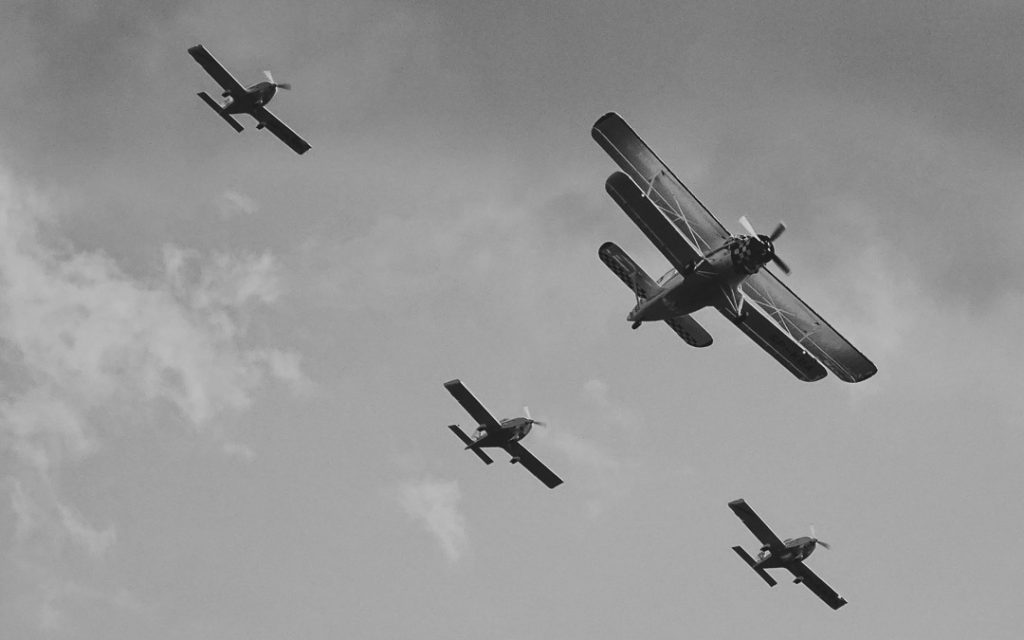
Around this time 75 years ago, amid the ashes of World War II, the boys were beginning to come back home from distant places with names like Iwo Jima, Corregidor, Bastogne and Berlin.
There were 16,112,566 Americans in uniform during that war. Roughly 400,000 never made it back. They lie in graveyards all over the world.
The legendary editorial cartoonist Bill Mauldin once talked about a Memorial Day service in 1945 at a military cemetery in Nettuno, Italy, outside of Anzio, just weeks after Germany surrendered, where untold numbers of American soldiers had been laid to rest.
“It was a bunch of VIP types from the Senate Armed Services Committee,” said Mauldin, whose great cartoon characters, Willie and Joe, captured the life of the average army dogface for Stars and Stripes, the U.S. military newspaper. “Commander Lucian Truscott gave the talk. He started out facing the honored guests.
“And then he suddenly turned his back on all these windbags and instead talked to all the graves behind him. He apologized. It was the most moving thing I saw in my life. He apologized to all these poor Joes for getting them killed. He felt responsible. And then he walked away without looking around. I never want to hear another Memorial Day speech. I want to quit with that memory, see?”
Five years ago, nearly a million World War II veterans remained among the living. Today, the government says, only about 300,000 are left.
Among the departed is Jacob Beser, a Baltimorean who helped make it possible for hundreds of thousands of American soldiers to come home at this time 75 years ago, instead of continuing the organized killing. But thousands of Japanese had to die, in two separate atomic bomb blasts, for the war to end.
Three-quarters of a century ago, Beser arrived home from the blistered sky above Hiroshima and Nagasaki. He was a 24-year-old radar operator out of Baltimore City College and Johns Hopkins University. He was the only man who flew both of the atomic bomb runs over Hiroshima and Nagasaki that finally ended the war.
Try to imagine Beser’s life. Imagine the pressure he felt on those two bomb runs, and all those post-war years when people heard about his missions. Some likely thought they were being really brave when they asked him, “How does it feel to have killed all those people?”
Sometimes, they’d call in the middle of the night. Sometimes, it was face to face. I saw it happen once in a hallway at Baltimore Hebrew Congregation, where Beser was a member.
“War itself is immoral,” he said. “If you’re out to kill a man, it doesn’t matter whether you do it with a gun or a bomb.”
What sustained him were the others who approached him — the Americans who told him, “You saved my life. If it hadn’t been for you, I’d have had to go into Japan.”
And there was the Japanese woman who approached him in 1985 at services marking the 40th anniversary of the atomic bomb. She’d been in Hiroshima when it was leveled. “You had a job to do, and you did it,” she said.
Twenty-five years ago, the Smithsonian National Air and Space Museum in Washington, D.C., exhibited the Enola Gay, the B-29 that dropped the bomb over Hiroshima. They showed a videotape of that city as it was about to be virtually removed from the face of the Earth.
I stood watching, next to two aging Japanese men. In Hiroshima, 66,000 died instantly and another 69,000 suffered horribly but clung to life. In Nagasaki, 39,000 died and 25,000 more were injured.
I wondered if an expression of sadness should be offered to the two men. Not an apology, exactly, but just an expression of sorrow for so much suffering on both sides of the bomb line. And maybe they’d offer regrets of their own.
Then all of us could swear such barbarism as world wars would never happen again, or else we’ve learned nothing at all in the long, tortured years since the boys started coming home.

A former Baltimore Sun columnist and WJZ-TV commentator, Michael Olesker is the author of six books. His most recent, “Front Stoops in the Fifties: Baltimore Legends Come of Age,” was reissued in paperback by the Johns Hopkins University Press.
Allow me a few paragraphs of time travel, and let’s go back to Johnny Carson’s monologue the night after Neil Armstrong became the first man to set foot on the moon. I’m paraphrasing here, but I think the joke still works 57 years after Carson first delivered it. “The good Read more

As he gets ready to leave for California, Rabbi Daniel Cotzin Burg looks back on his time in Baltimore and his 10 years writing for Jmore.
Michael Olesker pays tribute to WJZ’s retiring Marty Bass, a longtime fixture on local TV screens.