
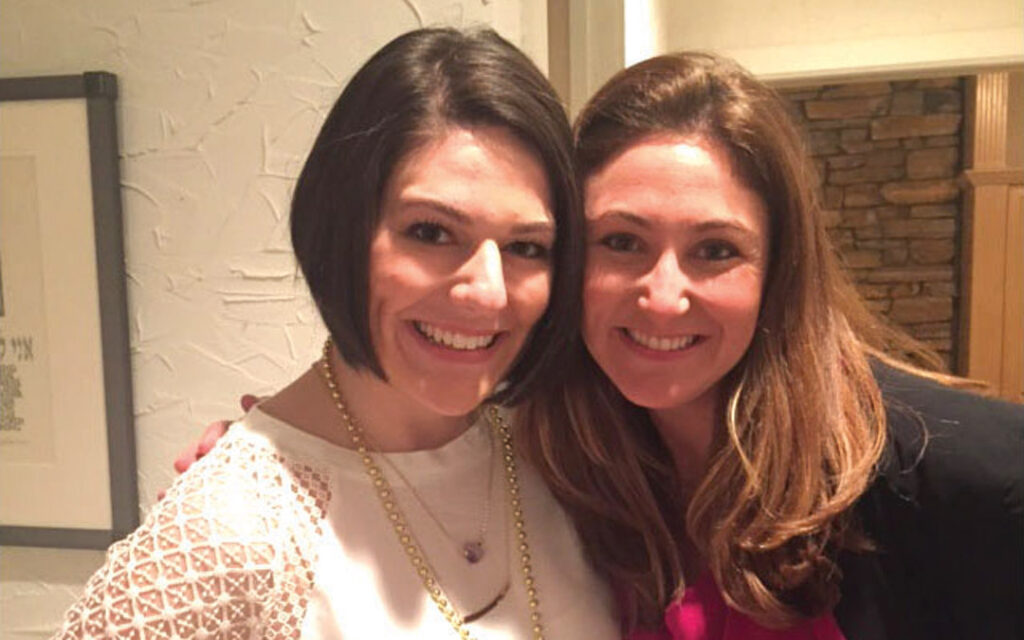
Erin Levitas wanted to change the world. And through her namesake organization, she’s doing just that.
“This foundation is driven by Erin’s courageous effort to share. This is what she wanted her legacy to be,” says Marissa Jachman, executive director of the Erin Levitas Foundation. “She’s helped so many people by leaving this in our hands, and we work every day to make her proud. When people hear Erin’s story, they want to be a part of our work because they want to be a part of change, of prevention and of the future.”
Levitas passed away on Jan. 16, 2016, from Ewing’s Sarcoma, a rare form of cancer.
She was also a victim of sexual assault. “That’s what disturbed her at night,” says Wende Levitas, Erin’s mother and president of the foundation. “She couldn’t sleep because of night terrors of her rape. It wasn’t the thought of dying. She was OK with dying, but was still not OK with her rape. To me, that is disturbing, that her assault was worse than dying.”
Before getting sick, Erin planned to go to the University of Maryland Carey School of Law to work on prevention support.
“Her sexual assault overtook her whole thought process,” says Levitas. “It was interesting for Erin to see how many people she knew who had similar experiences to her.”
Jmore recently spoke with Jachman and Levitas about the foundation and its work.
When Jmore last spoke with you, you were launching the Erin Levitas Initiative for Sexual Assault Prevention. What does that curriculum look like today?
MJ: Pre-pandemic, the pilot was in a Baltimore City middle school, and we’ve had about 60 kids go through the curriculum. We are focused on middle school because we understand from research high school is too late. Sexual harassment is at its highest in middle school, with nearly 50% of students reporting an experience with sexual harassment. In high school, sexual harassment goes down, but sexual assault goes up.
We are using a preventative educational model to teach the next generation of students to create behavioral changes that keep them and others safe by learning to understand, identify and practice safe bystander intervention among other skills. These kids are learning information and skills to reduce risk factors when it comes to social media, technology, healthy relationships, boundaries and gender norms.
What are students learning?
MJ: Some of our students are learning for the first time they have personal autonomy over their bodies. They are also learning about low-level behaviors that could be indicators of future problematic situations. For example, homophobic bullying is a predictor for someone who could cause harm in a sexual way down the line. And when you say something based on sex or gender, or that someone can or can’t do something because of gender identity, that is sexual harassment. We need to recognize these situations early on and not pass over them.
Empathy is also an important skill that helps risk factors go down. Someone with lack of empathy could cause violence later.
How has COVID-19 impacted what you do?
MJ: Currently, we aren’t in the schools because of the pandemic, and our curriculum is too sensitive to do online. It is important kids have safe environments to discuss sexual assault, and that environment may not be at home. We also aren’t able to read their facial expressions virtually or help them feel safe. And there may be some kids who aren’t able to ask questions because of someone who may be in the room at home with them, so we can’t do the curriculum remotely.
However, we are using this time to strengthen all other elements that support the kids, like our parent and teacher education programs. The parent education piece will be free to the public and we are getting ready to deploy that virtually. We’ve held online webinars and plan to have more in 2021 for parents to understand how to be a supportive parent in whatever your child comes to you with.
How does this foundation honor Erin’s legacy?
WL: Our goal is to see an end to sexual assault among teens and young adults. The thing Erin hated most was when people would tell girls to be careful when they went out. She would say girls shouldn’t have to be careful, people shouldn’t want to attack them. She wanted to change that.
We are trying to give kids the words on how to explain what happened to them and let them know we believe them and this is not their fault. Erin would have been proud and would be happy to see us doing something other than being sad. She would have been a strong force out here.
Baltimore native Susan Landsman recently celebrated her rite of passage surrounded by family, friends, fellow residents and staff.
Founded by Marci Yankelov, Julie Kichline, Elizabeth Miller and Lila Perilloux, the Bmore Community Fridge Network serves a crucial role in feeding the hungry.
The German-born rabbi, scholar and activist, who served Temple Emanuel from 1963 to 2000 , was a prominent figure in the local Jewish community for more than six decades.
A lifelong Baltimorean, Hirsh was the owner and CEO of Ottenheimer Publishers, a multi-generational family publishing business that operated for more than a century.