
I’m no foreign policy expert but I know when my city’s getting cheated, because it keeps happening to cities and suburbs and small towns all over America, one generation after another.
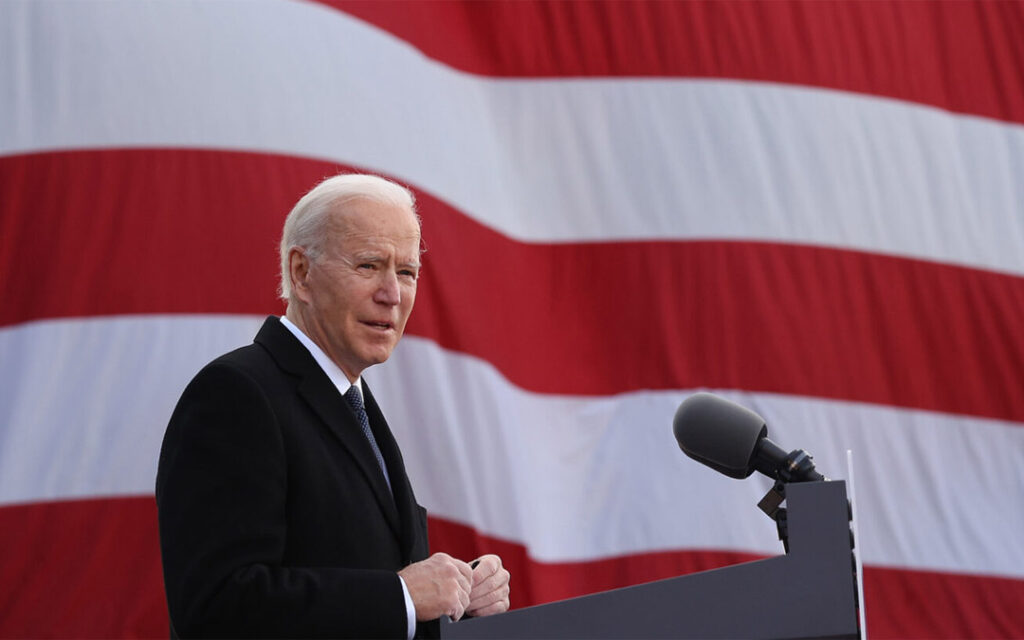
Last week, President Joe Biden called Vladimir Putin “a killer.” This, we’re being told, will heighten tensions between the United States and Russia.
Great, “heightened tensions,” the newest excuse to build some brand new, high-tech bombers.
Then, in the same week, we send some of our big-shot cabinet officials to meet with China’s smart guys. Things get a little testy. Our secretary of defense, Lloyd Austin, warns that China’s modernizing its military, and it’ll be necessary for America to maintain our “edge.”
Note the phrasing: our “edge.”
Great, here’s another excuse to build some brand new, billion-dollar missile systems while hundreds of starved American cities, just like Baltimore, will continue to struggle with decaying housing, roads, bridges and undernourished school systems.
In the New York Times over the weekend, veteran correspondent David E. Sanger writes, “While the Cold War has not resumed — there is little of the nuclear menace of that era — the scenes playing out now have echoes of the bad old days … reminiscent of when the Soviet premier, Nikita S Khrushchev, made headlines around the world 60 years ago by banging his shoe on a desk of the United Nations and shouting about American imperialists.
“But … the superpower rivalries today bear little resemblance to the past. Mr. Putin himself has lamented that the Russia of the early 21st century is a shadow of the Soviet Union that trained him to be a K.G.B. agent. Russia’s economy is roughly the size of Italy’s. Its greatest power now is to disrupt and instill fear.”
Oh, don’t worry, about fear from the Russians. In America, we’ve got our own leaders to help instill fear in us. They do it by reflex every couple of years.
And so, in the Washington Post over the weekend, we had Fareed Zakaria attempt to put the Chinese threat into perspective, much as Sanger did with the Russian “threat.”
“Welcome to the new age of bloated Pentagon budgets,” Zakaria writes. “What Secretary of State Austin calls America’s ‘edge’ over China is more like a chasm. America has about 20 times the number of nuclear warheads as China. It has twice the tonnage of warships at sea.
“Washington has more than 2,000 modern fighter jets compared with Beijing’s roughly 600. … And the United States deploys this power using a vast network of some 800 overseas bases. China has three. China spends around $250 billion on its military, a third as much as the U.S.
“U.S. military spending remains larger than the defense budgets of the next 10 countries put together — most of which are Washington’s close allies.”
And yet …
And yet, we’ll have politicians telling us America’s falling behind in military spending, the way they always tell us.
And yet, we’ll have the Pentagon reaching with both hands to grab every nickel and dime they can snatch, the way they always do.
Keeping us frightened of shadows, as always.
Remember, a few decades back, when the Berlin Wall came down, and communism and the Cold War were pronounced dead? Remember when we heard a new phrase called “the peace dividend”?
This was money once thrown into missile systems and warships and bombers that could now be spent on communities shortchanged through World War II and Korea and Vietnam and the endless Cold War.
Whatever happened to that peace dividend?
Now, thankfully, we’ve got $1.6 trillion aimed at rebuilding the country’s economy and making us all more resistant to a killer plague, while bloodless economists and politicians tell us we’re spending too much money, so much money, in fact, that how can we ever imagine rebuilding all those roads, bridges and buildings that mean not only physical revitalization but vast numbers of jobs?
No, they’ll tell us, we can’t afford rebuilding now. Because now we’ve got new tensions with Russia and China. Now we’ve got new reasons to inflate the Pentagon budget once again.
Now we’ve got the latest reason to shortchange cities, suburbs and small towns all over America, just as we’ve done one generation after another for decades.

A former Baltimore Sun columnist and WJZ-TV commentator, Michael Olesker is the author of six books. His most recent, “Front Stoops in the Fifties: Baltimore Legends Come of Age,” was reissued in paperback by the Johns Hopkins University Press.

Allow me a few paragraphs of time travel, and let’s go back to Johnny Carson’s monologue the night after Neil Armstrong became the first man to set foot on the moon. I’m paraphrasing here, but I think the joke still works 57 years after Carson first delivered it. “The good Read more

As he gets ready to leave for California, Rabbi Daniel Cotzin Burg looks back on his time in Baltimore and his 10 years writing for Jmore.

Michael Olesker pays tribute to WJZ’s retiring Marty Bass, a longtime fixture on local TV screens.