
The little luncheonette was so humble, I don’t think it even had a name.
It sat there like an afterthought on Liberty Heights Avenue, tucked midway between the old Howard Park Elementary School and Gwynn Oak Junction with its Read’s Drug Store and the Ambassador Theater and Toots Barger’s famous bowling alley, where some of us played hooky from Hebrew school.
The joint had a lunch counter with maybe a dozen stools. It had grilled hamburgers for a quarter, hot dogs for 20 cents, and a table in the back where several of our teachers and the Howard Park principal, Mrs. Bennett, would convene at midday.
Once a week, parents would give us lunch money, and we’d go there and feel like 11-year-old big shots. Big enough that one day, finding myself with a spare nickel, I walked to the back where the teachers sat.
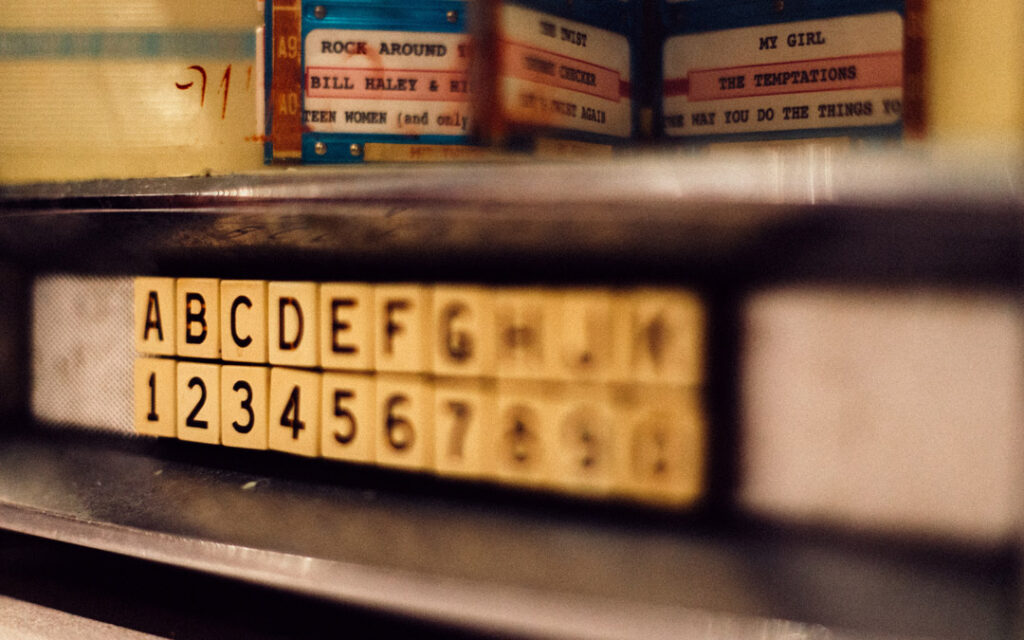
On a nearby wall was a jukebox. I started to pick a song when I heard an admonishing voice, sounding much like God’s, or my mother’s. It was Mrs. Bennett’s.
“Michael Olesker,” she said. “If your parents knew you were wasting their money to hear music on a jukebox …”
Maybe she was serious, and maybe she had a twinkle in her eye. I don’t know. But I was certain Mrs. Bennett would telephone my parents, and by nightfall I’d either be punished or put up for adoption.
And yet, it felt a little comforting. The message was: Grown-ups were everywhere, keeping an eye out, and they cared.
That moment came back the other day, when I found myself driving along Liberty Heights, and remembered how it felt long ago when we were free to roam and to stretch our world a little.
Today, the kids are stuck in the house. They haven’t gone to school in a year, haven’t gone to a movie or a bowling alley or even a little luncheonette, if any still exist. Nobody goes anywhere without a face mask.
Most of us, in our fortunate youth, had the run of things. Driving along Liberty Heights the other day, there was the old Howard Park Elementary School. I remember it with kids spilling all over the place, playing ballgames, playing hopscotch, getting to figure each other out at close contact.
Just up the street, there was Read’s, with its soda fountain, and its famous cans of Prince Albert tobacco. Weren’t we the clever ones, phoning Read’s to ask:
“Do you have Prince Albert in a can?”
“Yes, we do.”
“Well, let him out, he’s smothering!”
For a moment, it satisfied whatever latent instincts we had for anarchy. Or if you turned at Read’s and found your way down Gwynn Oak Avenue, you came to Gwynn Oak Amusement Park.
There, you took your life into your hands. Its rickety old roller coaster seemed only moments from total collapse. You got off alive, feeling you’d tested yourself and miraculously passed. You were a little bit grown up.
Much of Liberty Heights has changed through the years — some for better, some not. The old Liberty Jewish Center, at Marmon Avenue, is now the Concord Baptist Church. The old Howard Park Elementary School is now housing for the elderly.
The remnants of the old Ambassador Theater are still there. It closed in 1968, and had successive lives as a church, a beauty school, a dance hall, a roller skating rink. Now, it’s just a mess. A 2012 fire left its blackened scars, which remain on view today. The charred building’s the shame of the neighborhood.
But across the street, there’s a long-needed ShopRite supermarket and a bustling parking lot.
Toots Barger’s old bowling alley’s gone now. Yes, we played hooky from Hebrew school there on occasion. It’s best not to discuss this, since the statute of limitations may not have run out. It’s only been 65 years.
More than that, it’s a wonder we hid there. There were grown-ups all over Toots’s place. They were everywhere in those days, watching out for us as we did our first little explorations of the big world all around us.

A former Baltimore Sun columnist and WJZ-TV commentator, Michael Olesker is the author of six books. His most recent, “Front Stoops in the Fifties: Baltimore Legends Come of Age,” was reissued in paperback by the Johns Hopkins University Press.

A new biography captures the intensity and magic of the musical theater giant, writes Michael Olesker.

Melinda Michel pays tribute to the longtime Jewish community leader and volunteer who passed away on June 8 at age 68.

Jmore Editor-in-Chief Alan Feiler remembers Temple Emanuel's longtime spiritual leader, who passed away earlier this week at age 91.

Camp and youth group experiences have the ingredients for true, deep, lifelong transformation, writes Rabbi Jessy Dressin.