
This article was provided by AARP Maryland.
Karen Morgan is a fraud prevention volunteer with AARP Maryland. Before her retirement, she served as principal analyst with the Maryland Department of Legislative Services for more than three decades.
Let me tell you about Mary, a very nice lady who watches her finances, is careful not to overspend, and has invested wisely. During the pandemic she began shopping online more frequently. One day Mary received an email, purportedly from Amazon, saying that someone had made unauthorized charges to her account. The email instructed her to click on the embedded link to secure her account. Unfortunately, because she clicked on that link, the scammer was able to download a remote access malware program and gain control of her computer, and access to her personal information and financial accounts.
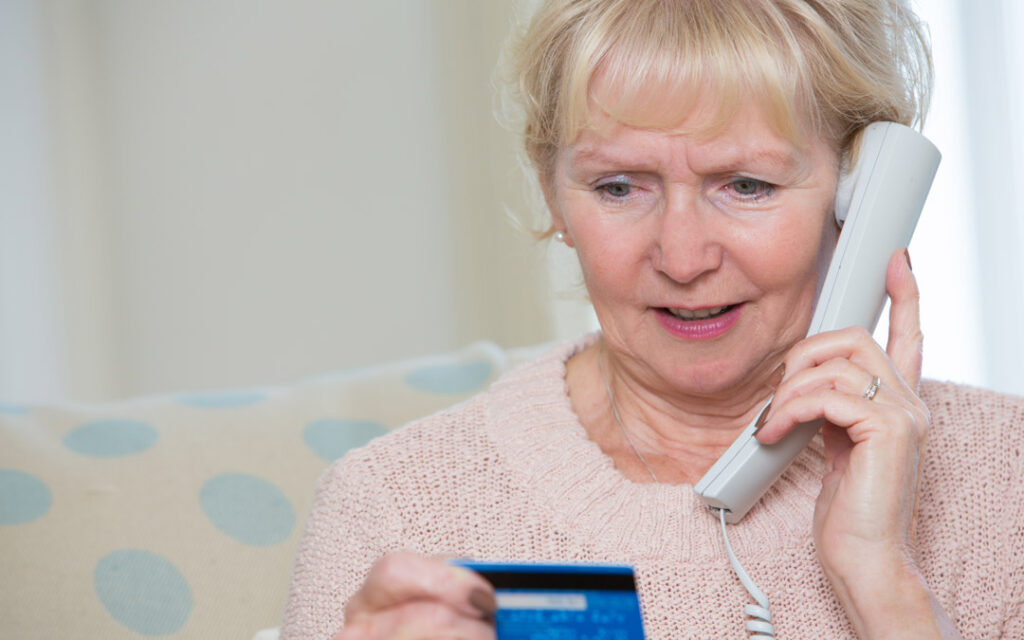
Then the calls began. They told her they could “fix” the problem, but she would need to pay a fee for this “service.” She only needed to purchase a gift card (or cards) and transfer the validation information. They told her the repair fee would be reasonable.
Except the demands for money did not stop. Even after she transmitted $2,000 in cash through gift cards.
As soon as Mary learned that the email was from a scammer and not from Amazon, she stopped sending money and got the malware removed from her computer.
And yet the scammer persisted in calling, entreating her to send even more money. He would say things like “Why have you stopped talking to me? We have such a good relationship…”
It used to be that putting your money in a bank meant it was absolutely safe, your name on a charge card meant that only you could use it, and using a card at a restaurant meant you were paying for only that meal. But those days are long gone. In the 21st century, you can save, invest and be careful about purchases, and still have no assurance that your financial house is safe. One click on a link in an email or text message, one phone call from a spoofed number or getting gas just once at “that pump,” can, in the blink of an eye, leave you vulnerable to fraud.
Anyone can be the target of a scam at any time, regardless of age, educational level, or familiarity with the internet or technical devices.
So why does it seem that seniors are frequently in the crosshairs of fraudsters and scammers? To paraphrase a retort from that infamous bank robber, Willie Sutton, “because that’s where the money is.” According to the U.S. Census Bureau, based on 2017 data, home equity and retirement accounts comprise the majority of household wealth and these accounts generally “…accumulate more wealth as they [the account holders] age.”
For a head of household younger than age 35, median wealth was $9,773.00 For a head of household between ages 70 and 74, median household wealth was $302,300.00, the highest of any age group. Also, the highest household median wealth amounts by age were for those heads of household age 65 and older (ranging from $236,900 to $302,300). While anyone can be a victim of financial abuse, the overall age of the American population is increasing, meaning older Americans are more likely to be targeted.
Here are some of the steps you can take to protect yourself:
● Do not ever pay for any service or pay any stranger with a gift card. As AARP says, “gift cards are for gifts” and gifts are for your friends and family, not a random person who wants to “repair” your computer or secure your account. If someone is “offering to help” but wants to be paid by gift card, it is a scam.
● If you get an email or text about a compromised account, do not click on any embedded link or call any included phone number. Instead, independently check with your bank, credit card, or online merchant to determine your account status.
● Use 2-step authentication. Two-step authentication occurs when you use a username and password to open your account (step 1) but before you actually gain access you have to submit another code or answer a security question (step 2). That means that any potential scammer who only has step 1 access has not gotten into your account. Amazon, Google and Microsoft are among the companies that offer 2-step authentication to secure accounts. Many banks and investment firms offer it, too.
● Set up online access and alerts for your accounts. Checking a statement sent once a month by postal mail is not a good way to keep track of your bills, purchases and finances. You can set up alerts to be notified of credit or debit card charges that exceed a specified amount. Your accounts should be checked often — weekly or even daily — to detect signs of unauthorized access.
I asked Mary if she would resume shopping at Amazon after her experience. She said she is now wary about online shopping, especially with Amazon, but at some point, she would likely go back to using the site. In retrospect, Amazon had not done anything wrong. Amazon had protected her account. It was the scammers who created the illusion of a problem that never existed.
I also asked Mary if she had any advice to help prevent the scam she endured from happening to someone else. She said:
● DO NOT PANIC. If you get a text, email, or phone call about your account being compromised, remain calm. The scammers are hoping that you will be so alarmed that you will act without thinking;
● GET A SECOND OPINION: ask a trusted family member, friend, or adviser if the message seems legitimate. An objective party may notice some earmarks of a scam attempt that a distraught person might miss;
● CHECK THE ENTIRE EMAIL OR WEBSITE ADDRESS: Mary said that by hovering her cursor over the impostor’s email address, she saw that there was a string of characters after “amazon.com” that indicated that the address was not really from Amazon.
PROTECT Week and World Elder Abuse Awareness Day
One in five seniors over age 65 have been the victims of fraud, losing a staggering $2.9 billion a year to identity thieves and con artists. Unfortunately, even more is lost to exploiters who are family, friends or caregivers. To assist Marylanders in identifying and combatting fraud, the Office of the Attorney General, Office of the Comptroller, AARP Maryland, CCCSMD (Consumer Credit Counseling Service of Maryland), the Maryland Department of Aging, the Commissioner of Financial Regulation from the Maryland Department of Labor, and other consumer protection groups are launching a statewide public awareness campaign during PROTECT Week (Protecting Older Americans from Financial Exploitation), June 14 to 21, 2021.
Now in its fourth year, the week coincides with World Elder Abuse Awareness Day, observed on June 15. PROTECT Week resources, available on protectweek.org, will help Marylanders identify financial exploitation so that they may protect themselves and their loved ones from abuse. The week’s activities include a series of free seminars and teletown halls on June 15, 17, and 18. To register for the teletown halls, visit vekeo.com/aarpmaryland or enjoy the livestream at Facebook.com/aarpmd.

Duke Zimmerman and Lori Gale will talk at Towson University about their new book "People Get Ready" and the role played by Globe Posters in the civil rights movement.

The new exhibition revisits and updates a previous show about ritual hair covering in the observant community.

One of the most competitive local races for public office this political season is for Baltimore County Executive. Jmore recently spoke with four of the candidates about their views on how they hope to enhance life in the county.

The Pikesville resident's latest offering "There's a Dragon in the Tree House and He Won't Come out!" was co-written with her grandsons.