
This story was sponsored by and produced in partnership with UJA-Federation of New York, which cares for Jews everywhere and New Yorkers of all backgrounds, responds to crises close to home and far away, and shapes the Jewish future. This article was produced by JTA’s native content team.
By Stewart Ain
When New York was caught in the midst of a brutal wave of COVID-19 in the spring of 2020, with the daily death toll reaching as high as 800, the stress for many Orthodox schoolchildren was overwhelming.
They were catching the coronavirus in high numbers. And their parents or grandparents were frequently falling ill. Many subsequently died or developed long-term symptoms.
Now, a year on, that trauma hasn’t subsided.
“That was very hard for children to live with,” said Dr. Norman Blumenthal, director of the trauma, bereavement and crisis response team at Ohel Children’s Home and Family Services in Woodmere, New York. “We told them we understand how they feel. Sometimes, if they are really beset by guilt, we try to give them something to do to honor their parent or grandparent. We might also have them undertake a religious practice to honor [the deceased].”
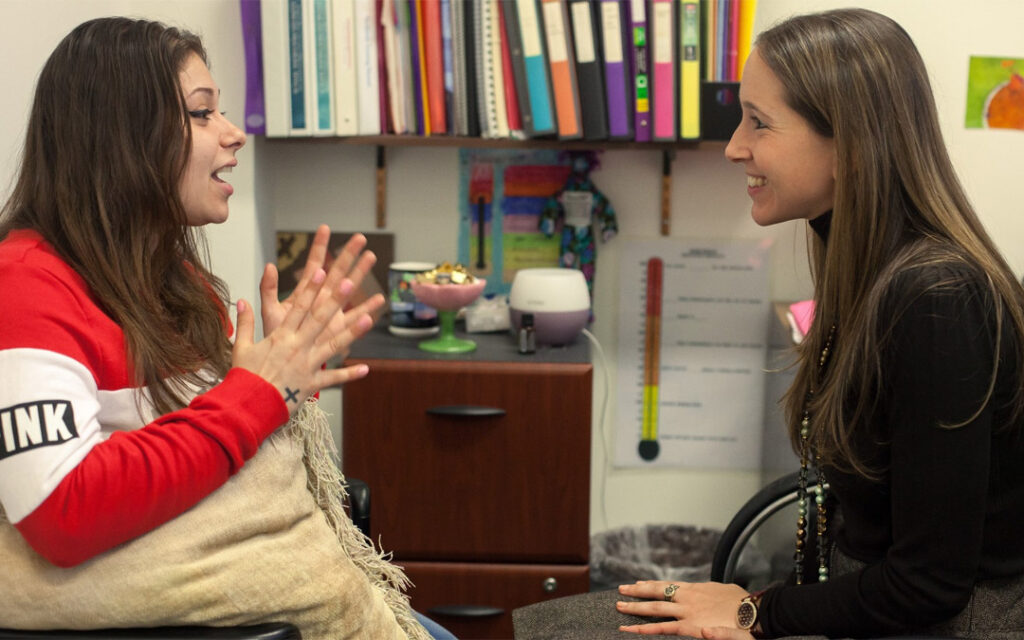
Ohel, a nonprofit partner of UJA-Federation of New York, is one of four Jewish organizations participating in a program called Partners in Caring that brings mental health services to students and their families in Jewish day schools and yeshivot in New York City, Westchester County and Long Island.
Those services were in place before COVID-19 struck — UJA-Federation had created Partners in Caring in the aftermath of the 9/11 terrorist attacks in 2001 to support unmet mental health needs — making it easier to respond quickly when the pandemic arrived.
In March of 2020, when schools in New York state suspended in-person instruction in an effort to slow the spread of the coronavirus, UJA-Federation began meeting weekly with the mental health professionals in schools to understand what was happening in the community, what the needs were and how to address them.
“We were hearing about grief and loss,” said Meredith Zylberberg, who oversees UJA’s mental health portfolio. “From March through June [2020], those agencies told us how overwhelming it was having to shift to virtual learning at their current level of funding. That was a determining factor in our decision to add more funding to those agencies.”
In total, UJA-Federation sent an extra $750,000 to four agencies dealing with child mental health: Ohel, the Jewish Board, Westchester Jewish Community Services and the Jewish Child Care Association.
Surge in Suicides
Mental health problems have soared during the pandemic, especially among the young.
“We are seeing a dramatic increase in suicide among children and adolescents,” Blumenthal said. “Suicide is the third most common death for teenagers, following accidents and cancer.”
The director of Ohel’s children’s services, Tzivia Reiter, helped create a COVID Resilience Workbook to help teachers understand children’s concerns, express those feelings through art or writing and develop coping skills.
“Through the various activity pages, the children develop self-regulation skills, a critical tool to help them cope with adversity,” Reiter said.
One of the most common mental health challenges has been children dealing with the death of a parent or grandparent from COVID. Anna Kalinkina, a social worker and program coordinator for Partners in Caring at the Jewish Child Care Association, said she worked with a high school student whose parents were both on ventilators with the virus.
“I Zoomed with the boy and I spoke with him on the phone to provide emotional support,” she said.
The boy’s mother recovered but his father died. The association has provided the family with financial support.
Virtual schooling posed its own challenges for families, including heightened sibling rivalries, family tensions and stress from parents losing their jobs. Many families struggled with financial problems, insufficient food and too few computers in the family.
“The pandemic caused alarming rises in the rates of depression, grief and suicidal ideation in youth and adults,” said Brenda Haas, a social worker with Westchester Jewish Community Services.
Destigmatizing Mental Illness
One silver lining of the pandemic, Haas said, is there appears to be less stigma now about seeking help for mental health.
“People are noticing and sharing more about their mental health challenges,” she said, “and it has never been as significant.”
Students are not the only ones in need of mental health. Educators and administrators also are asking for assistance, said Rivka Nissel, team director at the Jewish Board’s Seymour Askin Counseling Center in Brooklyn.
“Working with adults in the schools has become more necessary due to COVID,” Nissel said. “If the teaching staff is stressed, overwhelmed or experiencing trauma, it is difficult for them to contain it and model emotional wellness to their students. The adults in the system have asked for more support in the past year than they did two years ago.”
The Jewish Board has 15 mental health therapists providing more than 200 hours of service to about 2,000 students aged 5-18 in 13 Brooklyn yeshivot. Another 175 students receive ongoing psychotherapy in the board’s four satellite clinics.
Because nine of the 13 ultra-Orthodox yeshivot in the Jewish Board’s network did not use Zoom for remote learning, classes were held by telephone, and mental health professionals “had to be flexible and creative” in offering counseling by phone, Nissel said.
Now, as adults and teenagers are vaccinated, mental health professionals will continue to be on the case, helping people transition to the new normal.
“We will go through a healing process as we come out of hibernation,” Haas said.
This story was sponsored by and produced in partnership with UJA-Federation of New York, which cares for Jews everywhere and New Yorkers of all backgrounds, responds to crises close to home and far away, and shapes the Jewish future. This article was produced by JTA’s native content team.

Why not honor your mom by making a donation to a nonprofit that supports women and children?
Schools in Montgomery County have recently experienced a wave of antisemitic incidents.

CCBC Honors scholars are discovering a level of academic rigor and opportunity typically associated with elite four-year institutions.

For 35 years, the late Deborah Brodie, aka Bubbie Cookie, amassed a collection of over 200 Jewish ritual objects, which she used to teach her Hebrew school students with special needs.