

By Grace Gilson
When the Shabbat-dinner nonprofit OneTable slashed a quarter of its staff recently, it wasn’t only because of a budget crisis.
Fundraising was down, but the group was also responding to shifts in how Jews gather, citing its growing sense that Gen Z is less likely than other generations to open doors to their homes.
Now, OneTable is revealing a raft of new pilot programs and policies, including an expansion beyond its defining practice of subsidizing dinners; a new policy barring anti-Israel events; a renewed focus on young Jews; and a shift toward partnerships with emergent Shabbat “clubs” to lift the burden and risk of hosting at home.
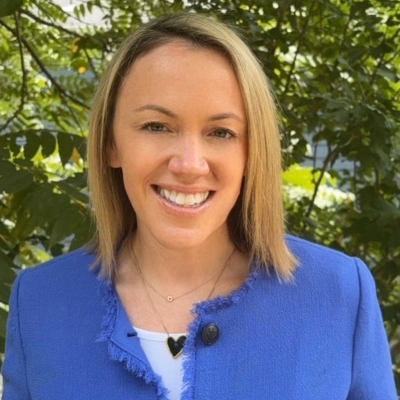
“In this world right now, the idea of welcoming something, someone into your home is scary to people,” said Sarah Abramson, OneTable’s new CEO. “All of these things are actually creating barriers to people wanting to host in their homes, and so we know that we need to bring OneTable out into the world.”
At the same time, the group is centralizing its operations. While the 14 layoffs took place across the company, Abramson said OneTable had focused in part on field managers, who served as regional liaisons with hosts and potential hosts.
“If a person in that community really saw that field manager as the face of OneTable, and for whatever reason, did not feel like that person spoke to them or was not aligned with their Jewish values and how they want to Shabbat, then often they would kind of discount OneTable,” she said.
The changes come as Israel looms large over Jewish nonprofits, influencing fundraising and engagement while also at times laying a minefield, especially for younger Jews who are increasingly divided in their sentiments.
OneTable says the number of people participating annually in Shabbat dinners it supports doubled after Oct. 7, 2023. Before the resulting war in Gaza, 42,000 people a year were attending OneTable dinners. After, the number reached 80,000, according to the group.
But the group struggled to keep pace when it came to fundraising. In 2024, OneTable ran a deficit of more than $900,000, spending about $10.6 million while bringing in just over $9 million in contributions, according to their tax filings that year. That represented a sharp decline in funding from 2023, when the organization reported nearly $12 million in contributions and ended the year in a surplus.
Gali Cooks, president and CEO of Leading Edge, which provides training, research and support for Jewish nonprofits, said there was also a “tricky confluence right now of rising demands and rising costs” within the Jewish nonprofit sector.
Cooks said across the sector, nonprofit leaders were realizing they have to “think smaller and bigger at the same time.” OneTable says it is doing that.
The changes underway at OneTable include formalizing a stance on Israel for the first time. Earlier this month, the organization added a list of its “core commitments” to its website that included a section outlining drawing a hard line against anti-Israel advocacy.
“We do not formally partner with, or support, any organization, Shabbat dinners, or gatherings that call for Israel’s destruction or in any way question Israel’s right to exist,” the section reads. “We do not fund dinners that align with any political party or candidate.”
At the same time, the group is aiming to stoke Israel talk at the Shabbat table. The group has a new partnership with Resetting the Table, a Jewish nonprofit that teaches dialogue skills.
For some, the changes mark an unhappy end to OneTable as a respite for young Jews from the ideological divides over Israel that increasingly characterize Jewish experiences.
Alexis Fosco, a former OneTable employee, posted on LinkedIn last month in an announcement of her departure that she was “frustrated at Jewish funders withdrawing from diaspora-focused work, leaving the staff who are already subsidizing their causes to absorb the impact.”
Abramson said the nonprofit’s new initiatives would be rolled out as pilots over the coming year. But even if the tests are temporary, they mark a significant shift for the nonprofit that has long been synonymous with underwriting the costs of serving Shabbat dinner at home. Hosts have historically received $10 stipends for each registered guest at their OneTable dinners.
Now, Abramson said the organization plans on rolling out alternative incentives for hosting Shabbat, including a “point” system in which points can be exchanged for prizes including, potentially, trips to Israel and elsewhere.
Abramson said the company was also shifting away from its recent focus on older Jewish adults to center on younger Jews.
“This is really going back to our roots,” she said, “and ensuring that we are evolving the way in which young adults want to be reached.” 
Grace Gilson wrote this article for the JTA global Jewish news source.

A former college campus activist, Veksler will speak at Chizuk Amuno on June 8 at the Ruth and Jay Lenrow Visiting Scholar-in-Residence for Combating Antisemitism.

For 35 years, the late Deborah Brodie, aka Bubbie Cookie, amassed a collection of over 200 Jewish ritual objects, which she used to teach her Hebrew school students with special needs.

Presented by Jews United for Justice and a consortium of local synagogues, "Beyond Welcoming the Stranger" offered a Jewish approach to helping immigrants.

Steve Hofstetter, who will perform at Soundstage next week, recently made headlines for his social media post ridiculing some fans' warnings about Charm City's safety.