
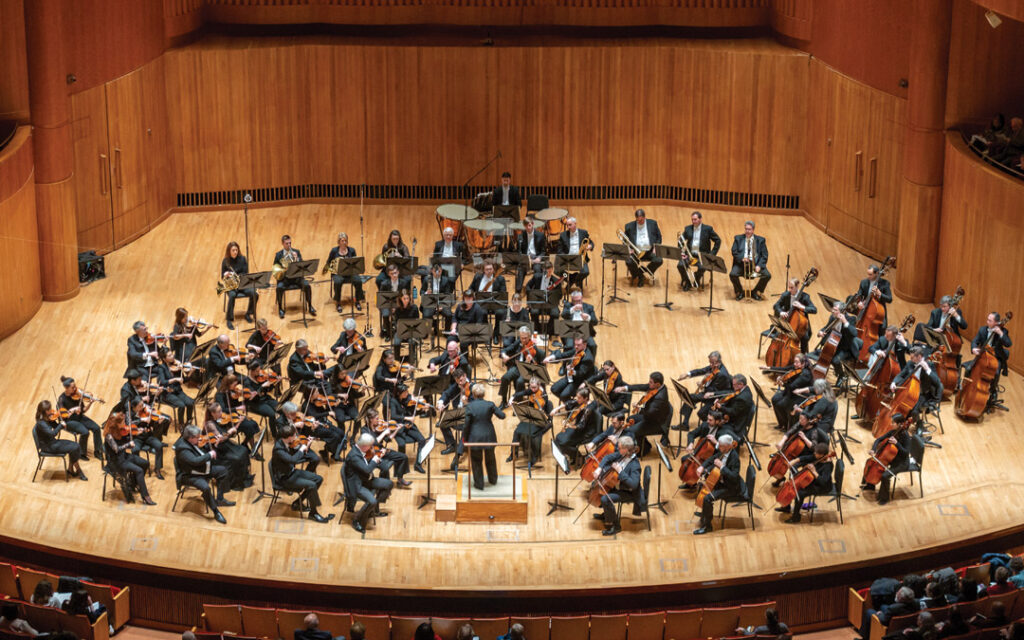
The BSO looks forward to an interesting season and a promising future.
It’s no secret that the Baltimore Symphony Orchestra was in crisis even before COVID-19 closed down the entertainment industry.
But Tonya McBride Robles, the BSO’s vice president and chief operating officer, says Charm City’s hometown orchestra has not only overcome its financial woes but emerged stronger.
“Just before the pandemic, the board approved a strategic plan we worked very closely on with Michael Kaiser [chairman of the DeVos Institute of Arts Management at the University of Maryland],” says Robles. “It’s focused on great art driving great audience participation and giving. And with the efforts of my colleagues on the staff, the board and among the musicians, we were able to do some transformational fundraising.”
Between November 2019 and March 2020, the orchestra raised $10 million to implement the strategic plan, which she calls a “game-changer.”
Robles says despite the pandemic’s catastrophic toll on public health in Baltimore and around the world, it provided an unexpected benefit for the BSO.
“Because we were not having live performances, we had the time and space to really work closely in partnership together and to negotiate a five-year deal, which was the longest-term contract that we’d had in decades,” says Robles.
Still, the pandemic demanded that the BSO remain relevant to audiences while the Joseph Meyerhoff Symphony Hall was closed. That presented a challenge for the BSO, which until 2020 had never self-produced a broadcast from its venue.
Fortunately, BSO donors rose to the occasion. Fundraising enabled the institution to purchase and install the cameras and related equipment necessary to record and stream a series called “BSO Sessions,” hour-long programs featuring 45 minutes of music and 15 minutes to introduce musicians, composers and artists.
“We did 30 episodes,” says Robles. “It was really a great new access point for people, not only within the [BSO] family but also for people all over the world.”
As the BSO returns to live performances, it will continue streaming most of its concerts.
Earlier this year also saw the retirement of BSO music director Marin Alsop, the orchestra’s first woman conductor and a trailblazer who came to the orchestra in 2007.
“Marin’s historic tenure here is something that will leave a lasting legacy for years to come,” says Robles. “She was certainly ahead of her time in many ways, and I feel like in some sense we’ve caught up to her.”
The orchestra is conducting a multi-year international search to find Alsop’s successor. Prospective candidates will take turns guest conducting throughout the year, and Robles promises that “as part of Marin’s legacy, there will be great diversity among guest conductors, both racially and gender-wise.
For the past several years, the orchestra has produced “BSO Pulse,” a grant-funded program in which BSO members collaborated with indie and alternative musicians to explore different musical genres. The performances attracted a younger crowd by featuring their favorite bands and offering concert activities, food trucks, dancing and cocktails.
This year, BSO Pulse will be replaced by a program called Fusion in which classical pieces will be “fused” with music ranging from indie band Radiohead to rappers Tupac Shakur and Biggie Smalls.
“What’s key for orchestras is to remain relevant and take care of all kinds of audiences,” says Robles. “We still need to be doing Beethoven and Bach. We also need to be amplifying the voices of historically under-represented artists that haven’t had a fair shot at being heard in in symphony halls.”
These under-represented artists include composers such as Alexander Zemlinsky, Franz Schreker and Walter Braunfels, whose works were suppressed during the Nazi regime. Their compositions will be performed as part of BSO’s “Rediscovered Voices” project with new artistic advisor James Conlon. The project also explores the works of American composers largely ignored because of their race.
“We’re doing [William] Dawson’s ‘Negro Folk Symphony,’” says Robles. “It’s a piece that garnered a great deal of acclaim in 1934 but because of the nature of race relations in this country, it didn’t get the platform it deserved.”
Safety guidelines permitting, the BSO opens its season Sept. 11 with a concert by superstar Israeli-American violinist Itzhak Perlman. He will be performing and conducting at the event, which Robles says is a “hot ticket.”
“The community has demonstrated to us they care about Baltimore a world-class orchestra,” says Robles. “We learned we must work with board, staff, musicians and the community to thrive in this new world.”
For information about the BSO’s fall season, visit bsomusic.org.

A new exhibition at the Baltimore Museum of Industry sheds light on Bethlehem Steel's 125-year history at Sparrows Point, the generations of men and women who worked there and their significant contributions to American industrialism.
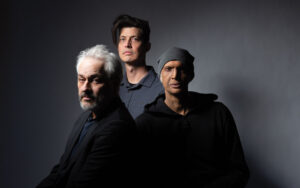
Marc Ribot’s Ceramic Dog will bring its blend of rock and avant-garde to Creative Alliance.
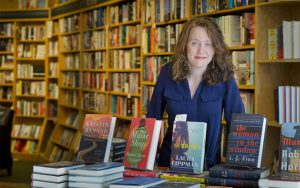
A streamlined Baltimore Festival of Jewish Literature will be held throughout November.
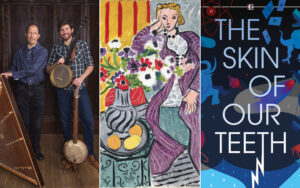
Here are just a few of the cultural gatherings happening in the area this fall.