

This article is part of Jmore’s October 2021 Innovations in Health Care issue.
Responding to the ever-increasing rise in drug overdoses — not only around the nation but throughout Maryland, including in Baltimore — Sheppard Pratt has established a new opioid treatment program. It incorporates medication-assisted treatment for people who have both substance use disorders and mental health conditions such as bipolar disorder, schizophrenia, anxiety and depression.
“Chronic addiction issues often are accompanied by complicated mental health and medical issues,” says Dr. Jason Martin, director of addiction services at Sheppard Pratt. “When these co-existing issues are treated at the same time, clients have a much higher likelihood of ongoing recovery. What sets our program apart is that we’re looking at the whole person, not just the addiction.”
The new opioid clinic offers urgent assessments, integrated mental health and substance use care, as well as methadone treatment. The program is offered through Sheppard Pratt’s community-based programs and is located on its Towson hospital campus.
Through its “hub-and-spoke” network of community partners, Sheppard Pratt also can help its clients access services such as transportation and housing, connections to employment services and more.
In addition to a team of professionals that includes a psychiatrist specializing in addiction medicine, chemical dependency counselors, registered nurses, case managers and therapists, peer support specialists — who have been successful in their own recovery — help clients stay active and engaged in recovery.
Along with the new opioid treatment clinic, Sheppard Pratt recently opened its 85-bed, 156,000-square-foot Baltimore/Washington Campus in Elkridge, offering a full range of psychiatric and behavioral health services to respond to the need for increased access to mental health care, which became more pressing during the COVID-19 pandemic.
The Baltimore/Washington Campus includes a Psychiatric Urgent Care unit that provides urgent assessments and triage to appropriate care for individuals experiencing mental health and/or addiction crises. This expands the urgent care services currently offered at Sheppard Pratt’s Psychiatric Urgent Care in Towson, which opened nearly a decade ago and serves 5,000 individuals a year in crisis.
In addition to a new young adult patient care unit, four specialized outpatient programs offer care and services for targeted populations and disorders, including children and adolescents and eating disorders.
The campus also offers access to the latest treatments, including novel approaches such as neuromodulation for mood disorders, particularly treatment-resistant depression.
For information, visit sheppardpratt.org.
A former Baltimore resident, Carol Sorgen is a freelance writer based in Portland, Oregon.

Schwab currently serves as president of Cumberland's historic B'er Chayim Congregation.
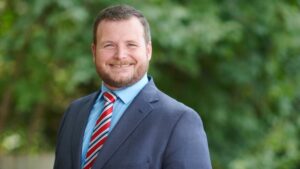
A former U. S. Marine, Pat Young has served as a Baltimore County Council member representing District 1 since 2022.
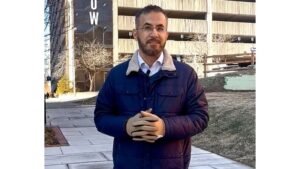
Mansoor Shams is known for carrying around a sign proclaiming, “I’m a Muslim and a U.S. Marine. Ask anything.” Now the Baltimore County Department of Recreation and Parks community engagement and outreach officer is running for Baltimore County Executive.

Baltimore native Susan Landsman recently celebrated her rite of passage surrounded by family, friends, fellow residents and staff.