
OK, this may sound kind of weird, and maybe even sacrilegious. But in a way, the holiday of Sukkot — which we recently celebrated — spooks me out.
That might seem like a bizarre statement, since the eight-day festival focuses on joy and requires the construction of a temporary dwelling in which families spend time together eating, singing, praying, schmoozing, decorating and playing games.
What’s spooky about that?
We’re taught the sukkah should be made in a decidedly flimsy fashion, with the heavens always visible, to reflect the fragility of life and the ephemeral nature of the world. The sukkah is intended to teach us to discard our hubris and locate the resilience within, while eschewing the external and material trappings of daily life.
In other words, nothing is truly permanent or completely solid.
And therein lies my problem with Sukkot. Because, wisely, the holiday reminds us that life can turn on a dime. (Just ask anyone whose sukkah was invaded by a swarm of yellow jackets or knocked down by a gust of wind.)
I recently got a strong reminder about that lesson of life’s fickleness. After enjoying a fun, restful vacation with my family, we came home to find the roarin’ Mississippi River – or what looked like it — flowing through my house.
Not a fun way to open your front door after a long, tiring journey home.
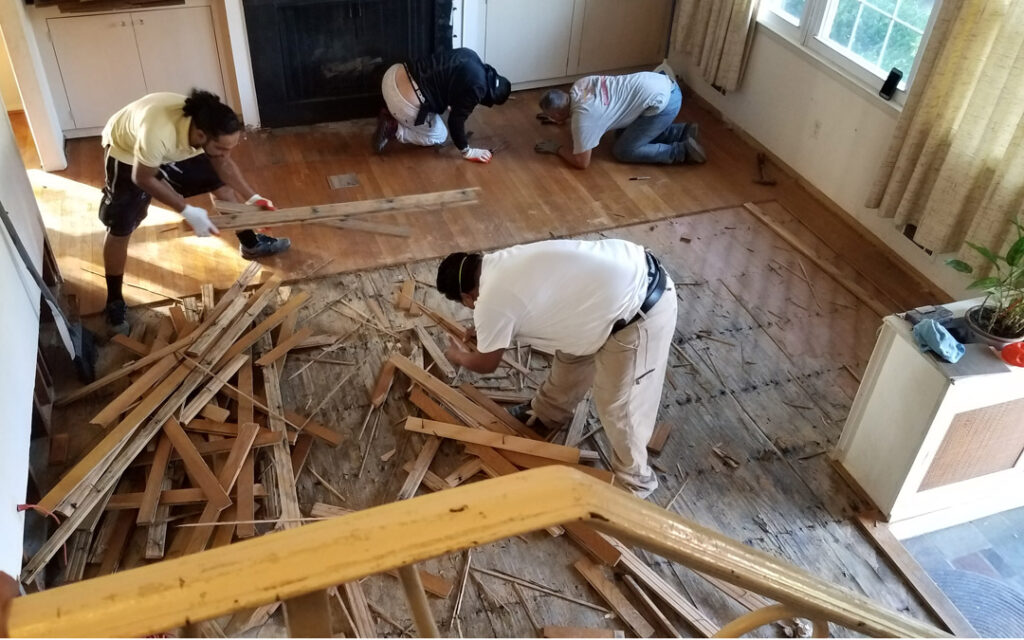
Seems that a burst kitchen pipe sent seemingly oceans of water gushing through my home, for days on end. Left in its wake were decimated hardwood floors, miles of waterlogged carpeting, damaged furniture and appliances, ruined personal mementoes and objects, and a crawlspace filled with a couple feet of water.
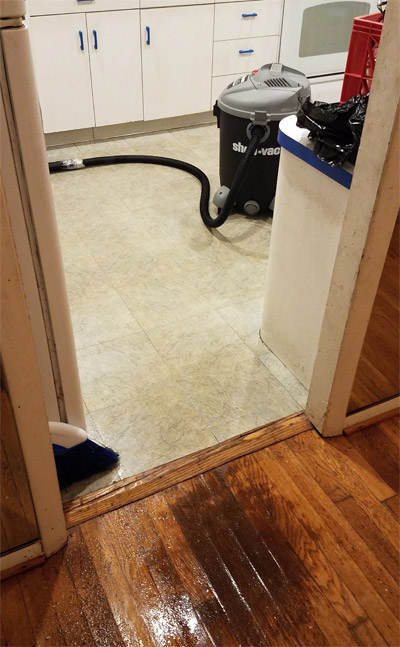
Believe me, the irony of returning from the beach to find a severely waterlogged residence was not lost on me.
Since then, we’ve had contractors, plumbers, restoration crews, insurance adjusters and others traipsing through our dusty home. (My guess is some of our visitors have not been vaccinated; I didn’t ask for documentation at the door.)
In a situation like this, which will likely take months to fully recover from, you realize your home really is your castle, no matter how opulent or dilapidated it may be. (And truth be told, my house was in need of TLC for some time now.)
But it also reminds you that, like it or not, life will always throw its share of curveballs, and how we respond is up to us. Sure, we’re allowed to feel sorry for ourselves for a while and get stressed out. But then we must lick our wounds and get back to the business of rebuilding.
Losing stuff and being inconvenienced for a spell, well, sucks. You feel vulnerable and out of sorts. Those lyrics by Leonard Cohen, appropriated from the Unetanneh Tokef prayer chanted on Yom Kippur, resonate now more than ever: “And who by fire/and who by water …”
But in the long run, you realize stuff is just that — stuff. It can be replaced. What cannot be replaced is your life and the lives of your loved ones. Sounds hokey, but it’s true.
Life may be precarious, but it’s also precious. That’s important not to lose sight of, especially when you see all of the misery in this world (i.e., the recent victims of Hurricane Ida).
And in my mind, that’s the essence of the High Holiday season we recently experienced. To quote the late Rabbi Alan Lew, “We are constantly becoming, continuously redefining ourselves. This doesn’t just happen on Rosh Hashanah.”
Sincerely,
Alan Feiler, Editor-in-Chief

A new biography captures the intensity and magic of the musical theater giant, writes Michael Olesker.

Melinda Michel pays tribute to the longtime Jewish community leader and volunteer who passed away on June 8 at age 68.

Jmore Editor-in-Chief Alan Feiler remembers Temple Emanuel's longtime spiritual leader, who passed away earlier this week at age 91.

Camp and youth group experiences have the ingredients for true, deep, lifelong transformation, writes Rabbi Jessy Dressin.