
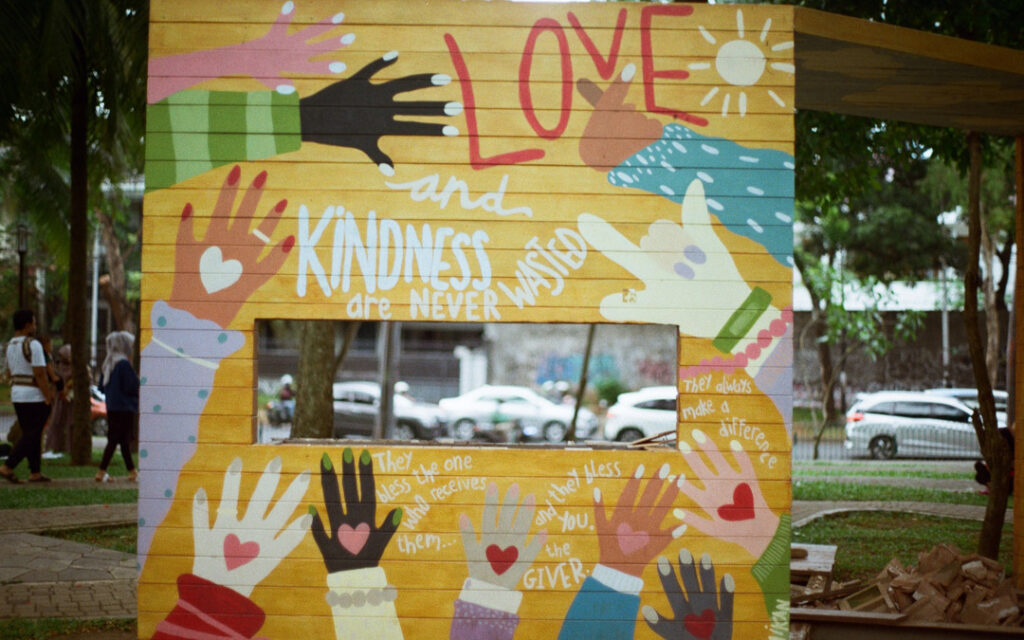
Rebbe Nachman of Breslov says, “If you believe something can be broken, you must also believe it can be fixed.”
Many of those seeking a more just society feel fatigued right now. As the pandemic rages on and new variants rear their ugly heads, as climate change exacerbates global droughts, floods, fire and famine, as systemic racism continues to infect American culture and policy, there is simply so much brokenness. It can all feel overwhelming.
This makes Rebbe Nachman’s message even more important. The promise of repair can be a salve for the persistent pain of injustice.
One way to refresh ourselves in such a climate is to focus on good that can be done, compassion that we can access and share. Consider this story (as detailed, among other places, in U.S. Surgeon General Vivek H. Murthy’s book “Together”) which begins with tragedy, with the family of Edward Jaievsky fleeing Nazi Germany for Argentina and emigrating to the United States and settling in Anaheim, California.
And then more tragedy: Edward, who had become a doctor of holistic medicine, was on vacation with his family when a car accident claimed the life of his 6-year-old daughter, Natasha. The family was overcome with grief, but when they began to go through her things, they found drawings and writings about compassion, rainbows with messages like, “Put your heart into kindness.” Edward created a poster and hung her colorful art all around Anaheim with the message, “Make kindness contagious.”
An Anaheim City Councilman named Tom Tait who saw these posters and was struck by their simplicity and beauty. No corporation had sponsored or branded the message. The only attribution was the scrawl of a child’s handwriting at the bottom: “My wish is to help people.” — N.J.
Tom did some investigating and discovered that N.J. was Natasha Jaievsky, and he learned her story. He was touched by the little girl’s message, particularly against of a backdrop of political discourse that was becoming increasingly vitriolic. Six years later, there was a vacancy in the mayor’s office. Tom decided to run on a platform of kindness — and won by a substantial margin. Tom’s contention was that cities could heal through the power of kindness.
Tom’s vision of a city animated by kindness proved both viable and effective. He launched the Million Acts of Kindness initiative in the Anaheim school district. When they met the district-wide goal of one million acts of kindness, the demonstrable results of Tom’s efforts were clear: Bullying in the schools was dramatically reduced. Suspensions were cut in half.
“Everything gets better if everyone is a little bit kinder,” said Tom. His efforts to make Anaheim a city of kindness led to visits around the world with mayors of other cities looking to tap into the power of compassion to keep their communities safe and resilient. The U.S. State Department even invited him to speak on behalf of its Bureau of Counter Terrorism to officials in Germany. The topic was (not kidding) countering extremism through kindness.
Tom recalls one conversation with a former neo-Nazi in Dusseldorf who explained that while it was his search for connection that led him to join a white supremacist group in the first place, it was unexpected acts of kindness by the very people he had been taught to hate that convinced him how wrong he had been.
“Kindness is Contagious” read the poster created by Dr. Edward Jaievsky. A simple and pure act of a 6-year-old girl inspires her grieving father to share her message of compassion with their city. A politician struggling to move that same city toward a sustainable and achievable vision of collective responsibility stumbles upon the posters and runs for mayor. Over several years, a city is transformed into a safer and more compassionate place.
That same politician travels to Europe and meets a young man whose toxic worldview had been challenged by kindness — the same place which Natasha Jaievsky’s family, two generations earlier, had had to flee because of that same ideology. As Anne Frank, another girl who died tragically and too young, once wrote, “In the long run, the sharpest weapon of all is a kind and gentle spirit.” w
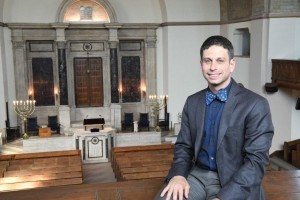
Rabbi Daniel Cotzin Burg is spiritual leader of Beth Am Synagogue in Reservoir Hill, where he lives with his wife, Rabbi Miriam Cotzin Burg, and their children, Eliyah and Shamir. This column and others also can be found on The Urban Rabbi. Each month in Jmore, Rabbi Burg explores a different facet of The New Jewish Neighborhood, a place where Jewish community is reclaimed and Jewish values reimagined in Baltimore.

As he gets ready to leave for California, Rabbi Daniel Cotzin Burg looks back on his time in Baltimore and his 10 years writing for Jmore.

Michael Olesker pays tribute to WJZ’s retiring Marty Bass, a longtime fixture on local TV screens.
The Orioles' weak defense plays a major role in the nightly carnage, writes Michael Olesker.