

The two main kosher restaurants in the Hungarian capital of Budapest have enjoyed excellent reputations for years.
Both Carmel and Hanna offer signature local culinary items like goulash with nokedli, a paprika-rich beef stew featuring handmade noodle dumpling, schnitzels, and flodni, a poppy-rich, nutty Hungarian- Jewish layer cake. That’s alongside such Israeli dishes as shish kebab and hummus.
But neither eatery is particularly cheap, and both require a longer sit-down meal experience. And that felt like a business opportunity to László Györfi.
So Györfi recently opened a significantly cheaper, no-frills burger shop that he says is Budapest’s only kosher fast food joint. It’s right around the corner from his competitors, in the 7th District, the center of Budapest’s nightlife.
“Hannah and Carmel are good restaurants, great service, lots of space,” he said. “But often, Israeli families just want a place where they can get a hamburger and fries or a hot dog for their four kids for a fraction of the cost and time. That’s what Kosher MeatUp is there for.”
In 2019, at least 144,000 Israeli tourists visited Hungary, the country’s fourth-highest tally of visitors from non-European countries.
At Kosher MeatUp, customers are not spoiled for choice. For the main course, the options are a hamburger, shawarma or breaded chicken breast. The side dishes are soup, fries or salad.
But even if the business model for Kosher MeatUp is optimal, its timing has been unfortunate. The COVID-19 pandemic stunted the eatery’s brief attempt at a launch last year and eliminated its projected source of income overnight, as both Hungary and Israel shut down touristic air travel.
But Györfi, who also owns a kosher bakery outside the center called Semes, says he has “faith in the business model” and is determined to “give it a chance.” For now, he is willing to lose some of his margin from Semes — which sells to locals and Jewish institutions, including schools and nurseries — to keep the lights on at MeatUp.

On a recent slow weekday, the staff at MeatUp mostly chatted among themselves and checked their phones. The mashgiach, or kosher supervisor, sat at a separate table hunched over scripture. The restaurant’s 10-odd tables were clean and empty.
Sometimes, Györfi sits at one to go over some paperwork while wearing his trademark Ascot cap. To him, kosher food in Budapest “is a business, but it’s also a mission.”
“When I was younger, there was hardly any kosher food industry, let alone fancy restaurants. So we’re building,” he said.
Many Jewish locals feel that way about most aspects of Jewish Hungarian communal life, which the Nazis came close to erasing entirely, and which Soviet Union communists then forced mostly underground for decades. MeatUp’s reopening coincided with a string of festive Jewish community events in August and September, including the opening of three new synagogues, a Jewish community center on the banks of the Danube River and a new building at a local Jewish hospital
It is part of a larger push for renewal that has been going on for about a decade amid mounting tensions and rivalries between Jewish groups — at times over resources, and at other times over the policies of Hungary’s right-wing government, led by Prime Minister Viktor Orbán.
Györfi has unlikely cheerleaders over at Carmel, his main competitor, which sells higher-end hamburgers and Israeli-style meats alongside its signature Hungarian dishes in a 100-seat cellar space near the famous Dohnay Street Synagogue.
“We don’t know what sort of impact MeatUp might have on Carmel, but even so I’m happy there’s a new kosher restaurant,” said Dániel Preiszler, who with a partner owns the company that runs Carmel and its kosher dairy eatery across the road, Tel Aviv Cafe.
Like Györfi, Preiszler believes MeatUp caters to a different demographic than Carmel’s. There’s also a business logic to welcoming competitors, he said, because the more options observant travelers will have, the likelier their numbers are to grow in total.
“But I don’t know, maybe we’ll lose hundreds of dollars a day,” he said. “The availability of kosher food is a basic condition we don’t take for granted here. So it means something every time it’s strengthened.”
Györfi has plans for a follow-up project: A cafe with its own cake shop that would offer kosher variants of the world-famous confectionary traditions of the former Austro-Hungarian Empire, such as the Sachertorte chocolate cream cake and the Gesztenye Torta chestnut cake.
For now, MeatUp is still relying on Israeli tourists.
“The food’s fine,” said one of them, Tomer Ashri, 22, who was there with a travel buddy. “It’s not amazing, but it’s a bit cheaper than what it would cost in Tel Aviv. It really beats buying vegetables at the supermarket, which is kind of what we expected to do for food here before we heard of this place.”
Cnaan Liphshiz writes for the JTA global Jewish news source.

Dara Bunjon talks with Sally Ekus, a senior literary agent at JVNLA, where she spearheads The Ekus Group, a boutique division that specializes in cookbooks and lifestyle titles.
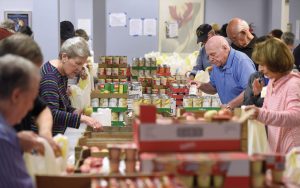
Weekend Backpacks is partnering with Heritage | MileOne Autogroup for the largest corporate volunteer engagement and donation initiative in the organization's history.

Pikesville residents David and Wendy Hefter recently joined Jewish motorcyclists from around the world to raise money for victims of the Oct. 7th terrorist attacks in Israel.
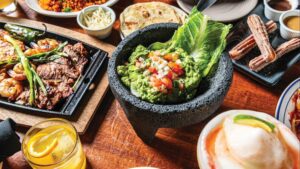
Hoops legend Shaquille O’Neal recently opened his first Big Chicken standalone franchise in Maryland. Randi Rom shares a roundup of local restaurant news and notes.