
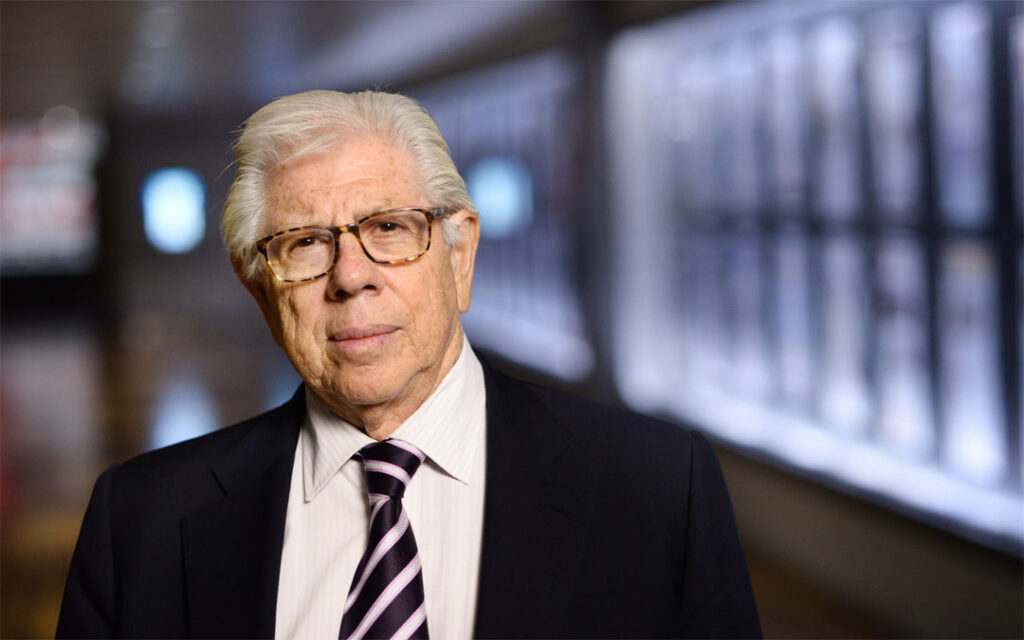
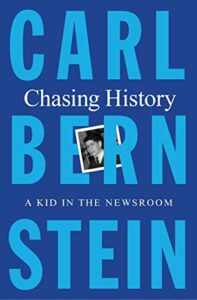
You never know how lives will play out. As a kid, Carl Bernstein looked like a cross between two freckled pop culture icons of mid-century America, Alfalfa from The Little Rascals and Howdy Doody. Neither comparison was considered flattering.
As an adult, he’s been portrayed on movie screens by two other pop culture icons, Dustin Hoffman and Jack Nicholson. Here the comparisons are considered mixed.
It was Hoffman in “All the President’s Men,” the story of Bernstein and Bob Woodward bringing down the presidency of Richard Nixon. But it was Nicholson in “Heartburn,” the thinly veiled account of Bernstein bringing down his marriage to Nora Ephron.
As a kid, Carl, now 77, barely scraped through high school, and then flunked out of the University of Maryland when he ceased all inclination to attend classes.
He was too busy marching into his future, which he’s now captured, quite lovingly, in “Chasing History: A Kid in the Newsroom” (Henry Holt and Co.).
It’s about his days at The Evening Star, the now-defunct Washington newspaper where the teenage Bernstein started out as a copyboy in 1960, at $29 a week, back in the days when newspapers still sat at the very heart of American politics and culture and community life.
They don’t anymore. And maybe that’s why Bernstein decided to write about that bygone era. It’s his story, but it’s also the memoir of a time when you walked into any big-city newspaper’s scruffy, disheveled newsroom and heard typewriters and wire service machines clattering away, and some editor hollering, “Copy! Boy! Copy!” as a deadline approached, and the smells included cigarette smoke and paste pots and raw ambition.
Washington had three daily newspapers back then, and Baltimore did, too. New York had eight. Bernstein takes us into The Evening Star’s newsroom, player by player, practically desk by desk, as he works his way up from copy boy to typist taking dictation to reporter.
He was also learning things: not only how newsrooms worked, but governments and police stations and street corner underground economies, too. All of this was his real education, the stuff he never would have picked up in some high school civics class.
Other would-be journalists arrived at the most distinguished big-city papers with their Ivy League diplomas in hand. Bernstein came with his street smarts and his hunger.
There’s barely a mention of the Watergate story in these pages — and yet, implicitly, you can see the fundamentals on which were built one of the great American newspaper stories, where Bernstein and Woodward unraveled the darkest secrets of the Nixon administration.
There’s Bernstein keeping daily notebooks of his early experiences. There he is double-checking details, cultivating sources, and always looking, as Bernstein has repeatedly phrased it over the years, for “the best obtainable version of the truth.”
Michael Olesker’s newest book, “Boogie: Life on A Merry-Go-Round,” will be published this spring. It’s the life story of Baltimore legend Leonard “Boogie” Weinglass, an original “Diner” guy who grew up to create the Merry-Go-Round clothing chain and contribute millions to charity.
Allow me a few paragraphs of time travel, and let’s go back to Johnny Carson’s monologue the night after Neil Armstrong became the first man to set foot on the moon. I’m paraphrasing here, but I think the joke still works 57 years after Carson first delivered it. “The good Read more

As he gets ready to leave for California, Rabbi Daniel Cotzin Burg looks back on his time in Baltimore and his 10 years writing for Jmore.

Michael Olesker pays tribute to WJZ’s retiring Marty Bass, a longtime fixture on local TV screens.