
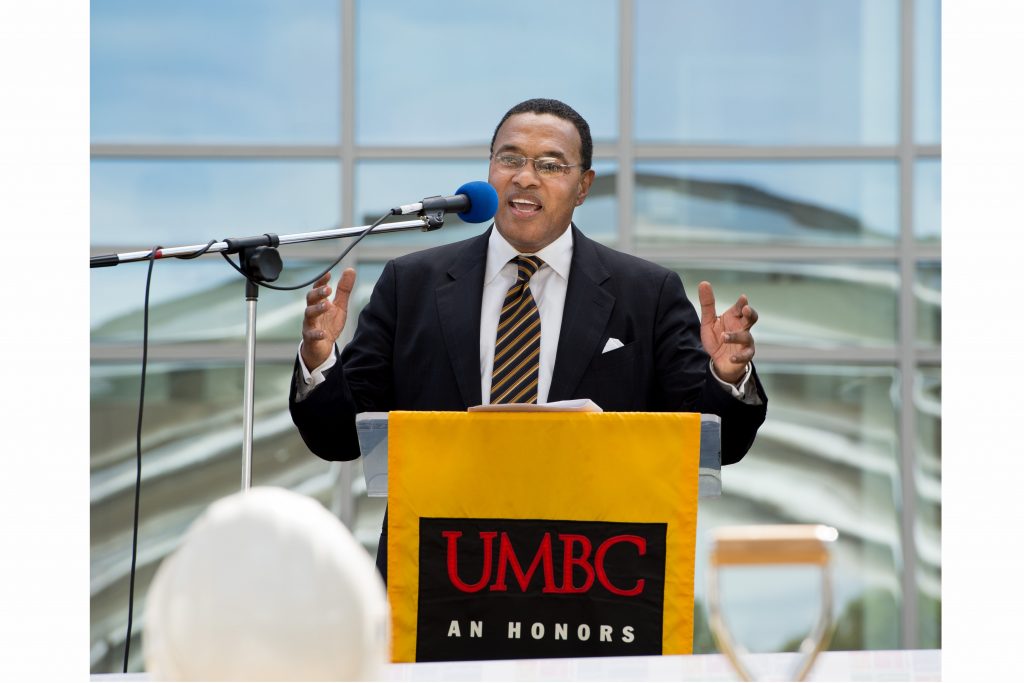
These days, with all the backbiting and name-calling that goes on in what passes for our national discourse, there’s a severe shortage of one extraordinarily valuable commodity — heroes. That might sound hokey, but it’s true.
We need heroes (even flawed ones) in a culture to remind us all to aspire to a greater common good, that such virtues as honor, compassion, commitment and nobility are not just relegated to “the Greatest Generation” or the days of antiquity. We live in an era when mean-spiritedness and one-upmanship is frequently celebrated. No wonder so many of our young people grapple with finding their way in such dark times.
We desperately need heroes in a non-heroic age to shine a light for them and the rest of us. Sure, we have sports heroes, entertainers and others in our popular culture to idolize or emulate. But rarely does someone come along who possesses the personal and professional attributes to truly merit such adulation.
I’d like to suggest that one of the heroes in our midst comes from what many people would consider an unlikely place: academia.
In June, Dr. Freeman A. Hrabowski III will retire as president of the University of Maryland, Baltimore County. During the three decades he has served at the helm, UMBC has evolved from a pleasant, albeit rather sleepy, suburban school into a world-class institution. (I can say that with full confidence as someone who graduated from UMBC before Hrabowski arrived and put the campus on the map.)
Under Hrabowski’s leadership, UMBC has been frequently lauded by U.S. News & World Report and educational journals, particularly in the fields of science, math and technology. Hrabowski himself has been profiled in national media outlets as an exemplary educator, innovator and role model, and a transformational leader.
Arguably, Hrabowski’s greatest legacy in education lies in his commitment to helping minority, low-income and under-represented students succeed in higher education. A perfect example of this is the Meyerhoff Scholars Program, which he founded with one of his mentors, philanthropist Robert Meyerhoff, to increase diversity among leaders in science, technology, engineering, mathematics and related fields.
I personally don’t know Freeman Hrabowski but have been an admirer from afar. Sometimes as a habitual skeptic, I’ve thought he just seems too good to be true.
Born in Birmingham, Ala., Hrabowski, now 71, was a child leader in the civil rights movement and marched with Martin Luther King Jr. He graduated from Hampton Institute at age 19 with a degree in mathematics, and received his master’s in math and a Ph.D. in higher education administration and statistics from the University of Illinois.
At the same time, Hrabowski is a classical pianist, enjoys philosophy and studies several languages. Look up the phrase renaissance man in the dictionary and you’ll likely find his beaming countenance.
Still, the most impressive thing about the man is when you talk to others about him. Countless are the stories from UMBC students about how Hrabowski — despite his hectic schedule — sporadically approaches them on campus, remembering their names (he reportedly has a photographic memory) and inquiring about a recent exam or class. Meanwhile, faculty members tend to smile and wax poetic when asked about Hrabowski.
Of the secret to his success, Hrabowski once said, “I’m always going to be passionate about my work, whatever it is. The combination of being able to be analytical, to think things through, and to bring passion to the work can build excellence. And that’s the approach I use.”
It’s an approach we all can be thankful for, as Freeman Hrabowski’s impact on our region and world has been incalculable. Now that’s a hero.
Sincerely,
Alan Feiler, Editor-in-Chief

As he gets ready to leave for California, Rabbi Daniel Cotzin Burg looks back on his time in Baltimore and his 10 years writing for Jmore.
Michael Olesker pays tribute to WJZ’s retiring Marty Bass, a longtime fixture on local TV screens.
The Orioles' weak defense plays a major role in the nightly carnage, writes Michael Olesker.