

During the 2019 summer season, camp directors like Alicia Berlin at Camp Louise in Western Maryland noticed a marked uptick in the number of campers exhibiting significant mental health challenges.
“It was clear even before COVID hit that mental health needs in the campers were increasing, and camps would have to step up what we were doing to address them,” she says.
In response to the system-wide concerns, the Foundation for Jewish Camp launched an initiative designed to provide Jewish camps with the support and funding necessary to address the mental health needs of their camping communities.
“We know concerns around mental, emotional, spiritual and social health among youth and young adults have only grown during the pandemic,” says Jeremy J. Fingerman, chief executive officer of the New York-based FJC. “Giving camps more resources to help address these challenges keeps the camp experience safe and healthy for all. The entire field benefits from sharing learnings across the diverse range of camps participating in FJC’s Yedid Nefesh initiative.”
Camps Louise and Shoresh — both of which are well attended by youngsters in the Baltimore metropolitan area — are among the 32 Jewish overnight and day camps chosen for the initiative’s first three-year cohort.
Funded by the Atlanta-based Marcus Foundation, Yedid Nefesh, which means beloved soul, funds camps to hire mental health professionals, provide staff training and integrate wellness programming into camp curricula. Funding also includes support for research and program evaluation.
Though Yedid Nefesh was scheduled to begin in the summer of 2020, the initiative was placed on hold until this past summer. By that time, the pandemic had caused an even more dramatic increase in mental health challenges for children and teens, and the initiative seemed more critical than ever.
At Camp Shoresh, a day camp near Frederick that serves campers from Maryland and Virginia, funds from the grant enabled the hiring of professional social worker Tamar Livingstone.
“She was amazing,” says Phran Edelman, Shoresh’s director of operations. “It was a tremendous addition to the staff. The whole reason we applied for the grant in the first place is because [mental health services] were something always lacking. Our camp has grown so large. We really need a full-time dedicated person to deal with the mental health issues these days.”
Edelman points out that post-pandemic, getting back to camp was “a hard transition, so it was very helpful to have [Livingstone] onboard. Not only did she work with some campers who were having challenges, she was there to guide the staff and help them be able to work through issues or concerns within their bunks. She trained counselors to have the skills to deal with situations on their own. That was tremendous.”
Edelman says every bunk at Shoresh was scheduled to meet with Livingstone within the first two weeks of camp, “so everybody would get to know her.”
Funding from the grant also enabled the camp to create a sensory room where campers could meet with Livingstone in a peaceful environment. The room was outfitted with plush carpeting, adjustable lighting, fidget toys and other devices to help relax campers.
“That was her space, and we put [visits to the sensory room] on the schedule,” says Edelman. “We called it ‘Tamar Time.’ She could dim the lights and have music on, just to make it a more comfortable, relaxing space and get away from some of the loud cheering during [activities like] Color War or in the dining hall.”
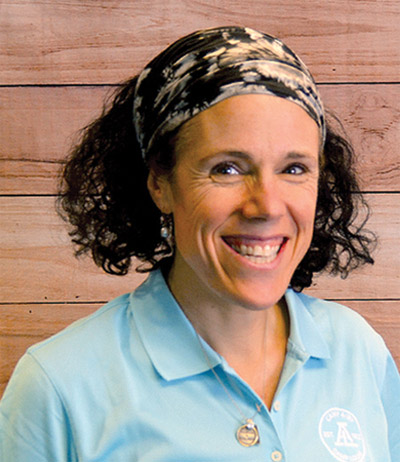
At Louise, the Yedid Nefesh initiative allowed staff to implement a variety of changes to enhance “wellness services,” says Berlin.
“Through the grant, we were able to do so many things,” she says. “One was to hire qualified professionals to help us in the off -season and during the summer around this mental health piece. And so we hired what we call our MESH director, which is [an acronym for] mental, emotional, social health.”
Berlin says the MESH director, a clinical social worker named Reesa Pearlman, is a former Louise camper.
“Now, not only do we have Reesa, but we have an entire team solely there for the campers and the staff to make sure we are doing everything we can for their health and for their safety.”
Berlin stresses the importance of having the chance to interact with other camp professionals through the Yedid Nefesh cohort.
“There are meetings that Reesa has with the other professional mental health providers. And there’s meetings that I have with the other directors, and we do all this collaboration all year. So we’re learning best practices together.”
Berlin says Louise has also increased camper programming around wellness activities such as yoga, journaling and using healthy coping strategies.
“We need to meet the campers and staff where they are, and we need to help them deal with the challenges that they have. And camp is such a great place to do that,” says Berlin. “We want to be able to support them and teach them strategies they can use not only at camp but they can hopefully take home with them as well.”
The BCO, founded in 1984, will perform the works of Frank Zappa, Beethoven, Mason Bates and Karena Ingram.

For more than 130 years, Sol Levinson & Bros. has been woven into the fabric of Baltimore’s Jewish community.

Led by local Israel-American cellist Amit Peled, the Mount Vernon Virtuosi aims to inspire people beyond musical enjoyment.

A former college campus activist, Veksler will speak at Chizuk Amuno on June 8 at the Ruth and Jay Lenrow Visiting Scholar-in-Residence for Combating Antisemitism.