

About a dozen years ago, Rae Rossen called me to let me know she was deceased.
At least that’s what the good folks at the Social Security Administration claimed.
True, Rae was no spring chicken. At that point, she was in her early 80s and residing at Weinberg Village III in Owings Mills. But the vivacious, East Baltimore-born widow, mother and grandmother was far from dead. In fact, she had at least twice the energy and vitality of someone half her age.
“They won’t send me my Social Security checks because they say I’m dead,” Rae said with a cackling laugh. “Really, do I look dead to you?”
I wrote a story about Rae’s ongoing battle with Social Security to prove she had not departed this mortal coil, something she seemed to view with more black humor and a sense of mischief than most seniors on a fixed income would.
But Rae was different than most people.
One day, she gave me a buzz. “Guess what? Turns out I’m alive!” she exclaimed, proceeding to thank me profusely for my alleged role in the matter.
I’m quite confident that Rae was giving me and my article far more credit than was deserved. After all, I doubt I made anyone shake or quiver at Social Security. But the whole matter spoke volumes about Rae and her puckish sense of humor, grateful nature and genuine love of life.
Sadly, I read recently that Rae passed away. (At least I think she did.) She was 92.
As it turns out, I had the opportunity to reconnect with Rae not long ago. I was working on a story recently profiling seniors who are “aging gratefully” and finding ways to make the most of their so-called “golden years.” Naturally, I immediately thought of Rae.
When I called her, we schmoozed for a while and laughed about her morbid bureaucratic tango with the federal government years ago. We also talked about her role as one of the ringleaders of the long-defunct Society to Promote Respect and Recognition for Millard Fillmore, a local group advocating a tongue-in-cheek reexamination of the frequently maligned 13th U.S. president.
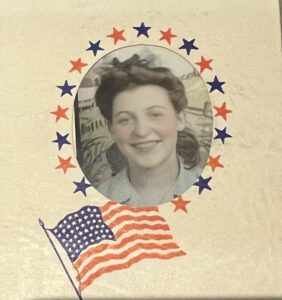
Always a gifted raconteur, she regaled me with wonderful stories of how she and her late husband, Harry, along with local educator Jeff Amdur, held annual charitable fundraisers while extolling the virtues and foibles of the man whom Rae told the Los Angeles Times in 1988 was the “Rodney Dangerfield of U.S. presidents.”
Two years earlier, in another interview with United Press International, Rae justified her admiration of Fillmore by saying, “He was mild-mannered with good handwriting and good to both his wives. … I feel that he is obscure enough to deserve recognition. He’s endearing and he got the short end of the stick.”
That was Rae, in a nutshell. She liked to have fun and a good laugh, and always rooted for the underdog.
But in between amusing stories and recollections, Rae shared with me her views on how to thrive in life and get past some of its trials and tribulations.
“I always advise people it’s good to be a little strange, peculiar, odd. That gives you a little bit of armor when dealing with things in life,” she said. “Being offbeat helps. A sense of humor is so important. That’s how we got through our childhood [during the Depression]. Always look at the funny side of life.”
Not that she didn’t recognize the challenges of getting older. She had her aches and pains. Little things, like simply opening a jar or putting on socks, were formidable obstacles when you reached her age, Rae said.
“You have to be innovative and put less emphasis on time, depending on what you’re trying to accomplish. I cannot do now what I’d like to do. Little things — like breathing,” she said, laughing. “But we have to be grateful for what we can do. Perspective and attitude matter. If I run around all day talking about what I can no longer do, I’d be in real trouble. It all comes down to attitude and gratitude.
“Life is our mortgage, and each stage pays the mortgage,” Rae said. “I call [the later years] the foreclosure of our life. Living is a loan where we try to maintain certain activities taken for granted, whether medical, monetary or ordinary. The foreclosure is inevitable.”
After my article was published and a lovely photo of Rae appeared on the cover of the December/January issue of Jmore, she sent me a characteristically gracious email for what she felt captured her joie de vivre. “Not only have you brought me back to life, but you are also my mind reader!” she wrote. I could almost hear her cackling laugh.
Then, she offered a token of appreciation. Knowing my affinity for unique tchotchkes, she wanted me to have a glass horseradish dispenser jar given to her by her old boss, Sol Tulkoff. Naturally, she had an anecdote about the late co-owner of Tulkoff Food Products.
“He’d pick me up (I never drove a car) and he’d take me to his home where he’d dictate some letters he couldn’t get to during the day, and I’d type them,” she wrote. “He was a real gentleman.”
Rae again thanked me for the article and encouraged me to pick up the dispenser whenever I got a chance. “I enjoy gifting others,” she wrote.
Unfortunately, I never got around to picking up that horseradish jar. I got busy with life and such, and foolishly put it off.
But it doesn’t really matter. Because in the end, it was Rae Rossen who was the gift.
To hear a podcast by Rae Rossen about growing up in Baltimore and her longtime support of The Associated: Jewish Federation of Baltimore, visit associated.org/stories/sharing-nine-decades-of-life-in-jewish-baltimore/.
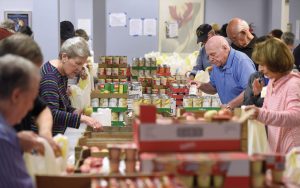
Weekend Backpacks is partnering with Heritage | MileOne Autogroup for the largest corporate volunteer engagement and donation initiative in the organization's history.
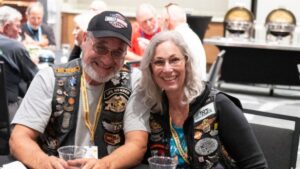
Pikesville residents David and Wendy Hefter recently joined Jewish motorcyclists from around the world to raise money for victims of the Oct. 7th terrorist attacks in Israel.
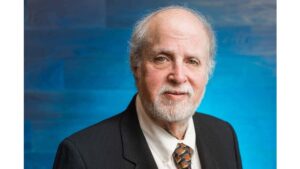
Attorney and Barry Levinson confidante Donald Saiontz left his mark on the world, writes Michael Olesker.

When we create a world with a warm and loving connection, even when someone beloved is gone, that relationship is carried on, writes Pamela R. Weissman.