
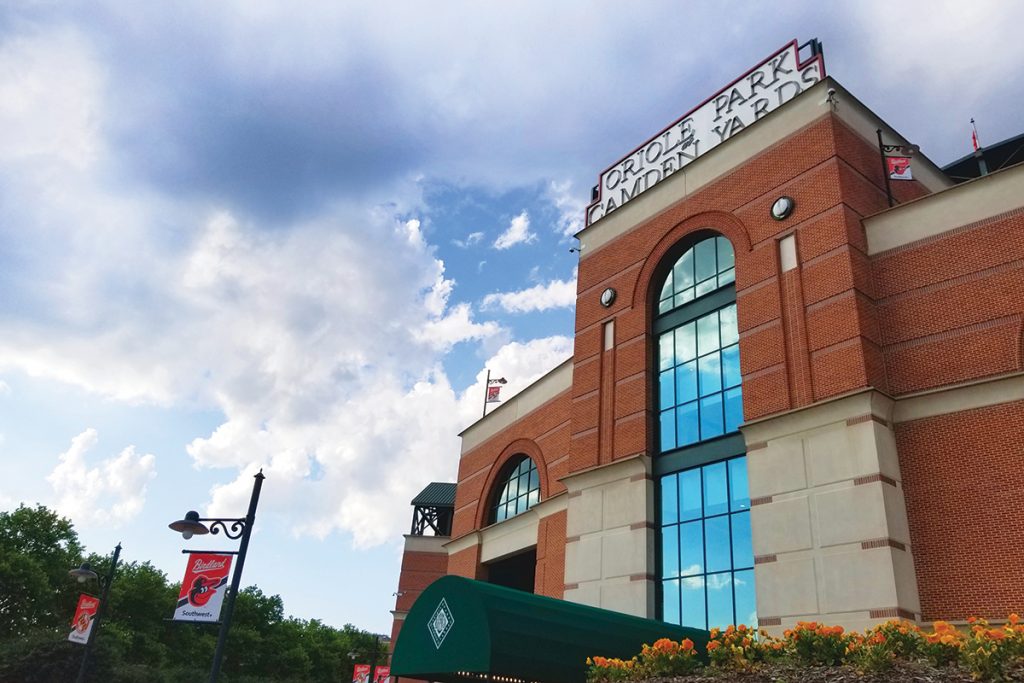
One spring afternoon near the end of his career as a Baltimore Oriole, Brooks Robinson sat in a scruffy little room at the old Memorial Stadium and pronounced himself awed.
“You know,” he said, pointing in the direction of the playing field, “sometimes when I’m out there, I’ll look up and there are 40,000 and 50,000 people in the stands, and I’ll think, ‘Isn’t this screwy? All these people out here to watch a bunch of us toss a ball around.’”
Of course, that was just the irrepressibly upbeat Brooks editing out the rough spots. In many of his 22 seasons over on 33rd Street, the O’s were more likely to draw 5,000 spectators a night and not 50,000. Every summer, they were life-and-death to draw one million fans, which averaged out to about 8,000 fans a game.
Whoever thought we’d be back to those days again?
But we are.
The Orioles opened the season this past weekend by dropping a series to the Tampa Bay Rays, who won the American League East last year but play in front of vast numbers of empty seats every year. The defending champs couldn’t even pack the ballpark for Opening Day.
The Orioles will have the same problem this year, not only last Monday on Opening Day but all the days and nights to come.
They were a hot ticket for a time, but not lately. When that cab driver out of Dundalk named Wild Bill Hagy arrived in the mid-‘70s and led the chorus up in Section 34, he gave birth to a generation’s worth of young fans cheering the Orioles.
They were drawing two million people every year, even when they stopped winning. When they opened the new place at Camden Yards, attendance topped 3 million for a bunch of years.
But those days are long gone, too.
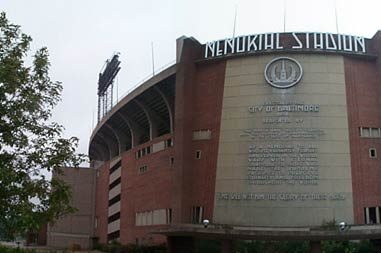
And for the Orioles, and for baseball, the question is whether the old days of consistently packed ballparks are gone forever. COVID hasn’t helped, nor did the latest labor dispute over the past six months.
But it’s more than that.
America’s gone through cultural sea changes, and the modern distractions have stolen away the game’s emotional hold. Last week, a lengthy analysis in the New York Times pointed out that baseball attendance has “declined steadily since 2008, and viewership for games is almost hilariously bleak.”
An ordinary ESPN prime-time Major League Baseball Sunday night broadcast, the Times reported, gets 1.5 million viewers, “about what a heavily censored version of ‘Goodfellas’ on a basic cable movie channel gets in the same time slot. Even the World Series attracts smaller audiences than the average Thursday night pro football broadcast.”
In 1975, the World Series averaged 36 million viewers per game. Last year, only 12 million per game. The average baseball TV viewer is 57 years old. Ask a 10-year old kid who his favorite baseball player is, you might as well ask who’s his favorite county councilman. They have other interests now.
In Baltimore, we have our specific problems. Downtown’s still suffering post-Freddie Gray jitters. When Washington got its own baseball team, they took a big percentage of the old Orioles fan base. And all this losing, year after year, has really tested the patience of even the most loyal fans.
Here’s one solution: Get those hot-shot minor league prospects up here as fast as possible. Yes, we’ve heard all about the intricacies of free agency and the need to hold onto players in their most productive years, and we’ve heard some of these kids just need a tiny bit more minor league seasoning before they’re ready.
But Orioles’ fans are more than ready. They need to watch tomorrow’s Orioles today, even if they’re not quite ready for prime time. We’ll have a chance to watch them grow.
It’ll be like watching the old Orioles of Paul Richards, who first established the championship “Oriole Way.” The kids grew up together, and fans grew up identifying with them. In time, they became the best team in baseball over two full decades.
Back then, one of those youngsters was a fellow named Brooks Robinson. It took him a couple of seasons to get going. But once he did, he personified a whole team, and an era, and a remarkable record of winning baseball.

Michael Olesker’s newest book, “Boogie: Life on A Merry-Go-Round,” will be published this spring. It’s the life story of Baltimore legend Leonard “Boogie” Weinglass, an original “Diner” guy who grew up to create the Merry-Go-Round clothing chain and donate millions to charity.
Allow me a few paragraphs of time travel, and let’s go back to Johnny Carson’s monologue the night after Neil Armstrong became the first man to set foot on the moon. I’m paraphrasing here, but I think the joke still works 57 years after Carson first delivered it. “The good Read more

As he gets ready to leave for California, Rabbi Daniel Cotzin Burg looks back on his time in Baltimore and his 10 years writing for Jmore.
Michael Olesker pays tribute to WJZ’s retiring Marty Bass, a longtime fixture on local TV screens.