
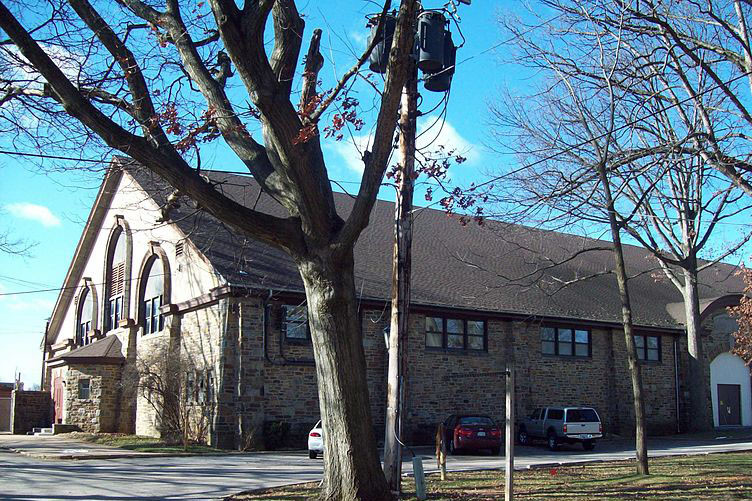
Who can count the years since the Pikesville Armory seemed like anything more than a leftover from some forgotten era, 60,000 square feet of a onetime military storage facility taking up 14 acres of land languishing lifelessly on Reisterstown Road?
But now it’s back in the news, full of new hope and new money.
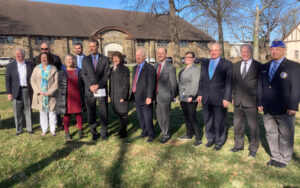
The other day, the Pikesville Armory Foundation announced it’s received a $2.4 million grant from the federal government. This will be combined with grants from the state, Baltimore County and local groups totaling more than $7 million.
As Jmore reported last week, the new money “could serve as an economic and cultural engine for the Pikesville/Reisterstown Road corridor.”
Or as Baltimore County Councilman Israel “Izzy” Patoka (D-2nd) posted on social media, “In the years to come, the armory has great potential as a regional gathering hub, bringing together a center for community development, cultural arts, recreation, open space, historic preservation and so much more. The possibilities are endless.”
Those words are nice. I also liked the words that went unsaid, the words that have been whispered for years about Pikesville itself, often spoken in ethnic code, putting Pikesville down one way or another.
For years, the whispers were about “rich people,” about “spoiled” kids. It was code for the middle-class Jews who moved to Pikesville in the suburban exodus from the city in the early ‘60s.
Then, the whispers were all about the new émigrés arriving from the former Soviet Union. Tough Russians who were probably mob-connected, the slander went.
In recent years, the whispers involve race. Pikesville has become more integrated. To some people, this instinctively connotes trouble.
And yet, there’s this: when I look at Pikesville High School, with all its modernizing and new technology, I see that the school’s listed as one of the best in Maryland. And it’s a mix of kids, the way America’s supposed to look.
When I move around the Pikesville neighborhoods, I see kids playing safely in yards and playgrounds. When I go to the big “Gucci Giant,” the staff is uniformly friendly. When I got to the Staples on Reisterstown Road, I see young people fresh out of school handling technological stuff with supreme confidence.
On summer evenings, when I’ve wandered around Pikesville’s middle and senior high schools, and the Wellwood International elementary school, I see playing fields full of kids romping about, and entire families gathered to watch and enjoy each other’s company.
I’m a regular at the Pikesville Library, which I consider the heart of the community. And there, whenever we’re not held back by COVID, I see crowds of people reading books, scanning computers, working on term papers. Try finding an available parking spot there in healthier times.
Pikesville is a community of strivers. It always has been.
So it was lovely to hear about plans for the old Pikesville Armory, and lovely for a change that I didn’t hear any familiar talk about Pikesville’s troubles.
The plans for the armory property sound really nice. But it’s great that they’re being hatched in a community with so much other good stuff to build upon.
Michael Olesker’s newest book, “Boogie: Life on A Merry-Go-Round,” will be published this spring. It’s the life story of Baltimore legend Leonard “Boogie” Weinglass, an original “Diner” guy who grew up to create the Merry-Go-Round clothing chain and donate millions to charity.
A lifelong Orioles fan, Jmore Publisher Scott Rifkin, M.D., shares a message to Orioles owner David Rubenstein.
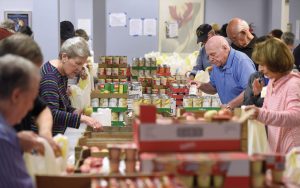
Weekend Backpacks is partnering with Heritage | MileOne Autogroup for the largest corporate volunteer engagement and donation initiative in the organization's history.
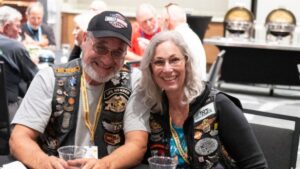
Pikesville residents David and Wendy Hefter recently joined Jewish motorcyclists from around the world to raise money for victims of the Oct. 7th terrorist attacks in Israel.
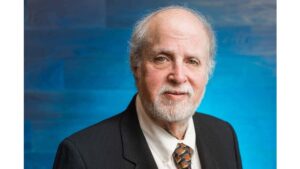
Attorney and Barry Levinson confidante Donald Saiontz left his mark on the world, writes Michael Olesker.