
By Julia Gergely
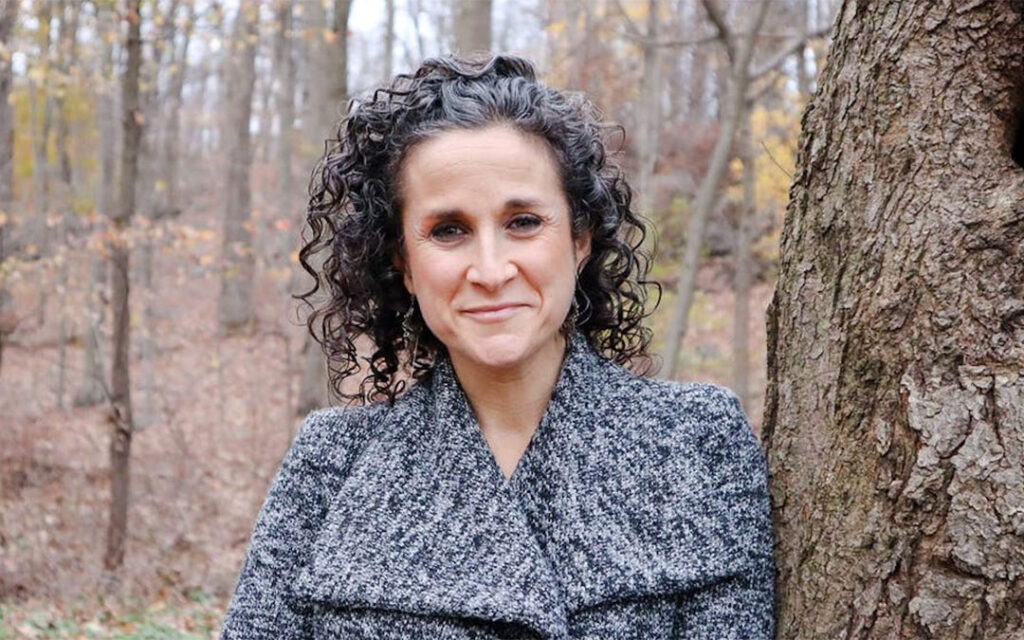
Rabbi Michelle Dardashti never planned on moving to Brooklyn.
The daughter of Chizuk Amuno Congregation’s former cantor, Hazzan Farid Dardashti, Rabbi Dardashti has been working since 2013 as the associate chaplain at Brown University and rabbi at the Brown Rhode Island School of Design Hillel. Feeling at home in Providence, Rhode Island, she’d found her dream job working with a diverse, challenging and pluralistic group of energetic young people.
But four days a week, her husband, Nathan Sher, was commuting back and forth to New York City, a three-and-a-half-hour drive from Providence. What’s more, the local Jewish day school ended after fifth grade, and the couple wanted a Jewish education for their three children, ages 12, 10 and 6.
Meanwhile, in the Cobble Hill neighborhood of Brooklyn, the rabbinic search committee at the historic Kane Street Synagogue was preparing to enter its second year of searching for a rabbi. Last year, Rabbi Samuel H. Weintraub retired after a quarter-century at the 166-year-old congregation. The committee already had other finalists fall through and was getting desperate to find someone who would breathe life back into the 166-year-old Conservative shul and revitalize the community after slogging through the slow pandemic years.
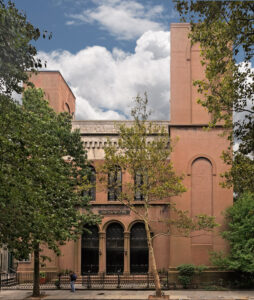
“Like many organizations, we have silos of different groups and we wanted someone who could bring those together and make everyone feel like they’re part of one community,” said Andrea Glick, co-chair of the rabbinic search committee.
By this time, the 41-year-old Rabbi Dardashti — who grew up in Baltimore and Los Angeles, and graduated from Pikesville High School — and her husband had decided to spend a year in Jerusalem. But a friend reached out, asking if the rabbi would consider looking at the questionnaire the Kane Street search committee had prepared.
“We were pretty sure we were going to Jerusalem. But I said, ‘Sure, I’ll explore it,’” Rabbi Dardashti recalled. “It was shocking. I checked out their questionnaire and I spoke to their search committee chairs and I was like, ‘This feels amazing.’”
Rabbi Dardashti met with the search committee in late January, and an announcement went out to the community by early March announcing her appointment as senior rabbi. Her tenure begins on Aug. 1.
“It was quite a feeling of beshert-ness,” she said, referencing the Yiddish phrase for destiny. “As much as we were excited to go to Jerusalem, my husband and I felt like this was an opportunity that felt so right — to us and to them — that we couldn’t let it pass us by.”
Rabbi Dardashti will rely on her experience at Brown RISD Hillel — where she started the Narrow Bridge Project, which allows Jewish students from all political leanings to discuss the past, present and future of Judaism and Zionism — to build a strong community base at Kane Street.
Calling herself a “radical pluralist,” she stressed the importance of living and working in a place that embraces more than one kind of Judaism. Rabbi Dardashti walks the walk when it comes to pluralism: ordained at the Conservative movement’s Jewish Theological Seminary, she belonged to both a modern Orthodox synagogue and a Conservative one in Providence, and often attended a Renewal minyan as well.
A number of factors at Kane Street attracted Rabbi Dardashti, including the potential of current staff — a executive director and liturgical director both started in 2019, joining Rabbi Valerie Lieber, director of Kane Street’s Hebrew school for more than a decade.
“I’m thrilled to be joining such a talented cadre of Brooklyn rabbinical and cantorial colleagues,” Rabbi Dardashti said. “They really seemed to have been through an introspective process, where they understood that they need to hold on to a lot of what has made Kane Street Kane Street forever and continue to hold tight to certain traditions and to the strong spirit of lay leadership that they’ve had, but also figure out how to leverage all of that to move forward.
This article was provided by the JTA global Jewish news source. It originally appeared in the New York Jewish Week. Jmore staff contributed to this report.

"A Beautiful Noise" chronicles the singer-songwriter's rise to musical icon.
Duke Zimmerman and Lori Gale will talk at Towson University about their new book "People Get Ready" and the role played by Globe Posters in the civil rights movement.
The new exhibition revisits and updates a previous show about ritual hair covering in the observant community.
One of the most competitive local races for public office this political season is for Baltimore County Executive. Jmore recently spoke with four of the candidates about their views on how they hope to enhance life in the county.