

“You don’t speak at Dachau. You whisper at Dachau.”
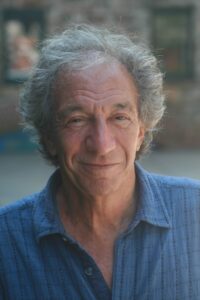
That’s what Baltimore-based author and journalist Arthur J. Magida told an audience of approximately 45 people recently at the Protestant Church of the Reconciliation on the grounds of the former Nazi concentration camp in southern Germany.
Magida was at Dachau to speak about Noor Inayat Khan, the subject of his 2020 book “Code Name Madeleine: A Sufi Spy in Nazi-Occupied Paris” (W.W. Norton & Co.).
The gathering — organized by the Inayatiya Order, an international organization committed to spreading the teachings of Sufisim — honored Khan and her memory.
Khan was the first woman wire operator to be sent to Nazi-occupied France and a spy for the Special Operations Executive, a British espionage, reconnaissance and aid organization. After months of heroic service, Khan’s identity was revealed and she was taken to Dachau, where she was imprisoned, tortured and executed.
Born in Moscow, she was the daughter of American poet Pirani Ameena Begum and Hazrat Inayat Khan, an Indian mystic who brought Sufism to the West. She was murdered at the age of 30 on Sept. 13, 1944, 78 years to the day of Magida’s talk.
“You whisper [at Dachau] because it’s such a reverential and sacred place, because your breath is taken away from you at what occurred there and what you witness there to this day,” says Magida, 77, a Mount Washington resident. “I knew I would be speaking maybe 100 or 200 feet away from where Noor was shot, and subsequently her body was burned in a crematorium. Being so close to those sites of crime was shattering. Even if you don’t know anybody who was killed there, knowing that the crimes and the atrocities and the genocide occurred there, you lose your voice and stamina and, to some degree, your sense of self and sense of how the world is.”
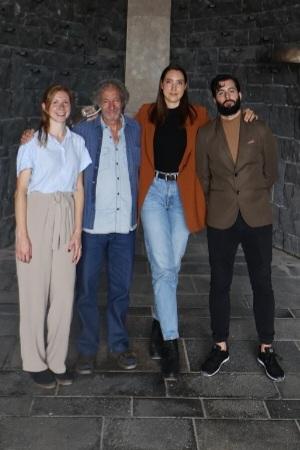
Among those in attendance were members of Khan’s family, the reverend of the Protestant Church at Dachau, the vice chancellor of the local district council and representatives of the archives at Dachau. In addition to Magida’s 90-minute keynote address, there was a luncheon and book-signing, as well as a tour of the memorial site.
The gathering culminated in the chanting of the Unetanah Tokef and kaddish prayers at Dachau’s Jewish Memorial, and the laying of flowers at the crematorium. Magida recited the prayers in Hebrew, while several of Khan’s relatives read English translations.
Despite his long career as a Jewish journalist and religion writer, Magida says he spent years having “very little to do with the Holocaust. I don’t believe I was ready to confront the Holocaust.”
But while on his first trip to Germany to research his 2011 book “The Nazi Séance: The Strange Story of the Jewish Psychic in Hitler’s Circle” (St. Martin’s Press), he became immersed in the Shoah after meeting a doctoral student named Matthias outside of a building.
“[Matthias] told me he and his friends had just discovered that this was one of the prisons of the SS,” says Magida. “This was important to me because this was where the guy I was writing about, Erik Jan Hanussen, had been taken shortly after he was arrested the very last day of his life.
“But Matthias began to tell me the names of some of the other prisoners. We finally got to ‘Prisoner 54’ and he said, ‘Leo Krell, a left-wing socialist journalist, was taken to that building and tortured and killed there.’ Krell was my mother’s maiden name. … I never heard of Leo before. I don’t engage in genealogy, but as far as I’m concerned I’m related to Leo Krell.”
During the writing of “Code Name Madeleine,” Magida says he was deeply affected by Khan’s character, faith and willingness to sacrifice herself on behalf of others.
Khan, he told his Dachau audience, was “an example of spirituality in action. Everything was holy and spiritual to Noor, even the jostle and the annoyances and the disappointments.”
Researching her life, Magida says, “has made me more reflective about myself and about the world, more empathetic and tolerant toward other people, less judgmental of other people. I will proudly say she has made me humbler.”
Magida says his talk at Dachau — which took place six years after his first trip to the site – was “one of the great honors and great privileges” of his life.
“Physically, I went back to talk,” he says. “But spiritually, emotionally, psychologically, it was a completely different visit than before. The first visit, I was just in the first few months of researching the book. Noor was relatively new to me. I spent the next two years or so after that visit writing the book, immersing myself even deeper into Noor’s life, learning a lot more about Sufism, learning a lot more about what are called the joys of sacrifice, meeting members of her family. … Going to Dachau September 13th was reimmersing myself into Noor, and she and I had become, or at least I think we had become, inordinately close and inseparable.”
Magida says he views Noor as “a stellar model for how all of us can be and can behave and can and should never lose our sense of integrity and ethics and morality and selflessness. And certainly, as we’ve witnessed the changes in our world over the last few years, Noor is even more important than ever, and Noor is even more of an indelible lesson for every single one of us.”
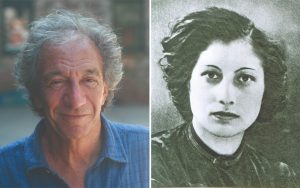
Arthur J. Magida's "Code Name Madeleine: A Sufi Spy in Nazi-Occupied Paris" is the true story of an unlikely heroine.