

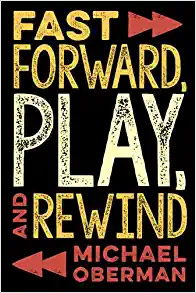
Let’s face it, the pandemic was a crummy time to come out with a book, even one as fascinating as a collection of profiles of the biggest names in the music industry at the height of the rock era.
But Columbia resident Michael Oberman has pressed on and is promoting “Fast Forward, Play and Rewind” (Backbeat Books) as an ideal gift for the holiday season.
From 1967 to 1973, Oberman, a Baltimore native who grew up at Chizuk Amuno Congregation, wrote a weekly music column for the now-defunct Washington Evening Star. He interviewed more than 300 leading musical artists of the day, from the Grateful Dead, Led Zeppelin and David Bowie to The Doors, the Rolling Stones and Joni Michell.
“Fast Forward, Play and Rewind” is a collection of more than 100 of those interviews.
After leaving the writing field, Oberman worked for the Warner Bros./Elektra/Atlantic recording company and produced concerts and managed recording artists. Today, he is an acclaimed nature photographer.
Jmore: From 1967 to 1973, you interviewed virtually all the major figures of the rock music scene. Was there one artist who left you tongue-tied or weak-kneed?
Oberman: Simple answer that is no. I considered most of the artists I interviewed to be contemporaries. Certainly, there was a slight feeling of ‘otherworldliness’ when I was in the dressing room with artists like The Doors or the Grateful Dead and there were throngs of screaming fans that could be heard in the nearby arena.
Who impressed you the most? The least?
I get this question quite often. I don’t think that ‘impressed’ quite fits how I would answer this. Joni Mitchell might have been the biggest surprise for me. She usually did not grant interviews, but she did for me.
In terms of the least, I’ll plead the Fifth Amendment on that.
What was it like to have a pre-Ziggy Stardust David Bowie as a guest in your parents’ home?
My parents were quite used to famous artists either being interviewed over the phone or occasionally at their house. David Bowie was an exceptionally unusual departure from the norm. He requested that he wanted to spend his first day in the United States with a typical American family. Conveniently, that was made easy as my brother [Ron Oberman] was director of publicity for Mercury Records, David’s American record company at the time.
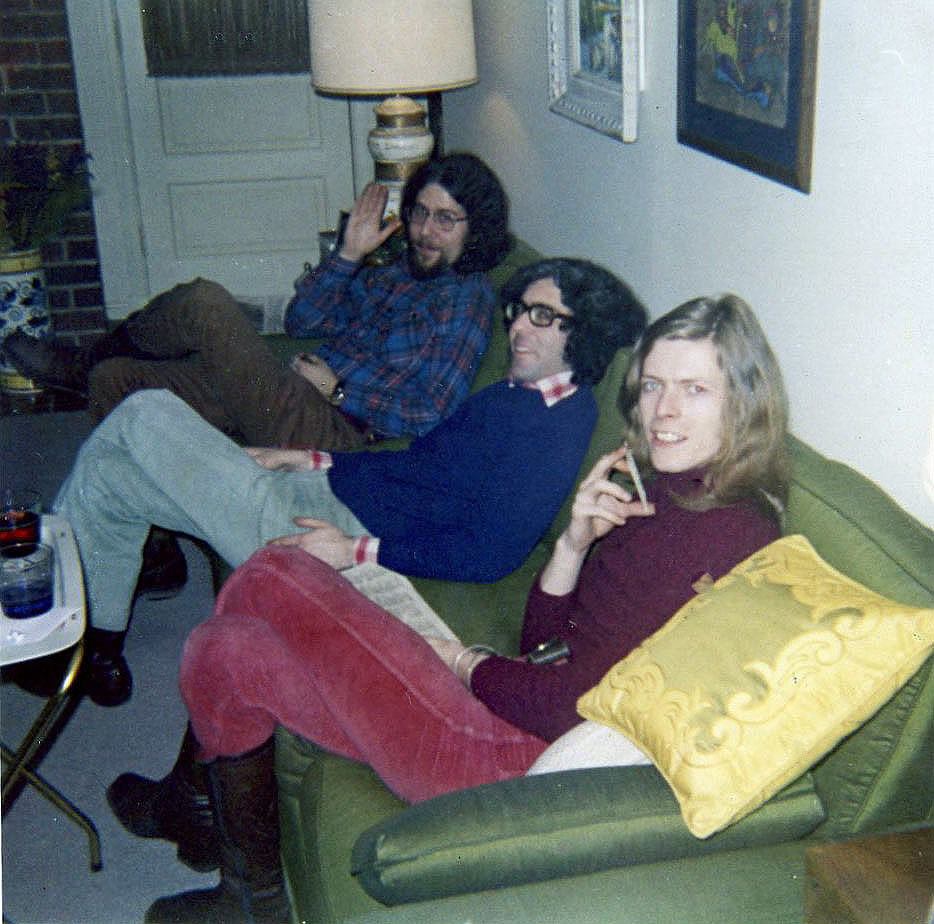
David was flying from London to Dulles Airport. My brother thought he would take advantage of the opportunity to spend time with me and our parents and grant David his wish to spend time with an American family. My parents welcomed David as if he was one of their sons’ college friends.
One must remember that in 1971, David was not a huge star in the U.S. like he was in Great Britain.
Did James Brown really wear a mezuzah when you interviewed him?
I first met James when I was 15 or 16 and went with my brother to see James at the Howard Theater in D.C. We went backstage to James’ dressing room after the show. James had his shirt off and was wearing a mezuzah.
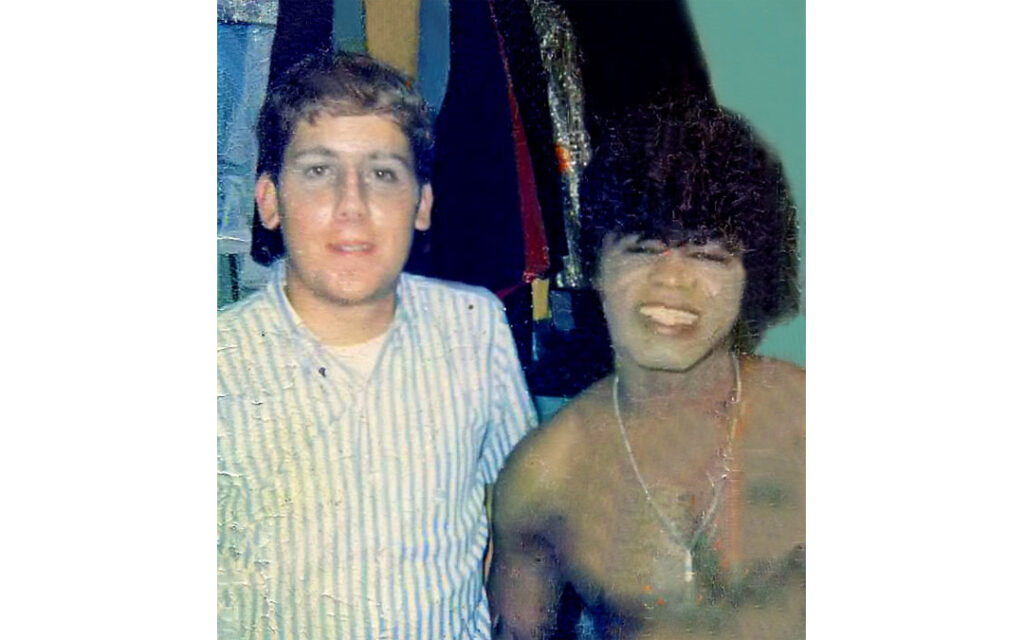
A few years later when I was interviewing James, I mentioned the mezuzah. James explained that his manager, Ben Bart, was Jewish. Ben had given James the mezuzah, and James considered it good luck and usually wore it.
Who do you still wish you had gotten a chance to interview?
Bob Dylan.
Could you identify with William Miller, the young rock writer protagonist in the film “Almost Famous”?
I really enjoyed “Almost Famous.” The character of William Miller was based on the film’s director/writer Cameron Crowe and his experiences when he was a young journalist writing for Rolling Stone. I certainly can identify with any journalist whose job is/was to interview famous or ‘almost famous’ musicians.
What was the wildest thing you witnessed while covering the music scene?
An orgy … enough said.
How is this period in music history misunderstood by the public?
I do not think it is misunderstood. In fact, there have been books and documentaries opining that 1971 might have been the most important year in rock ‘n’ roll history.
How did your late brother Ron influence your work and life during that period and afterward?
I was 16 when my brother interviewed the Beatles in February 1964. I thought, ‘How lucky! My brother has a great job and one of the perks is that he is meeting the cutest girls/women.’ Since Ron and I lived in our parents’ home, I had many opportunities to listen in on phone interviews between my brother and acts like the Dave Clark Five, the Temptations, etc. That led me to decide that I wanted to become a journalist.
Out of so many interviews, how did you pick the profiles for this book?
That was not easy. With over 300 interviews to choose from, I decided to pick artists that everyone knows and mix in some artists who might have been one-hit wonders.
Why did you leave the music writing field?
I was offered a job with Warner/Elektra/Atlantic Records. My newspaper asked if I would consider continuing to write my weekly column. It would have become a conflict of interest had I written about artists on Warner Brothers, Elektra or Atlantic Records. It would not have been fair to those labels if I didn’t write about their artists, so I moved on.
What has reaction to the book been like so far?
My book was published in October 2020. That was a terrible time to have a book released. It was the height of the COVID pandemic and almost all bookstores were closed.
That said, the reviews were very positive [in the] New York Journal of Books, Library Journal, etc. Most of my sales have been on Amazon and other online book sellers. Libraries around the world have my book on their shelves. I have been interviewed dozens of times on radio (Sirius/XM, Talk Radio Europe and numerous FM stations). I have done many podcasts here and in Europe.
I never expected to make a lot of money from my book (royalty percentages are laughably small), and I haven’t.
How did you get into nature photography?
I have been interested in photography since I was a teenager. When I moved from D.C. to Columbia, I found that nature beckoned. Columbia has almost 100 miles of paths/trails and several lakes, drawing both winged and four-legged critters. I fell in love with this area and have been fortunate enough to become successful as a nature photographer.
How has the music industry changed since you covered it?
From vinyl to cassette tapes to CDs to streaming and now back to vinyl. When I was writing and later managing acts, the mantra was, “We need a major label deal.” Record companies tended to live either in the past or in the present and didn’t think ahead. Now, it’s more of a DIY world for musicians. You can now record an album in your basement rather than having a six-figure budget from a major label.
Do you plan to write any more books?
I spent 10 months writing ‘Fast Forward, Play, and Rewind.’ It was a solitary and lonely task. Then came the pandemic. More isolation. I have been offered another book deal. I doubt I will take it.
What do you hope readers get out of your book?
If readers are old enough to have lived in the 1960s and 1970s, it will be a nice journey back to those days. If they are too young, it will be a musical history lesson.
If you could travel back in time, what would advise your younger self to do?
Learn to cook and bake.
Presented by Jews United for Justice and a consortium of local synagogues, "Beyond Welcoming the Stranger" offered a Jewish approach to helping immigrants.
John Singer wants to help Marylanders of all economic backgrounds to afford ankle foot orthoses.

At Krieger Schechter Day School, joining in the later elementary or middle school isn’t a setback -- it’s a launch pad.

Steve Hofstetter, who will perform at Soundstage next week, recently made headlines for his social media post ridiculing some fans' warnings about Charm City's safety.