

Rabbi Joshua ben Perachiah (Pirkei Avot 1:6) taught that we should “judge all people favorably.” Most of us know intuitively this is a virtuous approach to life, but still, it’s incredibly hard to do. More often, we bring bounteous assumptions to our human encounters. We may think people are simply not to be trusted or we allow our implicit biases, formed within our psyche over decades, to exert disproportionate influence over our relationships.
We leap to conclusions based on race, zip code, age or gender. We judge unfavorably, ignoring Rabbi Joshua’s advice, even those from our own people, who may practice their Judaism differently from us.
Back in November, I had two encounters on the same day that spoke to the assumptions we make. The first was a false assumption made about my neighborhood. The second was my own false assumption about someone else.
I was in Baltimore County for my father’s yahrzeit. Beth Am doesn’t have a daily minyan, so when I need to say kaddish on a weekday morning, I’ll often head to one of several Park Heights or Pikesville congregations.
When the service concluded, I fell into a conversation with a regular minyan attendee who noticed my car as the only one she didn’t recognize in the parking lot and (rightly) assumed it was mine. Both of us drive Tesla Model 3’s (a fact about which I’ve become increasingly embarrassed witnessing Elon Musk’s recent behavior). The woman told me I should consider keeping a thumb drive plugged into my USB port so the vehicle’s cameras will record any attempt to break in or do damage to the car. She explained she recently had her car keyed outside her home (she lived near her synagogue) and hoped to catch the perpetrator.
I thanked her for the advice and introduced myself. She asked where I live, and when I told her I live across the street from Beth Am in Reservoir Hill, her reply caught me off-guard. “You should get a taser!” she said. My draw dropped. “A what?” “You know, a taser. That’s a dangerous neighborhood.” I swallowed hard. “When is the last time you were in my area of the city?” I asked. “Well, it’s been a long time. I don’t really go to the city.” “Maybe you should spend some time there before leaping to conclusions about my neighbors,” I said, with all the kindness I could summon. Then, I joked, “After all, it was your car that got keyed recently, not mine. Perhaps I should be worried about coming to your neighborhood!” She didn’t get the joke.
I was thinking about that encounter as I tossed my tallis and tefillin into my car, glancing at the magnet on my trunk as I closed it. It reads, “Abortion Bans are Against My Religion.” I climbed into the driver’s seat and headed southeast toward the Jones Falls Expressway, and home. My route took me through residential neighborhoods above Northern Parkway, many in the area traditionally observant Jews.
At a stop sign, a woman pulled alongside me in her minivan. She signaled for me to roll down my window. I didn’t recognize her. Did she recognize me? I glanced at her tichel (Orthodox head covering) and thought, “This can’t be good.” I rolled down the window. “I like your bumper sticker,” she said. Then a pause. “Kiddush Hashem!” I smiled. She rolled up her window and drove off.
While feeling (appropriately) chastened, that second encounter buoyed me for the rest of the day, the 18th anniversary of my dad’s death. My father was someone who resisted making assumptions about others, who strove to judge people fairly and on their merits. I thought about the woman’s use of the phrase kiddush Hashem. The term means “the holiness of God’s name,” but it’s more charged than that. More frequently, the phrase (and it’s opposite hillul Hashem, “a desecration of God’s name!”) are deployed to reinforce assumptions, to cast judgment on those who differ, to draw firm lines between “their way” and “the right way.”
Judging our own family members or friends favorably isn’t always easy. Giving complete strangers the benefit of the doubt? That’s hard, and most of us struggle to do so even if we aspire to take Rabbi Joshua ben Perachiah’s advice. That day in November, I was reminded just how easy it is to fall into the trap of our own expectations. And how difficult it can be to admit when we’re wrong.
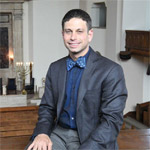
Rabbi Daniel Cotzin Burg is spiritual leader of Beth Am Synagogue in Reservoir Hill, where he lives with his wife, Rabbi Miriam Cotzin Burg, and their children, Eliyah and Shamir. This column and others also can be found on The Urban Rabbi. Each month in Jmore, Rabbi Burg explores a different facet of The New Jewish Neighborhood, a place where Jewish community is reclaimed and Jewish values reimagined in Baltimore.
A new biography captures the intensity and magic of the musical theater giant, writes Michael Olesker.
Melinda Michel pays tribute to the longtime Jewish community leader and volunteer who passed away on June 8 at age 68.

Jmore Editor-in-Chief Alan Feiler remembers Temple Emanuel's longtime spiritual leader, who passed away earlier this week at age 91.

Camp and youth group experiences have the ingredients for true, deep, lifelong transformation, writes Rabbi Jessy Dressin.