
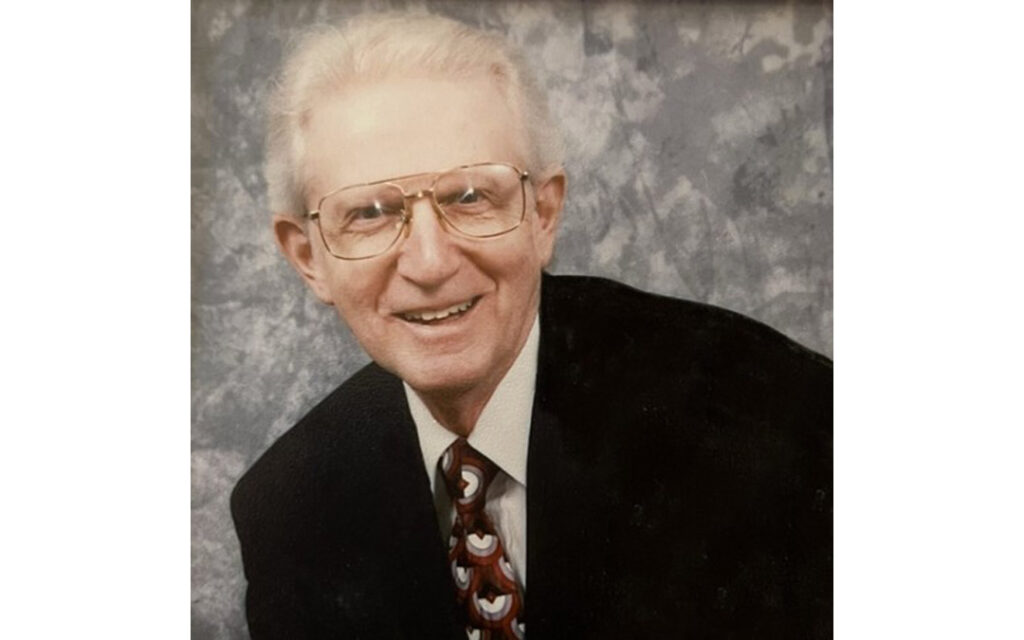
Who’s left around Bawlamer who remembers Alan Field? News of his death, at age 89, arrived the other day. But it was preceded, long ago, by the embattled life and death of his old radio station, WCAO, which once upon a time brought a controversial new musical sound to local airwaves.
It was called rock ‘n’ roll.
Field, born in Brooklyn, New York, as Irwin Fenster, arrived in Baltimore back in the 1950s when most radio stations were still playing Bing Crosby and Rosemary Clooney. But the thinkers at WCAO obstinately embraced Little Richard and Elvis Presley and The Shirelles.
For roughly a decade around here, WCAO cornered the market among young listeners. You could walk down any street in the metro area and hear mothers hollering at their teenage kids, “Turn down that noise!” The mothers wondered why the radio was playing Jerry Lee Lewis instead of Patti Page.
At WCAO, Alan Field was the morning jock in that era. He was the voice on the radio when kids were getting up for school and arguing with their parents for control of the radio, and sponsors were noticing it was the kids who were winning.
The ratings went up, and the money rolled in. And a culture changed in a heartbeat.
The irony was, Field was never a rock ‘n’ roll guy. He liked Broadway scores, he liked Ella Fitzgerald and Frank Sinatra, he liked the “Great American Songbook” that predated rock and roll.
(He could write a little music, too, including a couple of memorable commercial ditties from that era: “Nobody Has What Tate Has” and “Run Right to Read’s.”)
But at a time when his radio station was catching flak from critics of all kinds — parents, clergy, music critics — Field knew how to appeal to a wide audience. He played the kids’ new music, but he spoke to those who were past school-age.
He had a soothing delivery. He developed a “Housewives Hotline” at a time when lots of women stayed home. He had a “Secretary of the Day.” The station sent them flowers.
This was a gentle gesture in a combative time. Rock ‘n’ roll shows were getting banned in Boston and New York in the music’s early days. In Baltimore, The Sun ran a blistering series on the threat rock ‘n’ roll represented to America.
The paper reported that WCAO’s ratings jumped into first place just eight weeks after introducing rock ‘n’ roll. According to the Nielsen ratings service, WCAO had more listeners than any other two Baltimore stations combined, and more teenage listeners than any two other stations.
So the other stations jumped in. Each brought their own strengths, which included a bunch of disc jockeys whose names echo among an aging generation: Paul “Fat Daddy” Johnson and Hot Rod Hulbert, Johnny Dark and long, lean Larry Dean, Alan Drake and Johnny Contino, Jack Gayle and Jack Edwards, and the fellow who took his microphone over to TV Hill named Buddy Deane.
Alan Field was never the coolest among them, nor the funniest. But he was right there at the heart of WCAO in that long-ago era when the station shook the airwaves all around the Baltimore area.
Michael Olesker’s latest book, “Boogie: Life on A Merry-Go-Round,” was recently published by Apprentice House. It’s the life story of Baltimore legend Leonard “Boogie” Weinglass, an original “Diner” guy who grew up to create the Merry-Go-Round clothing chain and contribute millions to charity.
What does it mean to be fully present with each other and the sacred, asks Maryland-born cultural anthropologist Alanna E. Cooper.
A Baltimore native, Sweren was a collector of artists' books whose own works were displayed in national galleries.
As millions mourn the passing of Stephen Colbert from the airwaves, Michael Olesker looks back on the "institution" of late-night TV.
The BCO, founded in 1984, will perform the works of Frank Zappa, Beethoven, Mason Bates and Karena Ingram.