
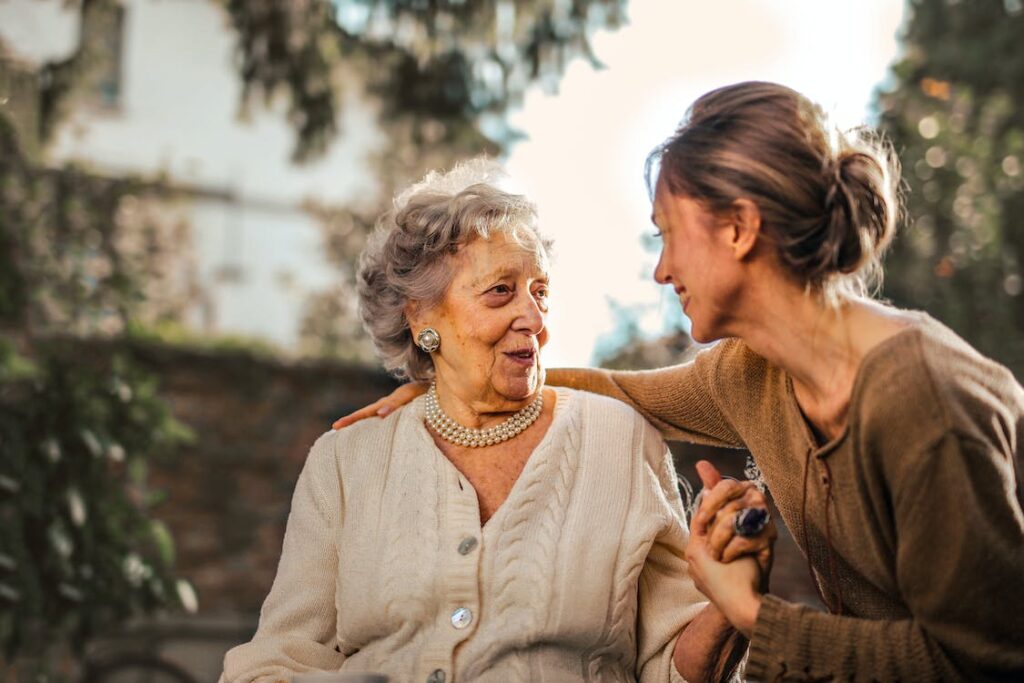
“You shall rise before the aged and show deference to the old.” (Leviticus 19:32)
Figuring out the best way to rise to the occasion of helping an elderly loved one who is ailing or slowing down can be one of the most stressful, perplexing times in an adult child’s life.
On Tuesday, May 9, AgeWell Baltimore will present its inaugural event, “Generations, Conversations and Community,” at 7 p.m. at the Gordon Center for Performing Arts, 3506 Gwynnbrook Ave. in Owings Mills.
Launched in 2021, AgeWell is a network of services for older adults, loved ones and caregivers initiated by The Associated: Jewish Federation of Baltimore, Comprehensive housing Assistance Inc., CHANA and Jewish Community Services. The inaugural event will be held in conjunction with local synagogues.
The ongoing forum will feature a series of speakers, panelists and experts to provide guidance and support for adult children and caregivers in helping parents and aging loved ones.
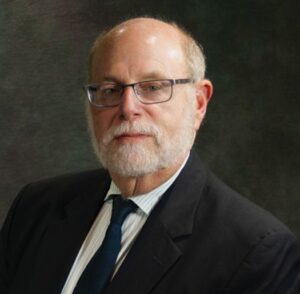
The keynote speaker at the May 9 event will be Rabbi Richard F. Address, founder and director of Jewish Sacred Aging. Founded in 1997, Jewish Sacred Aging describes itself as a “forum for the Jewish community with resources and texts that feature discussions on the implications of the revolution in longevity for Baby Boomers and their families.”
A panel of experts from CHAI, CHANA and JCS will join Rabbi Address after his talk to answer questions from audience members and provide resources.
For more than three decades, Rabbi Address served on the staff of the Union for Reform Judaism, first as regional director and then as founder and director of the URJ’s Department of Jewish Family Concerns. He served as a specialist and consultant for the North American Reform Movement in the areas of family-related programming.
Ordained by the Hebrew Union College-Jewish Institute of Religion in 1972, Rabbi Address began his pastoral career in Los Angeles. He also served as a part-time rabbi for Temple Beth Hillel in Carmel, New Jersey, and as senior rabbi of Congregation M’kor Shalom in Cherry Hill, New Jersey, from 2011-2014.
Jmore recently spoke with Rabbi Address, 78, a Philadelphia native who lives in Mantua Township, New Jersey, and is the author of “Seekers of Meaning: Baby Boomers, Judaism and the Pursuit of Health Aging” (Behrman House).
Jmore: How did you get involved in the field of Jewish aging and elder care?
Rabbi Address: When I worked for the URJ years ago, my department noticed trends toward the older population, and now it’s all being validated. According to the Pew Research Center’s [2021] study of the Jewish community, close to 50% of our community is over the age of 50. Most synagogues and community organizations still haven’t grasped that.
As the Baby Boomers age out, the people in my kids’ generation in their 40s still need to grasp how to care for [their parents] if given that opportunity. The costs can be staggering, and people are not prepared for it and don’t even have a care plan. … Most of the time, it’s the kids who don’t want to deal with it. People feel, ‘If I have to deal with this for my parents, does that mean I’m next?’
Have you noticed any changes in the community over the years regarding perspectives on the aging process?
There’s a whole explosion of creative, positive things happening in the aging community. We give a workshop on new rituals, such as saying a blessing after you’ve signed an advance directive. That’s a very spiritual, powerful moment. Removing a wedding ring after the loss of a spouse. Another big discussion [in Jewish congregational circles] is the redefining of adultery when your spouse has Alzheimer’s or dementia. It’s very emotional, not necessarily sexual, and extremely personal. Very powerful stuff.
There are also more films and TV shows now looking at older people and presenting positive images of older people. People are talking about this stuff.
Where does the denial about aging, dying and death come from? Is it an American trait? A Jewish trait?
It’s all of the above. America is a very youth-oriented culture. It’s the ultimate fear of our own deaths, and I believe this is why religion was created. We realize we’re going to die. We’re confronted with this, and we don’t want to deal with it. It’s frightening. What I’ve found is that the older we get, the less afraid people become. There’s a sense of acceptance.
We all struggle with it but have different ways of coping with it. Especially after the age of 50, we deal with a lot of transitions taking place. You notice changes in your body. So one of our challenges is how you deal with natural losses and changes if given the gift of longevity.
How do you counsel people on this complicated topic?
Every family situation is different. There is no cookie-cutter. The media uses the term ‘Sandwich Generation.’ We don’t actually use that term because it’s multi-generational. There are plenty of Millennials out there who are caring for their grandparents while their parents are busy working, and some grandparents who are very involved in the lives of their young grandchildren.
We call it the ‘Club Sandwich Generation.’ It’s basically around your 40s and 50s where this club sandwich stuff comes into play, and it can be very stressful and challenging.
Do you think the organized Jewish community is dropping the ball on aging and end-of-life issues?
It’s starting to change because it’s not so abstract to the leadership of the community anymore [as it ages]. The community is still very focused on youth. Most synagogues put their resources into the next generation because that’s the future. But if you forget that elder population, except as a source of income, then what does that say about your community?
Should the community allocate more funding into elder services?
That’s a very tough question. The resources are dwindling, from what I understand.
A family of modest means might have a mom who is failing and they have to put her into a nursing home or assisted living facility. How do they pay for it? They may call a rabbi and say, ‘Is there somewhere I can go? Are there funds to subsidize it?’ They’re often forced to use retirement funds or spend down to qualify for Medicaid. Not everyone has long-term care insurance, and most of us are just one medical crisis away from financial [disaster]. It’s very challenging.
Meanwhile, there’s still this myth of all of the Jewish community being affluent. But there are lot of people living on the margins, especially the aged.
Do you see any reason for optimism?
Yes. I work mainly with congregations and I’ve noticed an increase in the past five to 10 years that they realize they don’t want to ignore this population. This is starting to happen, slowly but surely. As my generation gets older, we’re trying to control the last quarter of our lives. They want more opportunities to discuss this subject. [AgeWell] is very indicative of this.
More older Jewish adults are taking part in Jewish classes and studying texts than ever before, especially since the pandemic. ‘I’m mortal — it’s right there in Genesis 3.’ [‘To dust you shall return.’] I call them the ‘why questions.’ Most people don’t want to talk about them, but as you age you think about the essence of life — ‘Why am I here? Why will I die?’
At what age should the community teach about end-of-life issues?
What is the major lifecycle event for a young person? Getting a driver’s license. Unfortunately, some of these kids are going to get into accidents. Every rabbi I know has had to officiate at the funeral of someone who was 17. Why not have conversations in confirmation classes about driving 60 miles an hour? That’s a good time to talk about it. Why not discuss it with them? It’s frightening, but it’s real. The community has to rethink how it teaches.
How do you advise unmarried people as they age and deal with these challenges?
You have really search and find someone you really trust — a family member, a friend, a member of the clergy. It’s a real challenge sometimes. … This is also an issue for the LGBTQ community to deal with as well. Some are estranged from their families and feel abandoned.
This is all happening right now, and it’s all very personal and emotional.
What does Jewish tradition tell us about honoring the elderly and end-of-life issues?
There is a tremendous amount of tradition in the Jewish community about this topic that we don’t teach. The texts and traditions are absolutely brilliant, and we need to teach it more. There is a phrase from Pirkei Avot I go back to every time I get stuck — ‘In a place where we encounter no one acting as a human being, strive to act like a human being.’ It all goes back to preserving the dignity of every human being at whatever stage.
The subjects of aging and death are very grim, sobering topics. How do you keep a positive attitude?
You have to keep a sense of humor. These are very serious subjects, but I get energized when I teach them because you can see people understanding the teachings and traditions they weren’t taught, and then they go back to their congregations and teach them. That’s the juice for me.
Is the upcoming event at the Gordon Center an unusual happening?
It’s very exciting that they ‘re doing it. Very few communities do something like this as a community-wide effort. It’s usually a small group of congregants. … I’m kind of anxious to see the reactions [from audience members]. This is a beginning of conversations. We’re planting seeds, and I’m honored to be the leadoff batter.
To register or for information about “Generations, Conversations and Community,” visit associated.org/event/generations-conversations-and-community/.
The BCO, founded in 1984, will perform the works of Frank Zappa, Beethoven, Mason Bates and Karena Ingram.

For more than 130 years, Sol Levinson & Bros. has been woven into the fabric of Baltimore’s Jewish community.
Led by local Israel-American cellist Amit Peled, the Mount Vernon Virtuosi aims to inspire people beyond musical enjoyment.
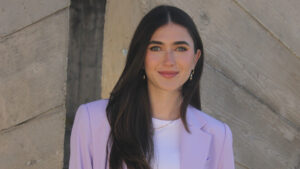
A former college campus activist, Veksler will speak at Chizuk Amuno on June 8 at the Ruth and Jay Lenrow Visiting Scholar-in-Residence for Combating Antisemitism.