
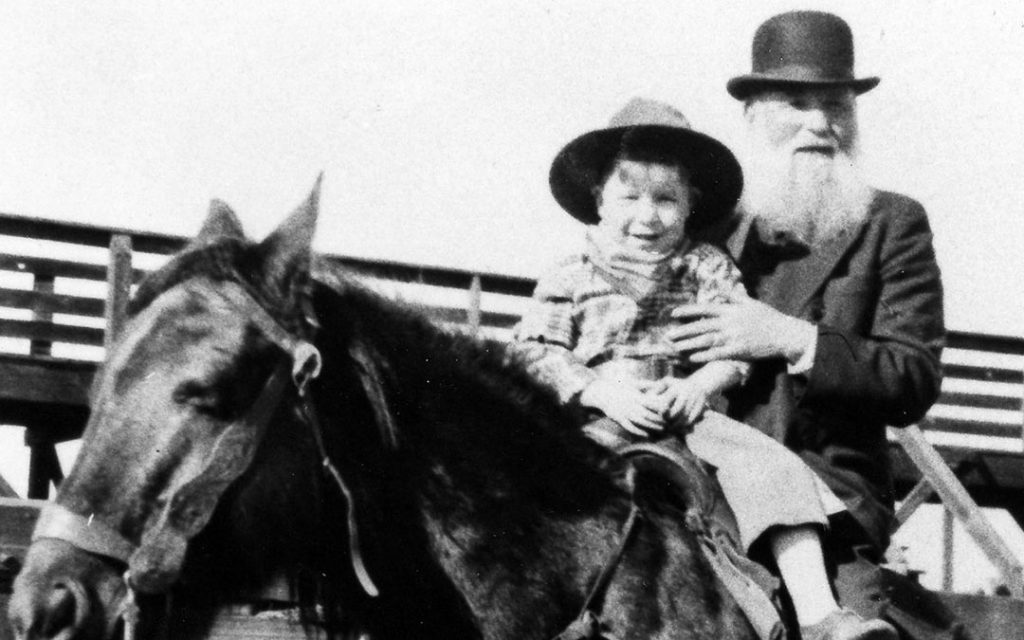
“He came from the old bar mitzvah spread/With a 10-gallon yarmulke on his head/He always followed his mother’s wishes/Even on the range he used two sets of dishes … Big, short, fat Irving/The 142nd fastest gun in the West”
—From “The Ballad of Irving”
For some folks, the lyrics of that 1966 Frank Gallop novelty tune spring to mind when hearing any mention of Jews of the American West. Or Mamaloshen-speaking Native Americans in Mel Brooks’ “Blazing Saddles,” or Gene Wilder’s fish-out-of-water Polish rabbi in 1979’s “The Frisco Kid.”
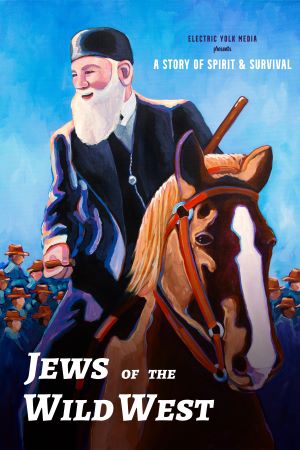
But for Emmy Award-winning independent filmmaker Amanda Kinsey, the Jewish history of the Wild West era is anything but quirky or offbeat. In fact, Kinsey feels the Jewish pioneers of the West, in real life and on the silver screen, are an important but largely forgotten chapter of American history.
She is trying to set the record straight with “Jews of the Wild West,” a feature-length documentary directed by Kinsey and produced by her Colorado-based Electric Yolk Media company.
Through on-camera interviews, archival footage and historical photographs, the film highlights the contributions of Jews in shaping the West and its hallowed place in the American psyche. “Jews of the Wild West” premiered last year at the Atlanta Jewish Film Festival and is currently streaming on Amazon, iTunes and most video-on-demand platforms. It is also available at participating libraries through Kanopy and broadcasting on public television stations across the country.
“Jews of the Wild West” has been presented at film festivals around the nation and was named “Reader’s Choice Best Western Documentary” by Arizona-based True West Magazine.
Jmore recently spoke with Kinsey about the film, which was screened Tuesday night, May 16, at the Library of Congress in Washington, D.C. Kinsey, who moved to Denver from New York in 2017, spoke at a Q&A session following the screening.
Jmore: People tend to chuckle when hearing of Jewish cowboys in the American West. Why is that?
Kinsey: Humor is an important piece of Jewish pride and resilience. I see ‘Blazing Saddles’ as a statement on the tragic absurdity of racism in this country. It’s also a reflection of mutual respect and friendship between Mel Brooks and Richard Pryor [who co-wrote the screenplay]. ‘The Frisco Kid’ is not really a comedy at all. It will make you laugh and cry, and I believe it’s a film with great depth. Comedy is often commentary and should challenge us.
The non-Jewish world has a history of trying to define Jewish identity and erase Jewish experiences. How we change that behavior I think is the more important question. We often think of Jewish immigrants of the 19th century as peddlers. Why were there so many Jewish peddlers? It’s because the non-Jewish world put severe restrictions on occupations for Jewish men in Europe. This was a centuries-long form of antisemitic oppression and forced poverty.

The idea of a Jewish cowboy may seem unique to us, but the reasons for that are complex. I believe the more we accurately understand history, the more we help break down stereotypes.
As a non-Jew, how did you get involved in this project?
There is an imperative for storytellers to help amplify voices that have been and continue to be marginalized. Unfortunately, attempting to sideline Jewish voices is often a central focus of antisemitism. ‘Jews of the Wild West’ has no narrator. That is intentional. It is also told primarily from the perspective of interviewees who identify as Jewish. As a filmmaker, I see creating this documentary as an act of allyship and hopefully a means to standing up against antisemitism.
I first became aware of these stories through research at the Beck Archives for Rocky Mountain Jewish History at the University of Denver.
What originally attracted Jews to the West?
The two main reasons Jewish immigrants headed West were economic opportunity and less antisemitism. There was also an organized effort made through the Industrial Removal Office and Galveston Movement to push Jewish immigrants away from places like New York City.
How hard was it to find Jewish cowpokes, rustlers and ranchers?
Jewish cattle traders were not unusual. This was a profession in Eastern Europe and a skill set that was of value in the Wild West. For example, there were a group of Jewish cattlemen that were integral to the building of the Denver stockyards.
Ranchers were more unique, as ranching required capital that most first-generation Jewish immigrants did not have upon arrival. Some Jewish families moved into ranching, but this generally was with a second more established generation.
I didn’t come across any Jewish cow rustlers, though that would have been a fun story.
What were some of the hardships and adversities Jews faced in the Old West?
One of the most difficult aspects of life in the West was certainly the lack of Jewish community. There simply weren’t that many Jewish families outside of San Francisco and Denver, and that could be isolating. The fact that small Jewish communities maintained their Jewish identity in small towns successfully is a beautiful legacy and, in many ways, the broader story of the Diaspora.
How is the story of the Jews of the American West different than that of non-Jews of that period and place?
Jewish immigrants, especially those from Eastern Europe, were often refugees fleeing antisemitic violence and poverty. The Wild West is roughly defined as the period from 1840 to 1920. There were thousands of people of various backgrounds pouring into the West from all over the world during this time. Some of these were immigrants and some were Native Americans from the East being pushed West. Each group faced their own unique challenges. The restrictions, for example, placed on Chinese immigrants during this time were deplorable, and Native Americans were subjected to both displacement and genocide. This is a multi-layered time, and understanding this history requires us to have nuance. Jewish immigrants, by and large, embraced the diversity of the West and worked hard to make meaningful contributions.

(Provided photo)
Why did you focus on such famous people as Levi Strauss, Golda Meir and Josephine Marcus Earp in addition to more obscure folks?
The magic of Jews of the Wild West is the sum of its parts, and I felt showing wide and varied experiences was important.
Was it hard to narrow down all the stories?
I needed strong storytellers, captivating visuals and a connection to today that made the stories relevant. That’s a high bar, and what made the film were the best of the best.
What kind of audience reactions have you received so far?
Audiences love the film. It’s satisfying to hear daily from people who are touched by the stories and often excited to share their own connections to the West.
How long did this documentary take to make, and did the pandemic impede its progress?
I started researching and fundraising in 2018. We were scheduled to film most of the project during the spring of 2020, which clearly didn’t happen. Most of the film was done in the summer of 2021 once the crew and myself were vaccinated.
What does the film tell us about American Jewry today?
Jews of the Wild West is a story of optimism, hard work and resilience. I wish we weren’t still dealing with the same antisemitism that has been present in the non-Jewish world for thousands of years. Hopefully, Jewish audiences take away a pride and joy from the film this is comforting during these difficult times.
Why does the Old West still hold such an iconic place in the American psyche?
The Wild West was a complex time that is often oversimplified in movies. Though aspects of the Wild West were tragic, a sense of possibility and hope is what continues to captivate the world and ultimately defines the American Dream.
What books would you recommend about the Jewish Wild West?
We interview two biographers in the film, and I love both their books. One is Ann Kirschner’s ‘Lady at the OK Corral: The True Story of Josephine Marcus Earp’ [Harper Perennial]. The other is Lynn Downey’s ‘Levi Strauss: The Man Who Gave Blue Jeans to the World’ [University of Massachusetts Press]. Ben M. Freeman’s book ‘Jewish Pride: Rebuilding a People’ [No Pasaran Media] is not about the Wild West, but it had a profound impact on the film and Ben worked as an advisor to the production.
What do you hope audiences take away from your documentary?
A greater appreciation for the incredible contributions Jewish Americans have long made to the United States.
The BCO, founded in 1984, will perform the works of Frank Zappa, Beethoven, Mason Bates and Karena Ingram.
Led by local Israel-American cellist Amit Peled, the Mount Vernon Virtuosi aims to inspire people beyond musical enjoyment.
A former college campus activist, Veksler will speak at Chizuk Amuno on June 8 at the Ruth and Jay Lenrow Visiting Scholar-in-Residence for Combating Antisemitism.

Container vegetable gardening is a terrific option for people with limited space and/or time. Rebecca Brown and Norman Cohen share some tips.