
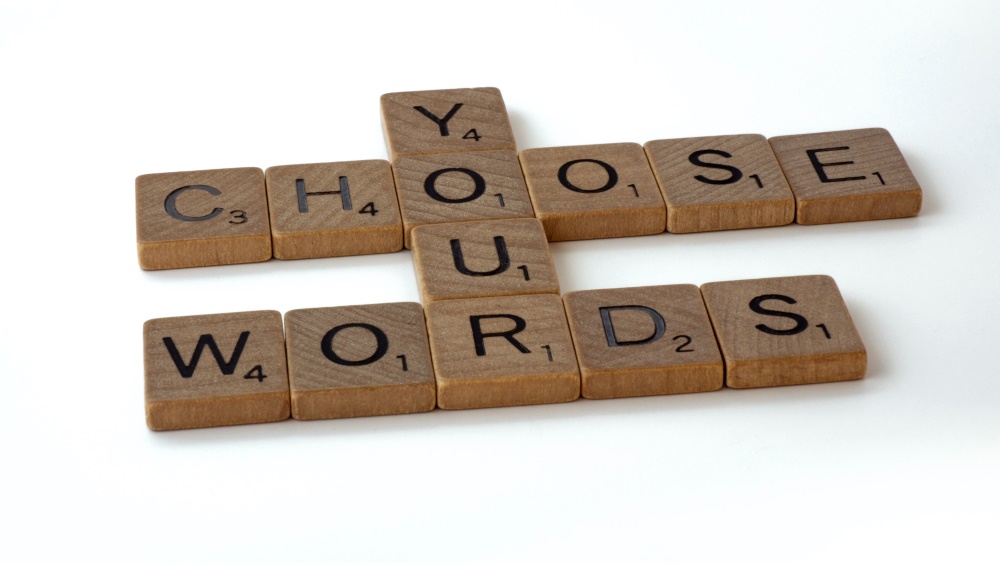
I struggle with the applicability of language and whether or when a word from one place is more useful or harmful when used in a totally different cultural context. I’ve written previously about how so-called intersectional claims run the risk of “[flattening] all oppression into an amalgam of grievances and rob whole societies of any lasting solutions.”
Nevertheless, there are plenty of words or phrases that cross borders, even oceans, and sometimes the borrowing of terminology serves to help crystalize a given injustice without robbing participants at various rungs within that society of their story’s uniqueness. For example, the Black Panther Party in America inspired a group of Mizrahi Jews in Israel in 1971 to form HaPanterim HaShechorim to protest the unjust treatment of Mizrahi Jews there. A similar organization, the Dalit Panthers, was founded a year later to spotlight the mistreatment of so-called untouchables in India.
As Isabel Wilkerson makes clear in her book “Caste,” the American caste system that enabled chattel slavery both drew inspiration from Indian caste associations and lent inspiration to Hitler’s Third Reich. In fact, Dr. Martin Luther King Jr. described feeling “shocked” and “peeved” when he was called an “untouchable” during his and Coretta’s 1959 trip to India to meet friends and family of Mahatma Gandhi. But then he started to think more deeply about the comment and its implications, concluding, “Yes, I am an untouchable and every Negro in the United States is an untouchable.”
Another of these itinerant terms is the word ghetto. This word, which has come to describe concentrated areas of urban blight and despair, has Jewish origins. Or, at least, the word was first applied to Jews when the municipal senate forced the Jews of Venice into a single, segregated quarter in 1516. Over the years, I’ve had discussions about the utility of this word as applied to communities like mine, and especially to ones like those to my immediate west (Penn North) or southwest (Sandtown-Winchester).
Some feel it is reductive to define a neighborhood by a word which Merriam- Webster says means “a quarter of a city in which members of a minority group live especially because of social, legal, or economic pressure.” Others feel that to avoid a term like ghetto as applied to Black communities in West Baltimore is to disregard the reality and severity of those pressures.
What I do know is when minority communities (e.g. Jewish Americans and African Americans) allow what Wilkerson calls “the dominant caste” to drive a wedge between us, it’s so much easier for misconceptions about and distrust for our communities to persist.
Recently, my family and I traveled to New York and saw two extraordinary and haunting plays about antisemitism: “Leopoldstadt,” which won the Tony for Best Play, and “Parade,” which won for Best Musical Revival. Michaela Diamond, co-star of “Parade,” wrote a powerful OpEd in the New York Times in which she explains what it’s like for her to “watch a Jewish man get lynched on Broadway” eight times a week. She describes how playing Lucille Frank has taught her a bracing truth: “… antisemitism and racism are inextricably linked, underscoring how the pursuit of justice fails in a broken judicial system. There is fear,” she admits, “in acknowledging ourselves — Jewish people — as marginalized. But as Lucille learns through the course of the play, assimilating into the mainstream and hoping that will protect you isn’t the answer. If we refuse to embrace our inherent otherness — the parts that make us definitively Jewish Americans — we forget our common struggle with other marginalized people.”
Wilkerson’s ultimate point in “Caste” is that all human beings are inextricably linked; oppressors and those they oppress all suffer to some extent under the unbearable weight of human othering. Borrowing words and applying them to different but related contexts is a way of acknowledging that evil can emerge from a similar set of human failures and flourish in the soil of a thousand lands. The privileged must strive to understand the power we hold, while admitting to ourselves an uncomfortable truth: that the less powerful almost always hold some power over others as well. And it behooves those of us whose people have been subordinated to appreciate one another’s similar experiences.
This year marks 90 years since Leo Frank was convicted of murder and sentenced to death for a crime he almost certainly did not commit. His death sentence was commuted, but by then it was too late. The lies had been told. Hateful ancient tropes had been vocalized and weaponized. When the mob came for him, it had all the righteous indignation of the state’s executioner. There is a word that applies to Frank as it did to so many Black Americans lynched in waves of vigilante justice. The word has biblical origins and has come to mean the vicarious conveyance of sin from guilty to innocent. The word is scapegoat. If you want to understand oppression in just about any corner of the world, argues Wilkerson, that word may not be entirely sufficient, but it is necessary.
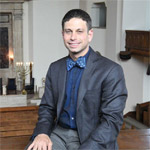
Rabbi Daniel Cotzin Burg is spiritual leader of Beth Am Synagogue in Reservoir Hill. This column and others also can be found on his blog, The Urban Rabbi.
A lifelong Orioles fan, Jmore Publisher Scott Rifkin, M.D., shares a message to Orioles owner David Rubenstein.
Attorney and Barry Levinson confidante Donald Saiontz left his mark on the world, writes Michael Olesker.

When we create a world with a warm and loving connection, even when someone beloved is gone, that relationship is carried on, writes Pamela R. Weissman.

The Orioles this season have proven that money can't buy happiness, writes Michael Olesker.