

On the day Brooks Robinson was inducted into the Baseball Hall of Fame, it felt like the emotional outpouring of a kind of extended family.
On one side of this massive crowd in Cooperstown, New York, there was Mayor William Donald Schaefer and Baltimore County Executive Don Hutchinson leading cheers, and over there on the other side, a cab driver out of Dundalk named “Wild Bill” Hagy was contorting his body to read something resembling “ORIOLES” as thousands hollered back at him.
“And then I count another blessing,” Brooks Robinson told the big gathering between cheers. “That is Baltimore. That is Baltimore. .… I share this day with my adopted home town. … Baltimore, thank you, I love you all.”
Was there ever a more heartfelt connection between a ballplayer and town as Brooksie and Baltimore? Or a nicer way of saying it than Brooks’ line when they unveiled one of the statues of him downtown: “I don’t think of you as my fans. I think of you as my friends.”
And was there ever a greater heartache over a ballplayer than there was yesterday when the awful news broke that Robinson, at 86, had died?
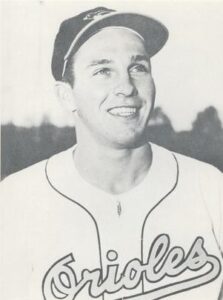
At Cooperstown on that August afternoon in 1983, I stood for a little while with Don Hutchinson, whose eyes were rimmed as Robinson entered the hall.
“The thing about Brooks,” he said, “is that he still doesn’t understand the amount of affection people have for him. He’s the same guy now that he always was. Not a piece of this has gone to his head.”
And yet, only a man so personally unassuming could have kept his ego in check with the fullness of affection Baltimoreans had for him.
There was the summer Reggie Jackson said they’d name a candy bar after him if he played in New York. At Memorial Stadium when they held a “Thanks, Brooks Day” that summer, the old Associated Press sports editor Gordon Beard told the packed house, “In Baltimore, nobody’s ever named a candy bar after Brooks. We name our children after him.”
At Cooperstown, baseball officials said they’d never seen a crowd as large as the one for Brooks. The town’s streets were glutted with folks wearing Orioles jerseys. Hotel rooms were booked for miles around.
In nearby Oneonta that weekend, the owner of a Town House Motor Inn told me, “When it was announced that Brooks Robinson was voted in, within two hours there was a thousand-room shortage. My phones never stopped. I’ve lived here all my life. Believe me, the closest thing to this was Mickey Mantle’s induction, and there weren’t half as many people for that.”
What brought about such an outpouring of affection?
It wasn’t just Brooksie’s ability to dive behind third and stuff a double into his glove — though nobody ever did it better. And it wasn’t just his clutch hitting across two decades — though few did it better.
He was a man of uncommon kindness. In that sweet post-war era when Major League Baseball and pro football were each born here, Brooks set the standard for personal decency for a few generations of athletes.
He was the role model for parents to point to when they wanted their kids to do the right thing. Years ago, the sports editor John Steadman asked Robinson’s mother where her son developed such a kind disposition.
She said the Robinson family lived across the street from a school for children with various handicaps. They were his playmates, his mother said.
When I asked him about it one day at lunch, Brooks said, “Well, I don’t know. I just saw them as my friends.”

I was lucky enough to know him as a friend. A handful of us — Richard Sher, Ron Matz, Stan “the Fan” Charles, Tom Davis and I — had a bunch of lunches with him. Brooks would eat between greetings from fans stopping by to say hello, to grab an autograph, or to say they’d named a child after him. He was always gracious.
One time, I mentioned I’d heard his first Orioles appearance on the radio. I remembered that he went 2-for-4 against Chuck Stobbs of the Washington Senators.
“And I drove in a run, too,” Brooks said. “I was so happy, I called my mom and dad back in Little Rock and I told them, ‘This is a piece of cake up here.’ Then I hung up the phone and went oh-for-my-next-18.”
My generation of Orioles fans feels we’ve lost more than a ballplayer. He was the emblem of modern Baltimore sports when they were first born in the mid-1950s. The Orioles arrived in 1954, and Brooks arrived at the end of the ’55 season. For local baseball fans, he was there virtually since the beginning of time.
We’re not just bidding farewell to a ballplayer, or even an old friend. We’re saying so long to youth and play and good cheer, which Brooks Robinson personified.
Michael Olesker’s latest book, “Boogie: Life on A Merry-Go-Round,” was recently published by Apprentice House. It’s the life story of Baltimore legend Leonard “Boogie” Weinglass, an original “Diner” guy who grew up to create the Merry-Go-Round clothing chain and contribute millions to charities.

The Jillian and Lindsay Wiener Short-Term Rental Safety Act requires rental companies to conduct annual fire inspections in Baltimore City and every Maryland county.
Reproductions of the murals, previously believed to have been lost, are now part of the Jewish Museum of Maryland's new permanent exhibition.
The donation will be directed to help foster research conducted by faculty at the University of Maryland School of Medicine and to advance innovative treatments.
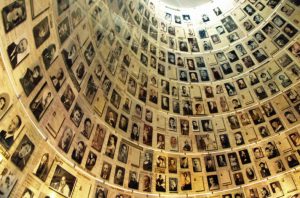
Commemorations of the Holocaust must transcend the past to include concerns about the present and future, writes Menachem Z. Rosensaft.