

A couple of years ago, Joe Buchanan was performing on a Friday night to a packed bar in Austin, Texas, when he suddenly felt inspired to shout out, “Shabbos!” He was stunned when the audience yelled the Yiddish phrase back at him, and he launched into a version of the traditional Sabbath song, “Shalom Aleichem.”
After the show, an audience member approached the singer-songwriter and told him in a low voice that he was Jewish, too.
“I said, ‘That’s really beautiful, dude,’” Buchanan recalls, “’but you don’t have to whisper.’”
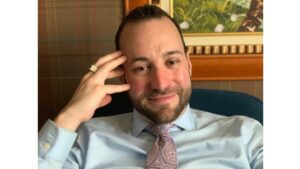
Since converting to Judaism nearly a decade ago and becoming a pioneer in the musical genre of “Jewish Americana,” Buchanan has been loud and proud about his passion for Judaism. On the weekend of Nov. 3-5, Buchanan, who lives in his native city of Houston, will serve as artist-in-residence at Pikeville’s Har Sinai-Oheb Shalom Congregation. The appearance will be part of his national “Sunsets & Serenades Tour.”
“It’s a beautiful world to be part of,” he says of the Jewish music scene. “A lot of people think that country music is Christian-based, but the field keeps growing and evolving and opening up. There’s plenty of Jewish people who’ve made country music, but writing about the Torah is kind of unique. There’s not many of us, but I hope there will be a lot more. [Judaism] has a lot of great living values, so there a lot of good songs to be written.”
Buchanan — who always wears a necklace with a guitar pick pendant featuring a Star of David — says roots music and Yiddishkeit are a natural fit.
“At services, I always want to give people permission to pray the way they want and to feel good,” he says. “Country music and Americana are good for that. There’s a lot of country music in the Torah, a lot of stories about joy and faith and heartbreak.”
Twitty, Twang and Torah
Buchanan, 46, came to both Judaism and professional music later in life. Growing up in a decidedly non-religious home, he was strongly influenced by his grandparents’ love for such traditional country music artists as George Jones, Marty Robbins, Conway Twitty and George Strait. Meanwhile, his father’s tastes ran more toward such classic rock groups as Boston and Bob Seger & the Silver Bullet Band.
“It was a great foundation,” Buchanan says. His dad bought him a guitar at a garage sale, mainly because of his son’s affinity for the jangly music of the band U2.
“I never took any lessons. I’m self-taught,” he says. “When I was young, I had a couple of little bands, but we never really did anything. I never thought I’d ever amount to anything as a musician. I lacked all self-confidence.”
After getting married and having a son while in his early 20s, Buchanan worked primarily in human resources on the environmental cleanup side of the oil industry. He also homeschooled his son, Nathan, now 22 and in a master’s degree program.
Spiritually speaking, Buchanan says he was “always very curious. I had friends who joined different churches, so I’d sometimes go with them. Unfortunately, I kept taking away things that took me farther [from religion]. It just didn’t make any sense to me that if I didn’t believe in this, I was going there.”

Everything changed about a dozen years ago when he and his family traveled to Washington, D.C., and visited the U.S. Holocaust Memorial Museum.
“My wife April said to me, ‘I want to get in touch with my people’s faith,’” Buchanan says. “I said, ‘What are you talking about? Who are your people.’ She looked at me like I was crazy and said, ‘I was born Jewish, and our son is Jewish.’ I knew her mom was Jewish, but I thought that was just a family thing. We’d been married 13 years, and I never knew April was Jewish. She was like, ‘How could you not know?’”
Growing up, Buchanan says his knowledge base about Jews was practically nonexistent. “We have a huge Jewish community in Houston, but I don’t think I ever met anyone Jewish growing up,” he says. “I never saw a Star of David or a kippah. I never heard anything antisemitic.”
Not long after visiting the Holocaust museum, the Buchanans met with Rabbi Stuart Federow of Houston’s Congregation Shaar HaShalom. The rabbi summarized Judaism’s essence as “there is only one God, and there is nothing wrong with you because you are part of Creation.”
“I was like, ‘Whoa, where’s this been all my life?’” Buchanan recalls with his characteristic booming laugh. “So I jumped in feet first. It changed everything. April reconnected with her family, and I started studying and writing music about Judaism to understand what I was going through, as a way of praying out loud. We were lucky. We happened to meet the right rabbi at the right time. … Choosing to be Jewish brought me back into my life. I love it because it feels like family. I never feel like a stranger in the Jewish community.”
After his conversion, Buchanan says most of his friends and family members were supportive, as was the Jewish community in general.
“But I have had my share of people who’ve come up and told me I’m not Jewish because of my Conservative conversion,” he says. “Some people also told me that you can’t be Jewish if you weren’t born Jewish. It’s terrible, but I’m not going to defend who I am.”
Buchanan says he also has encountered some antisemitism, mostly online. “Not a lot of people will say it to my face,” he says. “People have just left comments, hateful stuff, but I don’t respond. I don’t have the time. Overall, it’s been a beautiful journey with some potholes and hiccups along the way.”
Honoring Sacred Time
Performing his brand of Jewish Americana in public was initially terrifying, admits Buchanan, who so far has recorded two albums of original material, 2016’s “Unbroken” and the more recent “Back from Babylon.”
“I still get nervous walking out on a stage,” he says. “It’s like being adopted later in life and brought to a beautiful house. You’re in the house and don’t want to break anything, but you have to be who you are. The community has been very supportive. There’s a trust given to you when you’re spending sacred time with people. I want to honor that time.”
While many of his songs derive from his study of Judaism, Buchanan says others offer his observations and perspectives on living a righteous and meaningful life.
“My music is universal, you don’t have to be Jewish to enjoy it, but I don’t hesitate to let people know who I am and what I believe in,” he says.
The songwriting process can flow effortlessly or sometimes requires a great deal of time, he says. For example, one of his songs, “The Unbinding,” about the biblical account of God commanding Abraham to sacrifice his son Isaac, took about two years to write, Buchanan says.
“It’s a difficult story about a son begging his father to be who he was,” he says. “We put a lot on our kids that we shouldn’t. There was so much that needed to be conveyed. It’s not a chorus-driven song. It took some time.”
Occasionally during his performances at services, concerts, conferences and workshops around the country, Buchanan drops in a cover song or two, just to mix things up. “It depends on how the moment hits,” he says. “Sometimes I’ll play Hine Ma Tov and then throw in [Fleetwood Mac’s] ‘The Chain.’ Or with Havdalah, I might throw in a little ‘Dust in the Wind’ [by the band Kansas] and then Eliyahu [Hanavi]. It all flows together well.”
Right now, Buchanan is putting the finishing touches on a pair of albums, most of which were written during the pandemic. But he’s looking forward to spending time with audiences while on tour through the end of the year.
“We have so much to learn from each other. The Torah is a world that’s as deep as you want it to be,” he says. “I’ve got a lot going on in my life right now, but that’s a good problem to have. For me, this is a way to be a light. We’re building this life and world together.”
For information about Joe Buchanan’s upcoming performance at Har Sinai-Oheb Shalom Congregation, visit hsosc-baltimore.org/event/havdalah-and-concert-with-joe-buchanan.html or joebuchananmusic.com/home.
The BCO, founded in 1984, will perform the works of Frank Zappa, Beethoven, Mason Bates and Karena Ingram.
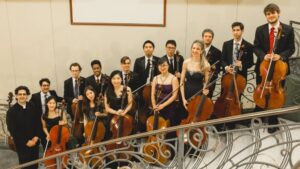
Led by local Israel-American cellist Amit Peled, the Mount Vernon Virtuosi aims to inspire people beyond musical enjoyment.

Container vegetable gardening is a terrific option for people with limited space and/or time. Rebecca Brown and Norman Cohen share some tips.
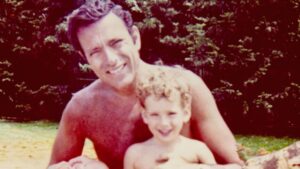
Filmmaker Justin Schein looks at wealth and inequality through the very real story of his late father.