
In life, we know all too well that things can change in an instant. And yet we’re still stunned when change does occur, and frequently greet the moment with a sense of bewilderment and remorse.
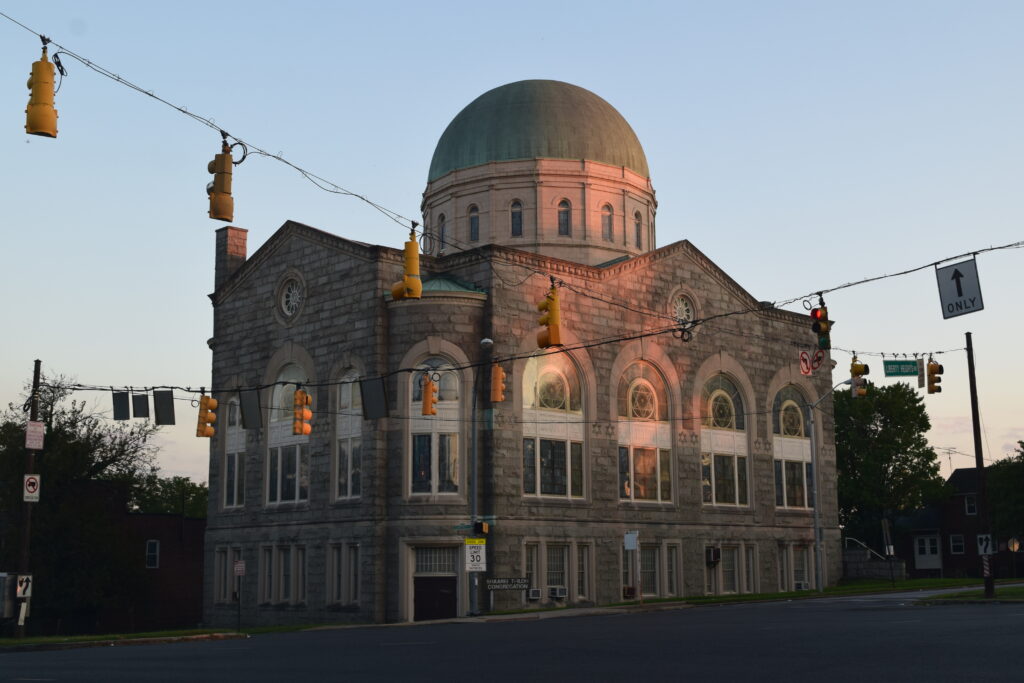
That’s how I felt when learning recently about the closing of Shaarei Tfiloh, the historic “Shul in the Park” at the corner of Liberty Heights Avenue and Auchentoroly Terrace, across from Druid Hill Park.
(While the shul is no longer operating, rumors abound in the community that the building will be repurposed in the future as a Jewish outreach center. Stay tuned.)
To be honest, Shaarei Tfiloh was a ghost of its former self for decades. Its glory days as a major Jewish center were long over by the time I was coming up.
But like many people in this community, I have a surplus of warm memories of Shaarei Tfiloh and its magnificent turquoise dome that will last a lifetime.
I remember attending High Holiday services there as a kid and young adult, with my parents and occasionally with friends. I can still hear the sounds of street traffic and roaring animals from the nearby zoo wafting through the open stained glass windows.
Sometimes, I found myself gazing around the synagogue and daydreaming about the times there during its heyday — the services, simchas and social hall celebrations, the USO fundraisers and Purim carnivals. (No wonder Academy Award-winning director Barry Levinson featured Shaarei Tfiloh’s ornate interior in his film “Liberty Heights.”)
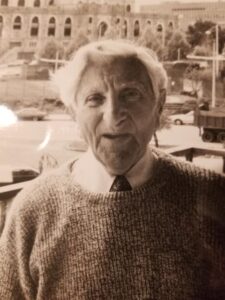
Many were the times I sat quietly in the sanctuary, listening to the chanting of the Torah by the one-and-only Solomon “Reverend Shloimie” Milgrome, who despite his advanced age pounded the pavements as a one-man shaliach (emissary) for Shaarei Tfiloh. You could almost hear the voices of the shtetl when the Polish-born Sol, who lived to the age of 104, sang the ancient prayers, tunes and psalms.
I fondly remember the stirring shofar blowing every year by Joseph I. Yohanas, a longtime congregant who carried himself with a great sense of dignity and grace, as well as the booming voice of Cantor Anshel Konzak. It all felt so … authentic.
Back in the ‘90s and early 2000s and living in mid-town Baltimore, I often attended the Shabbat morning minyanim at Shaarei Tfiloh and savored the small group of characters (for lack of a better word) who attended every week. These folks, many of whom were elderly, still wanted to keep Shaarei Tfiloh and Yiddishkeit alive. Ike Rubin, Irene and Albert Klein, Myra Greenberg, Israel Goldstein –- their names and faces are forever seared into my memory.
Some walked for miles from other parts of the city, while others still lived in the area near Mondawmin Mall and Park Circle. Reverend Shloimie used to get annoyed if one of the regular “minyanaires” didn’t show. “What they doing, sleepin’?” he’d yell in his thick accent. “Ya can sleep when you’re dead!”
I remember an older, non-Jewish woman named Inez who lived next door and worked as a caretaker for Shaarei Tfiloh. She oversaw everything from the kiddush spread to the aging pipes to keeping an eye out for vandalism and graffiti, and she did it with an abundance of love and care. As did the late Arnold Cummins, the shul’s gabbai, or sexton, who made sure services always went smoothly.
And then there was Rabbi David E. Herman, Shaarei Tfiloh’s spiritual leader and primary mover-and-shaker for decades. Despite having a busy job and family life, Rabbi Herman made it his raison d’etre to keep the synagogue going — whether it was through his heartfelt, poignant sermons, warmth with congregants and visitors, or talent for schmoozing up potential machers to help keep the old shul operating. For all of his efforts, those of us who spent any time basking in the glory of Shaarei Tfiloh owe him an eternal debt of gratitude.
Shaarei Tfiloh and its “Gates of Prayer” may now be closed, but the synagogue’s spirit cannot be extinguished. It lives on among those of us touched by the majesty of the “Shul in the Park” and the spirit of its congregation.
Sincerely,
Alan Feiler, Editor-in-Chief
In Italy, the Jewish Brigade's flag has unfairly become a flashpoint in today’s battles over Zionism and anti-fascism, writes Dr. Ginaluca Fantoni.
Stewart, a business attorney, believes trust and affordability are the county's biggest obstacles.
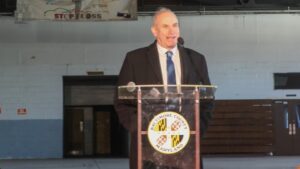
The County Councilman from the 2nd District feels that transit-oriented developments can help meet pressing priorities.
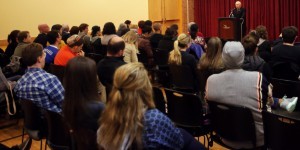
The gathering on June 4 will be part of activities and programming around the world marking "Holocaust Survivor Day."