
At times, Joe Pachino couldn’t stop himself from sobbing uncontrollably while touching and blowing kisses at highchairs at “The Empty Shabbat Table” vigil last Friday afternoon, Nov. 3, at Har Sinai-Oheb Shalom Congregation.
“My wife Marlene is [HSOSC’s] executive assistant and when she told me about the highchairs there, I told her I just couldn’t go because I knew I would be too distraught,” said Pachino, a Pikesville resident and grandfather of five. “But I thought it through and decided I had to go. Every chair, every setting, every picture touched me deeply. How could it not?
“I’m just glad I brought Kleenex.”
More than 300 people dropped by the front lawn of the Pikesville synagogue to demonstrate their concern about and support for the 240 Israeli hostages held by Hamas in Gaza.
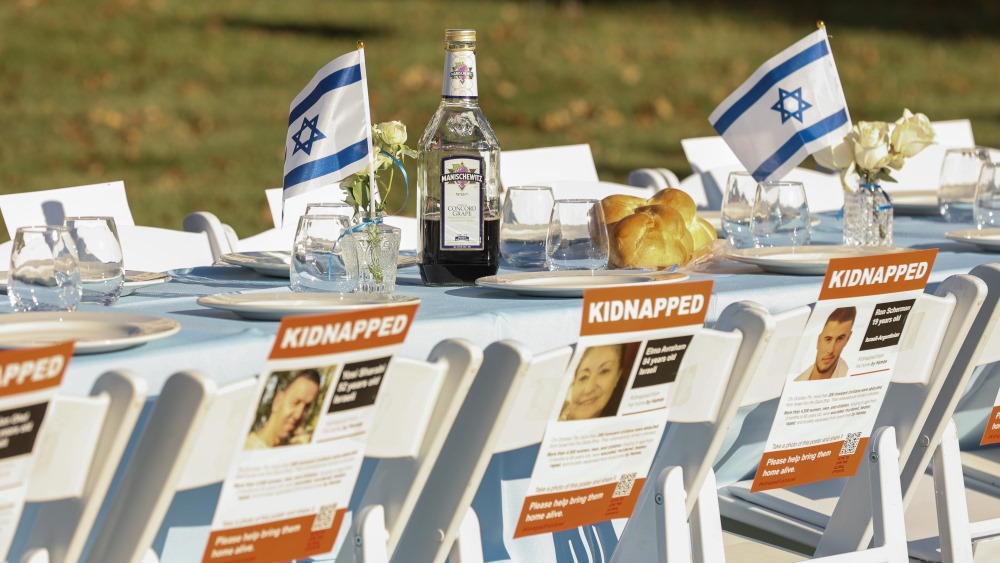
In cities and towns throughout the world since the Oct. 7 start of the Israel-Hamas war, Jewish communities have symbolically set up Shabbat tables with empty seats for the hostages.
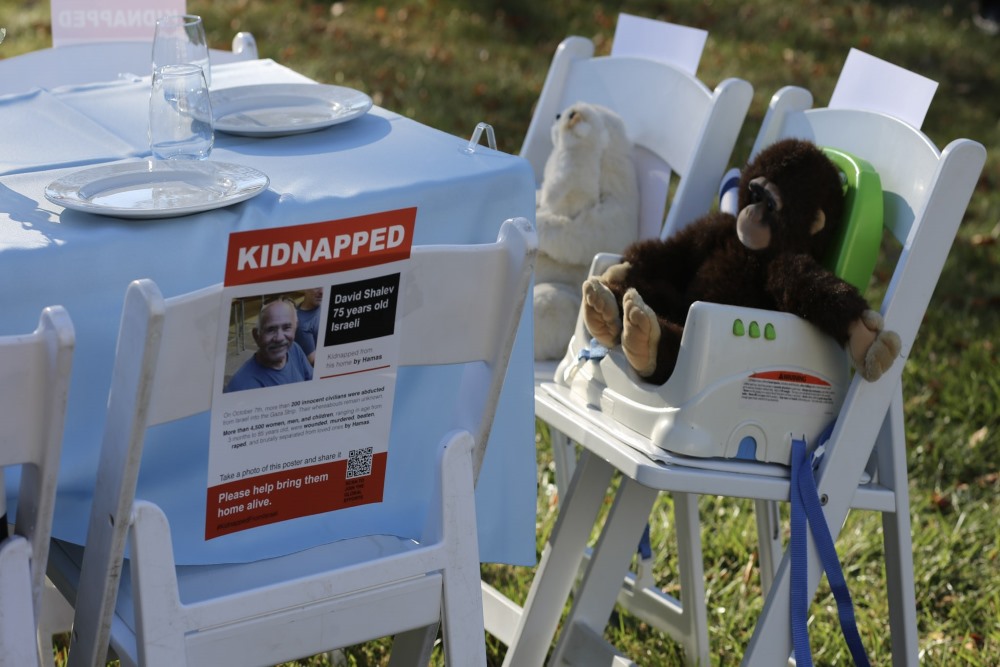
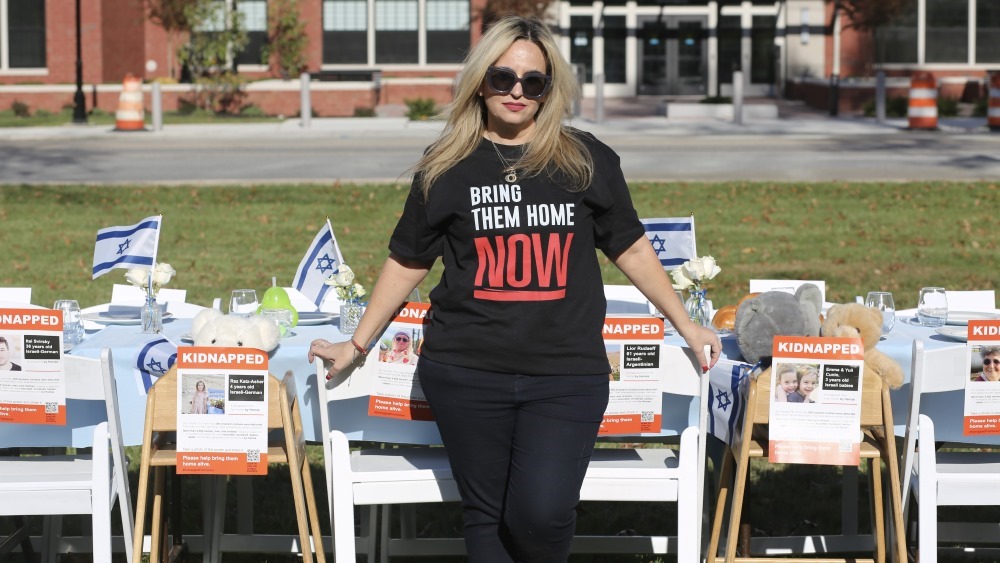
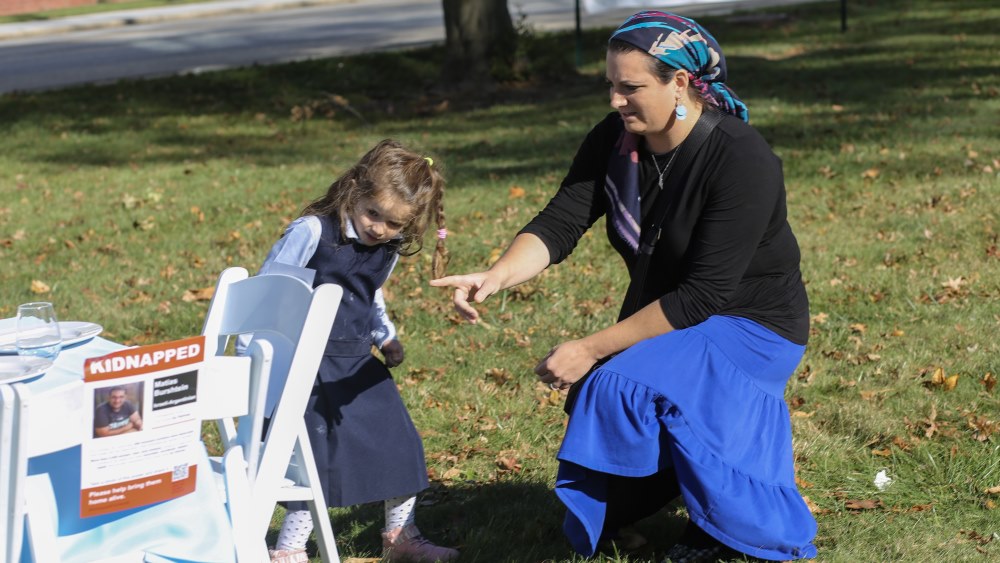
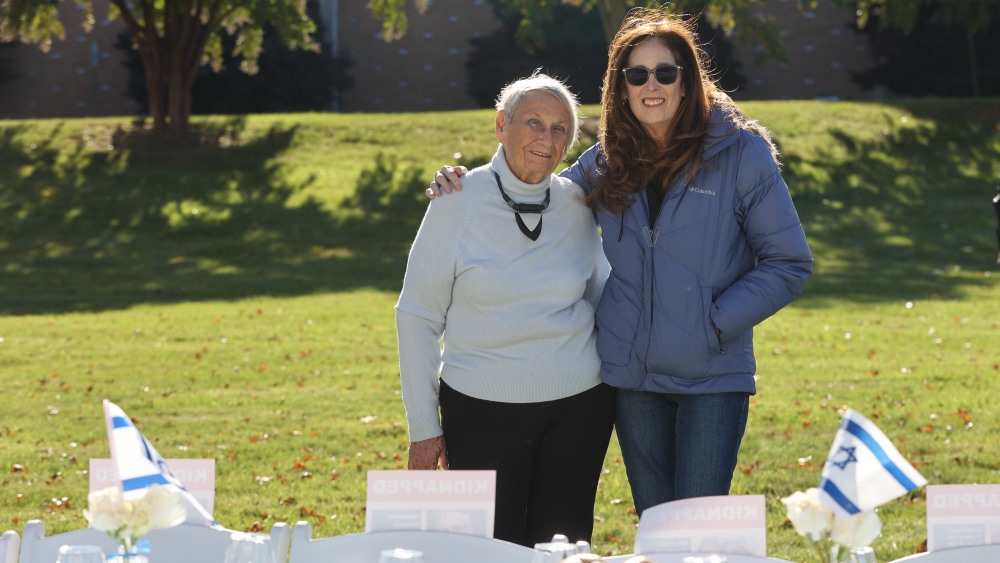
The Baltimore installation — conceived by Sandie Nagel, a retired educator and Pikesville resident — featured 240 settings with plates, cups, loaves of challah, Shabbat candles, flowers, wine, Israeli flags, and photos and profiles of each hostage.
“Two-hundred-and-forty people who will not be at Shabbat tonight — that’s what we’re representing here today,” said Baltimore Zionist District Executive Director Caren Leven. “These are our brothers and sisters.”
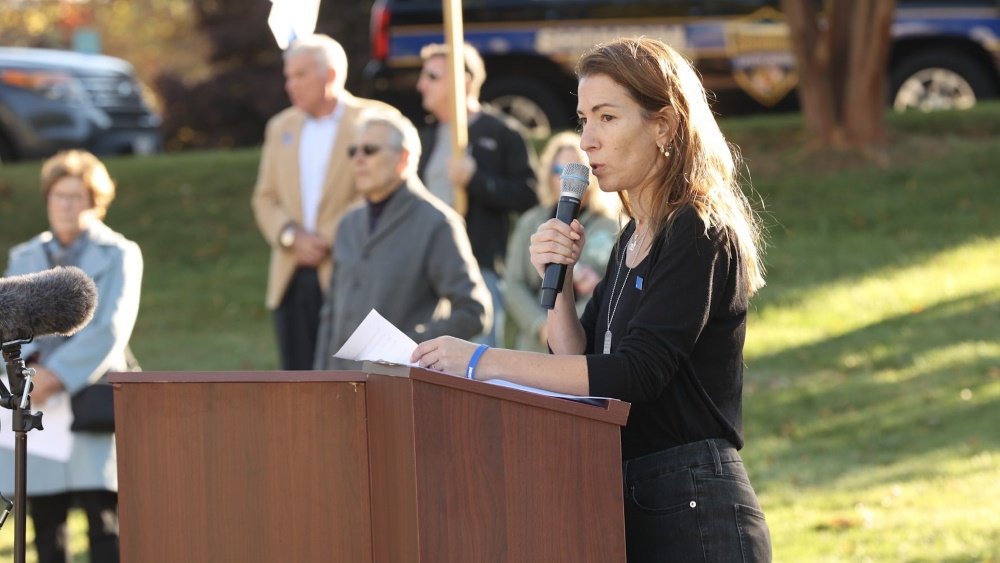
“The Empty Shabbat Table: A Gathering of Hope” featured prayers and speeches by local community leaders, as well as performances by cantors and talks by relatives and friends of hostages.
Among them was Rockville resident Yolit Kachlon, a native of the southern Israeli kibbutz of Nahal Oz that was the site of a massacre on Oct. 7. During the attack, Kachlon texted back and forth intermittently with her close friend Ravit, who was hiding from Hamas terrorists for more than 10 hours.
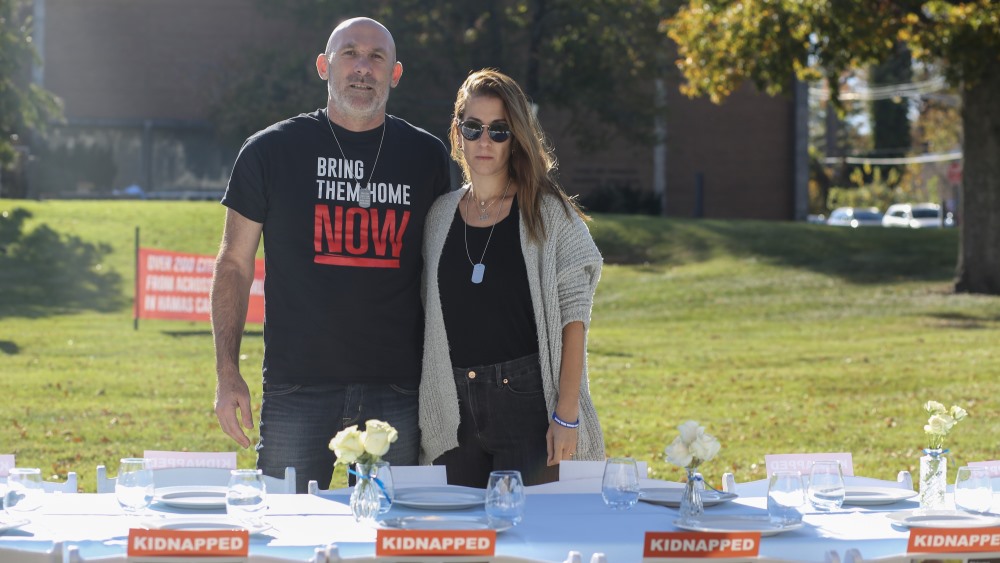
“She told me that terrorists were all over the place, shooting people, standing on rooftops, yelling in Arabic, celebrating, and there were no [Israeli] soldiers around,” she said. “It was all surreal. …
“This is our 9/11 on steroids,” a tearful Kachlon told Jmore before the event. “All of these people are our close friends, mishpachah [family]. It’s a very strong community. We don’t even lock our doors. It’s a community full of pro-peace activists. They dream of a future and better world for their children and all the children of the region.”
Among those who died in the Nahal Oz pogrom was Shlomo Ron, a kibbutz locksmith. With his wife, two daughters and grandson hiding in a safe room, the 85-year-old Ron went into his living room and sat in a chair as a decoy. The terrorists shot him immediately, but left the rest of the house and its inhabitants unscathed.
“I grew up with him,” said Kachlon, noting she was not surprised by Ron’s supreme sacrifice for his family. “He was a mentsch, a hero. Heroes come in all shapes and sizes and ages. He chose to save his family. He made a decision. That’s who he was.”
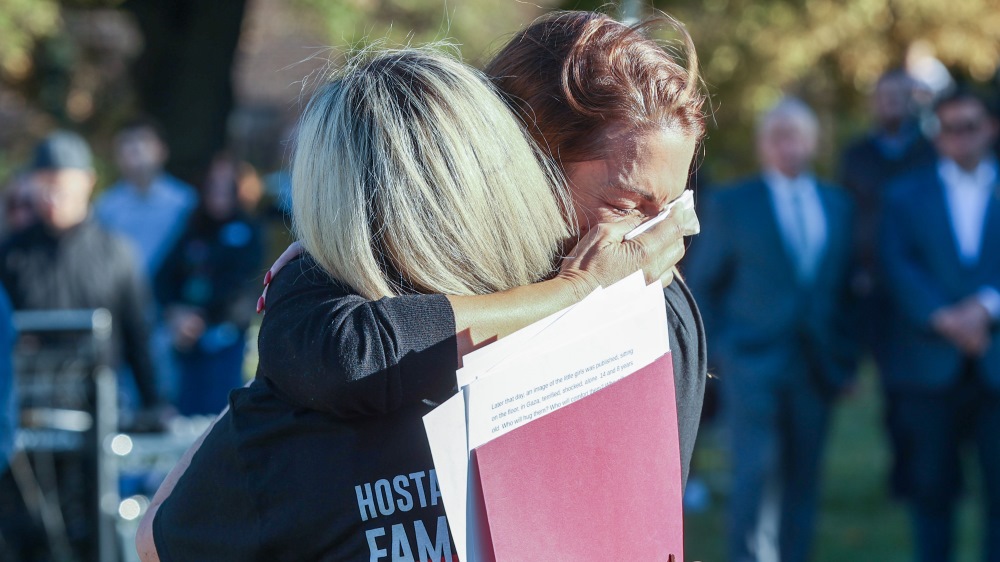
HSOSC’s Rabbi Dr. Rachel Sabath Beit-Halachmi called on attendees to keep the hostages in mind at their Shabbat tables and at other times.
“We can’t stand idly by while the voices of 240 innocent babies and women and men and elderly people are silenced,” she said. “We’re using our voices to speak for them, and we stand in solidarity with the people and state of Israel. … Walk by and look at and feel the faces at every chair at this empty Shabbat table. Connect with them and feel each one of them. We are responsible for them. Bring them home now!”
Besides HSOSC and the BZD, co-sponsoring organizations of the event included The Associated: Jewish Federation of Baltimore, Baltimore Hebrew Congregation, the Baltimore Israel Coalition, Baltimore Jewish Council, Beth El, Beth Israel, Beth Tfiloh, B’nai Israel, Bolton Street Synagogue, Chizuk Amuno, Hadassah Greater Baltimore, the Jewish Community Center of Greater Baltimore, Israel Bonds of Maryland and Ner Tamid Greenspring Valley Synagogue.
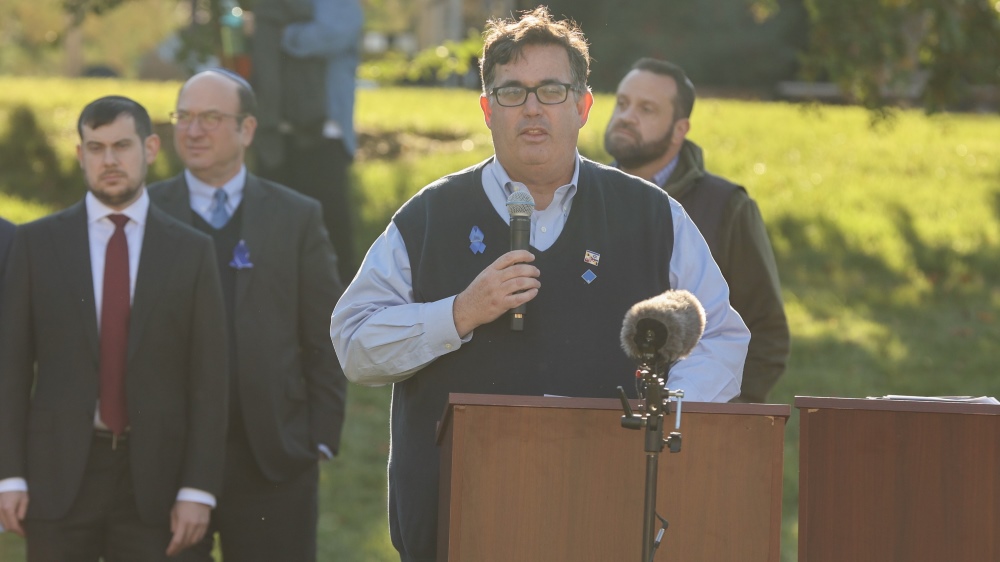
“To see all of the groups that stepped up to put this together in just a few days was inspirational and heartbreaking,” said BJC Executive Director Howard Libit. “We are all thinking of the people and the hostages who we need to bring home. The need has never been more critical.”
Among the speakers was Dr. Boaz Atzili, whose cousins Aviv and Liat Atzili are believed to be held hostage in Gaza. He described his cousins as compassionate, peace-loving people who adopted a three-legged dog — which was killed by Hamas — a few years ago. They visited the United States just a few months ago.
“We all went out to Yellowstone, and now it feels like a long time ago,” he said. “Their children are going through hell right now. They’re not sure if they’ll ever see them again.”
Dr. Atzili, who teaches international politics at American University in Washington, D.C., said he hopes and prays that the Israeli government will take any measures necessary to secure the release of the hostages.
“We need time for negotiations — 240 lives are worth any price,” he said. “There are two people in this land, and neither is going away. Israel has a right to defend itself, but the children in Gaza have a right to be alive. We have to find a solution. But first, we need to bring our hostages home.”
In her talk, Yolit Kachlon asked the audience to “think of those who are not around the Shabbat table together. Who will hug them and protect them from this evil? Think of them and make a promise that you’ll do everything in your power to bring them home.”
Representing her husband, Sen. Benjamin L. Cardin (D-Maryland), an emotional Myrna Cardin read a letter from the longtime Jewish legislator and chairman of the Senate Foreign Relations Committee. He assured attendees that he and the Biden administration are working around the clock for the return of the hostages.
“I am aware of the work the entire Jewish community in Baltimore is doing for the hostages,” the letter read. “We must find a way to preserve hope that they will come home. We have to be their voice right now. Am Yisrael chai.”
Next week, Yolit Kachlon said she plans to travel to Israel to visit her friends and former neighbors at Nahal Oz.
“I know all of their names and faces, and my heart is broken. This is my home,” she said. “These are very brave, resilient, heroic people who have been bombed [by Hamas] for the past 20 years. But they’re in so much pain right now. Their lives are shattered. I just want to go there and hug them and mourn with them for those who died.”
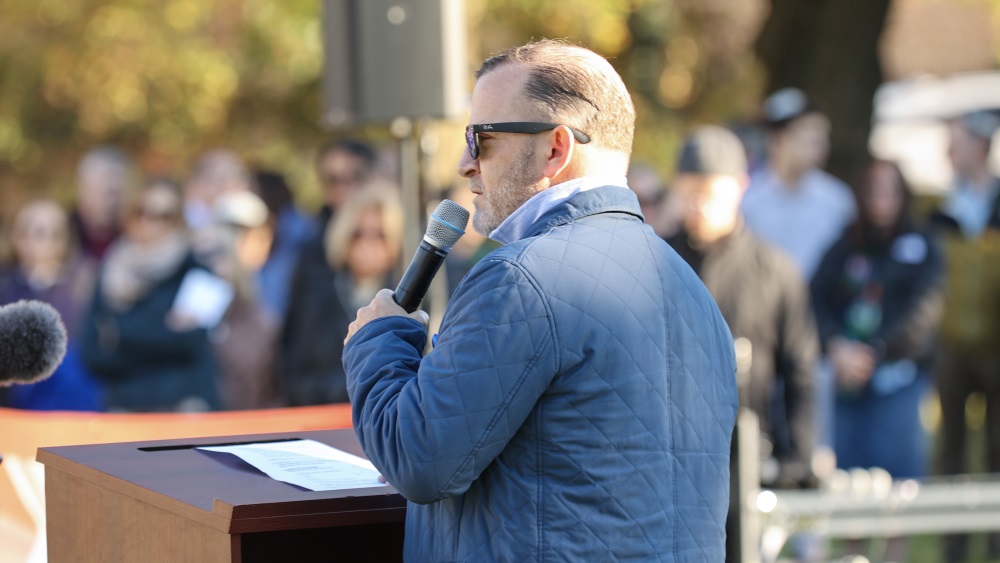
When leaving the vigil, Joe Pachino took a lawn sign featuring the photo of Vivian Silver, a Canadian-Israeli peace activist who was abducted by Hamas from her home in Be’eri, a kibbutz in southern Israel.
“I took it because we’re around the same age — I’m 73 and she’s 74,” he said. “I’ll put it up and hope for the best for her and all of them. It’s hard to comprehend the evil that some people in this world have in their hearts. I just hope all of [the hostages] stay strong. Who knows how all of this ends?”
A Baltimore native, Sweren was a collector of artists' books whose own works were displayed in national galleries.
The BCO, founded in 1984, will perform the works of Frank Zappa, Beethoven, Mason Bates and Karena Ingram.

For more than 130 years, Sol Levinson & Bros. has been woven into the fabric of Baltimore’s Jewish community.
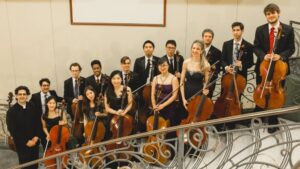
Led by local Israel-American cellist Amit Peled, the Mount Vernon Virtuosi aims to inspire people beyond musical enjoyment.