

For our annual Aging Gratefully cover package, Jmore recently spoke with a trio of local Jewish seniors to glean their insights into how best to enjoy one’s twilight years.
‘You Can’t Stay Down for Too Long’
By nature, Ben Dubin is a relaxed, easygoing person. But when greeting a visitor recently at his Pikesville condominium, the 81-year-old retired CPA apologized if he was moving a little slower than usual.
“Three weeks ago, I got a 10-year battery installed for my pacemaker,” he says with a smile. “I haven’t gotten a written guarantee for it yet.”
But underneath that calm surface is the soul of a fighter and tireless advocate, as anyone who’s come up against Dubin in community gatherings and hearings knows. That’s an attribute that Dubin continues to embrace even in his golden years. In fact, he credits his activism for keeping him active and fit.
A Mount Washington native and longtime member of Baltimore Hebrew Congregation, Dubin has a long list of organizations and causes with which he’s been aligned over the past four decades.
Besides BHC, where he is a past treasurer and brotherhood president, Dubin has served as president of CHAI (Comprehensive Housing Assistance Inc.), vice chair of the Baltimore County Commission on Disabilities, on The Associated’s AgeWell Commission, the Alzheimer’s Association and the national board of the Alexander Graham Bell Association for the Deaf and Hard of Hearing, just to name a few.
In addition, he served on such state advisory committees as the Governor’s Office of the Deaf and Hard of Hearing and Universal Newborn Screening for Deafness.
“I like to give back what I got and the things I learned over the years, to try to improve other people’s lives,” he says.
For instance, Dubin frequently finds himself contacting different organizations and congregations in the local Jewish community to remind them to be more inclusive for disabled individuals. Not long ago, he took it upon himself to contact a recently established Pikesville shul that did not meet requirements for members in wheelchairs and walkers.
“People have to be constantly reminded,” Dubin says. “The ADA [Americans with Disabilities Act] is now more than 30 years old. We’ve come a long way, and there’s a lot more funding for programs for individuals with disabilities. Congregations have come a long way. But you always need an advocate to make change. I’m constantly calling up different places about signage for handicapped spaces and such.”
Like many people who participate in particular community advocacy endeavors, Dubin was inspired to get active due to personal reasons. He became a dedicated fighter for the disabled after the birth of his daughter, Rachel, who was born deaf. Over the years, he has served on many committees and boards promoting the rights of people with disabilities.
“I became an advocate because of Rachel, and now she is an advocate,” he says proudly of his daughter, now 47 and working as a research and data analyst in the U.S. House Office of Diversity & Inclusion in Washington, D.C. “You have to constantly remind people about having some [closed] captions, or why a person in a wheelchair shouldn’t have to sit in the back of a room. To me, it’s the little things that count when people don’t think about things when planning.”
Dubin became involved in advocacy for people with from Alzheimer’s disease after his wife, Esther F. Dubin, was diagnosed with the early onset of the brain disorder.
“Esther had Alzheimer’s for eight years,” Dubin says of his wife, a coronary care nurse who passed away in July of 2014. “It was very progressive. As a result, I started a caregivers’ support group at Baltimore Hebrew. … Alzheimer’s doesn’t discriminate, and there’s no known cure. Each person is different because it takes different forms. Some people become docile, and some people become combative.”
While taking care of his wife during that period, Dubin says that friends and others helped him along the way, including a group of Esther’s buddies who lunched with her on a weekly basis.
“People helped when I was being a caregiver, and I wanted to give back what I learned,” Dubin says. “When life events occur, you know who your true friends are. People often say, ‘Call if you need me.’ That’s a cliché, although some people do come through for you.”
During that challenging time, Dubin says he learned to be grateful for what life offers and to roll with the punches.
“First of all, I learned that you’ve got to take care of yourself. If you don’t, you can’t take care of your loved one,” he says. “I was able to continue working [during Esther’s illness]. I was fortunate to have long-term care insurance that allowed me to work and get some help at home. You can’t do it all alone.”
After losing his wife, Dubin committed himself to starting a new chapter in life.
“Some people can’t move forward; the grieving process slows them down,” he says. “But you can’t sit around and grieve forever. I think I have resilience, maybe because of all the issues I went through with Rachel. … Life didn’t come to an end. It’s still there. There’s still more to explore. I try to enjoy what’s there.”
When he’s not fighting for the disabled, Dubin can often be found with the Kodak Brownie Hawkeye camera given to him by his bubbie decades ago. Dubin, who worked as a photo editor at the Baltimore City Collegian in his high school days, enjoys traveling around the world and taking photos of some his favorite spots, such as Africa, Italy and Morocco.
“I really love to travel and see how people around the world live and see the beauty of the world out there,” Dubin says. “There’s more to the world than just Baltimore.”
He also started a photo club at the Edward A. Myerberg Center, where Dubin — who was stationed in South Korea while serving in the U.S. Army from 1965-66 — serves on the veterans affairs committee.
“You’ve got to do something,” he says of retirement. “You need to be active. I try to walk every day. I don’t miss working, but I do miss the contact with clients. It’s good to find a career that you like and then be active outside of work and give something back to the community. I’m not a couch potato. You’ve got to be active and keep your mind stimulated.”
Despite some of the challenges he’s grappled with over the course of his life, Dubin says he’s grateful for every single day.
“Sometimes you do feel sorry for yourself and wonder why certain things happened to you,” he says. “Once in a while, people need down-time. But you can’t stay down for too long. You’ve got to get up and find your niche, something you’re good at, and you need to be consistent in what you’re doing. I try to enjoy what’s there.”
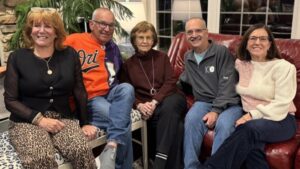
A Norfolk native, Frankle worked at Sinai Hospital, Camp Airy and privately for five decades.
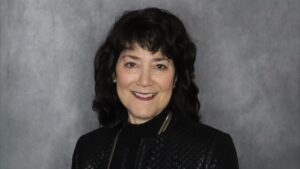
Esther Greenberg, Leora Match, Kathlleen St. Villier Hill and Ben Gershowitz will be recognized for the contributions to the community.
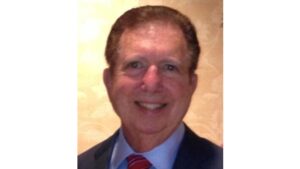
For more than five decades, Dr. Rosenstein was known by local families as a trusted and caring physician for their children.
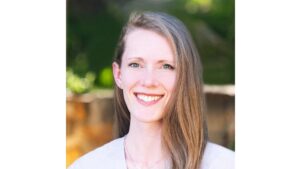
Jewish Community Services' upcoming "Future-Ready Workplace" event will feature a keynote address from workplace expert and bestselling author Liz Fosslien.