

Human nature tends to shine brightest when things look bleakest. And throughout our long history, Jews have been no strangers to bleak times.
Take the current situation. Since the Oct. 7 Hamas terrorist attacks, Israel has been thrust into a horrific conflict it was basically avoiding for years. The result is rampant antisemitism on an international scale most of us have never seen in our lifetimes, and global condemnation for Israel and its right to defend itself.
Even some of our own people have questioned the veracity of what happened on Oct. 7 and resorted to conspiracy theories, and the divide between younger and older Jews about Israel has never been more pronounced.
But the worst of times often brings out the best in people. Sorry, I know it’s a cliché, but it’s true.
Over the past few months, I’ve had the honor of writing about how so many in Baltimore’s Jewish community have responded to the crisis. I’m not just talking about rallies in town or inspirational sermons. I’m not just referring to the thousands of dollars flooding into The Associated for its Israel Emergency Campaign and other fundraising efforts. I’m talking about on the grassroots level.
For some people, the horrors of Oct. 7 reenergized their Jewish identity and reminded them why they participate in the life and times of this community. For others, it was a wakeup call about the need for achdut, unity, and the bigotry that’s been bubbling beneath the surface for years.
A good example is Claudia Chappel-Winelander, a local artist, jeweler and author. Even though she’s lived in Baltimore’s Jewish community most of her life, Claudia admits she’s never been a “super-Jew.” But Oct. 7 hit a nerve.
“I felt such a tightness in my chest,” she recalls. “Something just came over me. It was very personal — ‘How dare they?!’ I knew I had to do something.”
Claudia started making one-of-a-kind bracelets to benefit the local chapter of Friends of the IDF — a group she’d never previously heard of – and so far has raised more than $21,000 for Israeli soldiers and their families. Her clientele is around the country. “It’s been very gratifying,” she says. “I start to cry when I talk about it. I get very passionate,”
I also interviewed Ettie Berkovitch Goldstein, an Israeli who’s lived in Baltimore for nearly four decades. Inspired by a childhood memory from the Yom Kippur War, Ettie started the home-based Operation Kovah to make hats and neck warmers for Israeli soldiers.
“It’s a simple item, but it’s so important. Winter is cold, especially up in the north. It’s an item they need right now. Our soldiers are freezing.” she says, sounding a little like a Yiddishe mama.
Kovah (the Hebrew word for hat) has produced and transported more than 800 garments to Israel. “So many people want to help, so they purchase the materials for the hats and neck warmers,” she says. “I get packages at my door every day. The Amazon and UPS guys are here all the time, telling me I cleaned out their trucks.”
And then there’s Azi Rosenblum, a local businessman who took it upon himself to place lawn signs featuring all of the Israeli hostages on his Smith Avenue property.
“It’s meant to inspire,” he says “If the Israelis can do everything they’re doing right now, we don’t get to mope around. We have to stay focused and kick butt, which is what we always do when we stand together.”
All I can say to that is amen.
Sincerely,
Alan Feiler, Editor-in-Chief

Jmore Publisher Scott Rifkin, M.D., reacts to President Donald Trump's latest poll numbers and the real force behind the growing decline of the Trump movement.
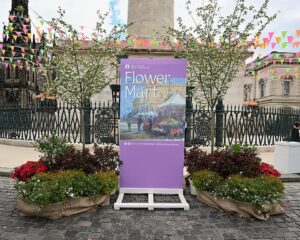
Last weekend's Flower Mart once again demonstrated that there's nothing to fear about downtown Baltimore, writes Michael Olesker.
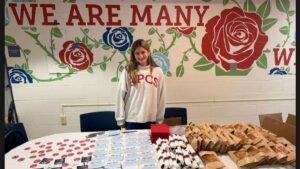
A junior at Roland Park Country School, Katie Grossman writes about a recent experience that spurred her to take action to fight antisemitism.
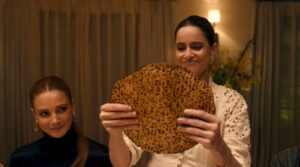
At a time when many Jews fear appearing Jewish in public, seeing Judaism depicted correctly onscreen is reassuring, writes Jewish content creator Rabbi Yael Buechler.