

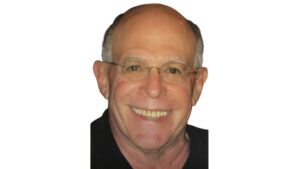
Award-winning Baltimore poet, dramatist and biographer Daniel Mark Epstein calls David Bergman “a post-modern master of the lyric narrative poem.”
A prolific writer born in Massachusetts and raised in New York, Bergman has taught for more than four decades at Towson University, where he co-founded the cultural studies program and directed the lesbian and gay studies program.
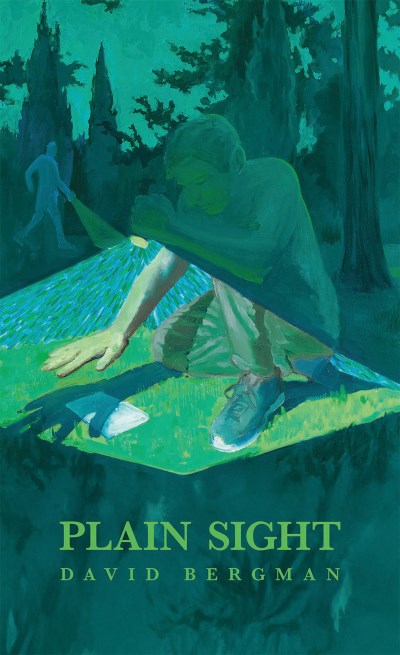
For the past eight years, Bergman — who resides in Charles Village with his husband, John Lessner — has lived with Parkinson’s disease. Bergman’s first new book of poetry in 25 years, “Plain Sight,” was recently published by Passager Books, a local literary press.
Jmore recently spoke with Bergman, 73, about “Plain Sight,” which explores the aging process, chronic illness, the power of love, and the twists and turns of everyday life.
How did you get started as a writer?
I wanted to be a writer for as long as I can remember. I wrote even before I could write; I would do hieroglyphics. My junior high English teacher James C. Morris, a wonderful African-American poet, made me rewrite a sonnet over and over until it was ‘correct,’ and in so doing taught me an immense amount about poetry. On the last three days of class in late June, [with] the un-air conditioned classroom around 90 degrees, he closed the blinds and read Longfellow’s ‘Evangeline’ aloud to us, and I was hooked. It cemented my two desires to become a teacher and a writer.
You’ve written poetry, nonfiction, scholarly works, even two whodunits. You’ve edited important collections of literature; you’ve translated foreign language literature into English. Do you like moving among different genres, or do have a genre that you like to write more than others?
I was an academic, so I wrote things that were appropriate to that field. I wrote the three scholarly books because people asked me to write them. I’m very interested in the literature of gay culture, both as a scholar and as a gay man. So I wrote about it, and also compiled and edited several collections of gay literature.
I’m essentially a poet, though. One of the remarkable things about poetry is that it’s not me but rather the language that’s in charge. As I write, I edit. I might add or take out the occasional word. But you have to let the poem do what it needs to do. In prose, the writer’s in charge. In poetry, the language is.
How does having Parkinson’s disease change what you write or the way in which you write?
I’m still in the process of figuring that out. Parkinson’s is a progressive disease, you know, so I keep having to adapt to its changes — and my changes, one of which is micrographia, writing so small that even I can’t read it. I’ve always been dedicated to writing my first draft by hand. Now, it takes tremendous effort even for me to read it. I think my lines are getting longer because I’m writing smaller. In fact, my latest poems seem to gallop along, emphasized by smallness of writing. All my energy is packed into a smaller space.
I never learned to really type. In high school it was a sexist thing; women, not men, were typists. But my hand-eye coordination is off now because of the Parkinson’s, so I might not be able to type even if I knew how.
I did have the good fortune of being mentored at Towson by the remarkable Donald Craver, a gay man with not only multiple sclerosis but diabetes and cancer. Consequently, I refuse to turn my life over to the disease.
While I wouldn’t wish Parkinson’s on anyone, for me it has been a fascinating experience and taught me so much about my body and mind.
How does Judaism play a role in your personal life and writing career?
I always took tremendous delight in the rituals and the stories and the ethics of my grandparents. But despite having had a bar mitzvah, I was always an atheist. I’ve always been totally uninterested in the religious elements of Judaism, but I’m very interested in and influenced by its ethos.
The Jewish tradition of learning, integrating poetry into your life, caring for others, repairing the world — all of those are integral to my life. And humor. It represents a hope, laughing in the face of death, destruction and the absurdity of living. That’s one of the things I cherish most about the Jewish tradition.
I’d written a set of poems called ‘Hebrew melodies’ that I’d originally thought would go in ‘Plain Sight,’ but the book was getting too long, so the editors and I decided to cut them.
Why did you title the book ‘Plain Sight’?
It speaks to the irony — nothing is plain. Poetry does that, puts things in an unusual context so you can see it.
A lot of people are intimidated not only by poetry but even by the word ‘poetry.’ Why do you think that is, and what would you say to them? People enjoy language, but the term ‘poetry’ has gotten a bad reputation, largely because of the way a lot of people were exposed to it in school. Song lyrics are poetry; rap is poetry; people love those things. I don’t want people to be intimidated by the poems in ‘Plain Sight.’ There’s no exam at the end. You love language or you don’t. And if you do, you want to spend time with it being used in playful, melodious ways.
Baltimore native Susan Landsman recently celebrated her rite of passage surrounded by family, friends, fellow residents and staff.
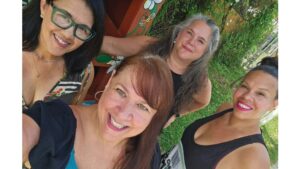
Founded by Marci Yankelov, Julie Kichline, Elizabeth Miller and Lila Perilloux, the Bmore Community Fridge Network serves a crucial role in feeding the hungry.
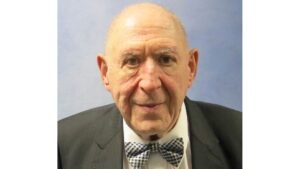
The German-born rabbi, scholar and activist, who served Temple Emanuel from 1963 to 2000 , was a prominent figure in the local Jewish community for more than six decades.
A lifelong Baltimorean, Hirsh was the owner and CEO of Ottenheimer Publishers, a multi-generational family publishing business that operated for more than a century.