
Beth Am recently hosted a wonderful Pride Shabbat gathering. With more than a dozen partner organizations, we welcomed nearly 150 people to our congregation for a rainbow-bedecked and joyful Kabbalat Shabbat service and dinner.
Among the most memorable moments were four brief testimonials from individuals of various ages, gender identities and sexual orientations describing why it was so important for them to feel seen, valued, safe and loved for who they are.
Too many LGBTQ+ people know all too well the toxicity of the closet. Thank God, many also know the joys of not-hiding.
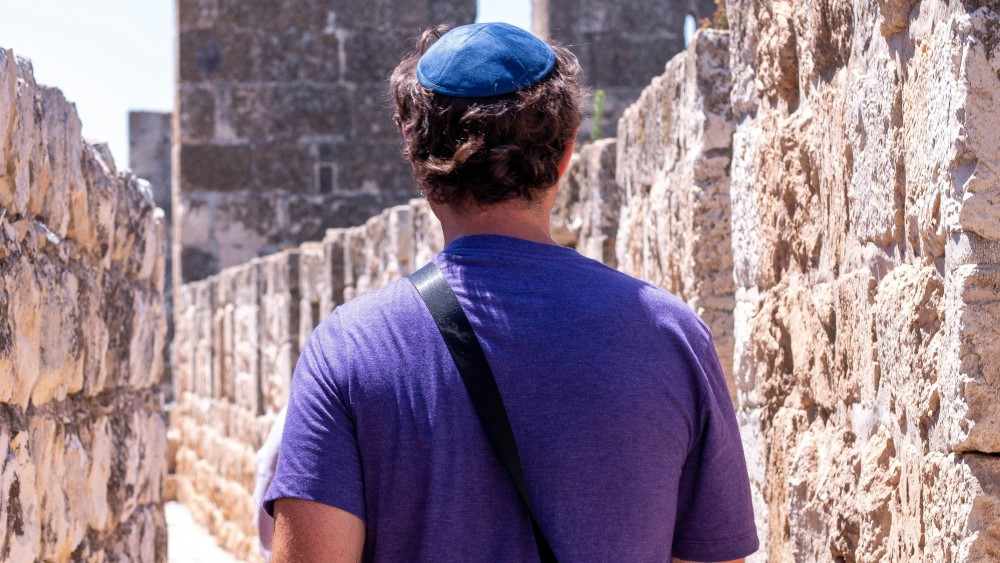
For a long time, Jews enjoyed the safety of not having to hide who we are in many corners of the world. In my life, I’ve rarely thought twice about wearing a yarmulke in public, but this has begun to change.
Traveling with my family to Uganda and Kenya this summer, I wore a hat most of the time rather than a kippah, deciding not to risk “outing” myself or my family until we were more comfortable with our surroundings.
We elected not to fly through certain cities. France was better than Qatar, but I still wore a hat in the Paris airport while moving to our connecting flight. And my daughter did not wear her customary yellow hostage pin.
Even in my own community, while never hiding who I am, I have occasionally felt targeted since Oct. 7 in ways that make me feel unwelcome or unsafe.
One day recently, I walked across the 29th Street Bridge on my way to a Tikkun Leil Shavuot in Hampden. I passed a man I know from Reservoir Hill, someone I’ve engaged in some tough discussions with but always had a reasonably good rapport. This gentleman knows me as a rabbi, a religious leader in our community and, in the past, he’s engaged with me in that capacity.
That erev Shavuot, he approached from the east on a scooter. I nodded, smiled and said, “Hey.” He stopped, pushed back his headphones, but did not meet my gaze. “Oh no, you don’t talk to me.” “Huh?” I said, confused. “You and I, we don’t talk anymore. I know about you. I know about your … escapades.”
I was taken aback. “I don’t even know what you’re talking about,” I said. “Do you have a question for me?” He responded, “I don’t have any questions for you. I know exactly who you are.”
I was starting to get agitated. Like most people, I don’t like being told who I am, especially by someone who doesn’t know me that well. He was still staring somewhere over my shoulder. After a few more rounds of my trying to determine what was bothering him and his insisting he has nothing to learn from me, he finally dropped any pretense.
“I know who YOU are,” and then finally turning to look me dead in the eye, “Daniel.” (It’s strange to be called a name with only one’s name). But then came the slur, dripping with condescension. “Zionist!”
And all became clear. I thought he might want to discuss what he assumed I believe or perhaps what the land and state of Israel, its millions of inhabitants, might mean to me, the complexity of the conflict and my own complicated feelings about the Israel-Hamas War. He did not.
This year, Aug. 12-13 marks Tisha B’Av, the day on which Jews commemorate the destruction of both Temples in Jerusalem and myriad pogroms, enslavements and expulsions from dozens of lands over the millennia. Our national day of mourning is focused on the big events; only the Holocaust merits a separate day of observance. Only the eradication of an unfathomable six million of our people dwarfs the suffering of so very many over so very many centuries.
But what’s lost in Tisha B’Av is the smaller indignities, the ways we Jews have been forced to hide, to shapeshift, to make impossible choices between safety and passing.
This Tisha B’Av, I think we need to consider how best to resist being forced into the closet. There are people in this country who cannot change their appearance, who do not benefit from the conditional whiteness so many American Jews do.
But if there’s one thing we Jews can learn from the Queer community, it’s that the closet is a dangerous and destructive place. Having to constantly determine how much to share of who we are, what we are, and what we believe is corrosive to the Jewish psyche.
Killing us is an ancient pastime, but killing our confidence, our sense of safety and belonging is ancient, too. Let’s not allow anyone to make us feel afraid to be who we are. Tisha B’Av is already too heavy with our generational pain.
Rabbi Daniel Cotzin Burg is spiritual leader of Beth Am Synagogue in Reservoir Hill. This column and others also can be found on his blog, The Urban Rabbi.

Jmore Publisher Scott Rifkin, M.D., reacts to President Donald Trump's latest poll numbers and the real force behind the growing decline of the Trump movement.

Last weekend's Flower Mart once again demonstrated that there's nothing to fear about downtown Baltimore, writes Michael Olesker.

A junior at Roland Park Country School, Katie Grossman writes about a recent experience that spurred her to take action to fight antisemitism.

At a time when many Jews fear appearing Jewish in public, seeing Judaism depicted correctly onscreen is reassuring, writes Jewish content creator Rabbi Yael Buechler.