Late Saturday afternoon, Aug. 3, we left Artscape and its big, beaming, sweaty, good-natured throng happily defying all suffocating heat and humidity, just in time to avoid the first of the day’s electrical downpours.
It made me think about Annapolis.
By the time we headed back downtown a few hours later, for dinner in Fells Point, the rain had returned like drumbeats on the roof of our car and the Jones Falls Expressway was starting to form little rivers.
But I was thinking about Annapolis.
On Sunday, we learned that 30,000 households around the Baltimore metropolitan area had their power blown out by heavy rain, winds and lightning. All weekend, when it wasn’t raining, the temperatures approached 100 degrees.
We were lucky. We didn’t lose our power, so we could turn on the television and see what Hurricane Debby was doing across Florida: power outages, downed trees, flooded streets.
And I thought some more about Annapolis.
Here’s why: all this rain around here, all this storm damage and the power failures — this is how we live in a world where each new weather disaster feels like a strange combination of aberration and inevitable glimpse into the future.
But in Maryland’s capital, it’s getting to be routine.
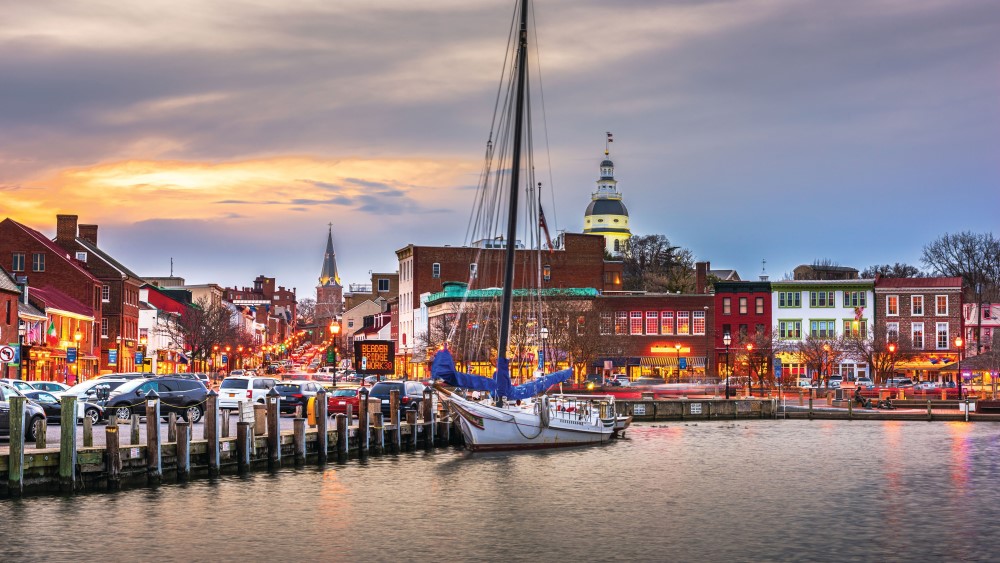
I’m looking at a magazine called Annapolis & Anne Arundel County, one of those feel-good publications put together by various local municipalities. They’re distributed at places like airports, train stations and hotels to tell visitors about the glories of those locations.
And in a lovely, thoughtful piece by Annapolis Mayor Gavin L. Buckley, we have the voice of a grownup. He’s proud of his city and fascinated by its history. But in a venue generally given to platitudes, here’s what he has to say about Annapolis on its routine days.

“According to the National Oceanic and Atmospheric Administration (NOAA), tidal flooding makes Annapolis one of America’s most vulnerable coastal communities, Buckley writes. “Back in 1969, downtown Annapolis faced, on average, 3.6 days of flooding per year. This is the kind of flooding that laps at the doors of downtown homes and businesses, disrupts commerce and degrades infrastructure.
“By 2013, that number had grown to 38.5 days of yearly flooding. By 2019, it was 52 days a year. If nothing is done to hold back the water, by 2065, Annapolis is expected to see daily flooding, 365 days a year.
“And we aren’t talking about rainy days and stormwater runoff,” he writes. “Annapolis experiences ‘sunny day’ or ‘nuisance’ flooding where the water is driven up by the Chesapeake Bay tidal surge compounded by a rise in sea level.”
What’s also alarming, the mayor writes, is that storms these days tend to be more intense.
“In 2003, Hurricane Isabel brought upwards of 7 feet of storm damage to City Dock, the highest on record,” he writes. “Of the 44 highest recorded flooding events in Annapolis, only six happened before 1985.”
Buckley doesn’t explicitly take issue here with climate change or other causes. But he hints at it.
“Over the years, a number of plans have been introduced to combat the flooding,” he writes. “Most plans couldn’t make it through the political gauntlet of local politics.”
Let’s keep that in mind as thousands in Baltimore await the return of electrical power cut off by a few aberrant weekend storms. And keep it in mind as we see the hurricane flooding across Florida.
And think about the future that’s already arriving in Annapolis.

A former Baltimore Sun columnist and WJZ-TV commentator, Michael Olesker is the author of six books, including “Journeys to the Heart of Baltimore” (Johns Hopkins University Press) and “Michael Olesker’s Baltimore: If You Live Here, You’re Home” (Johns Hopkins University).

As millions mourn the passing of Stephen Colbert from the airwaves, Michael Olesker looks back on the "institution" of late-night TV.

The BCO, founded in 1984, will perform the works of Frank Zappa, Beethoven, Mason Bates and Karena Ingram.

As he gets ready to leave for California, Rabbi Daniel Cotzin Burg looks back on his time in Baltimore and his 10 years writing for Jmore.