
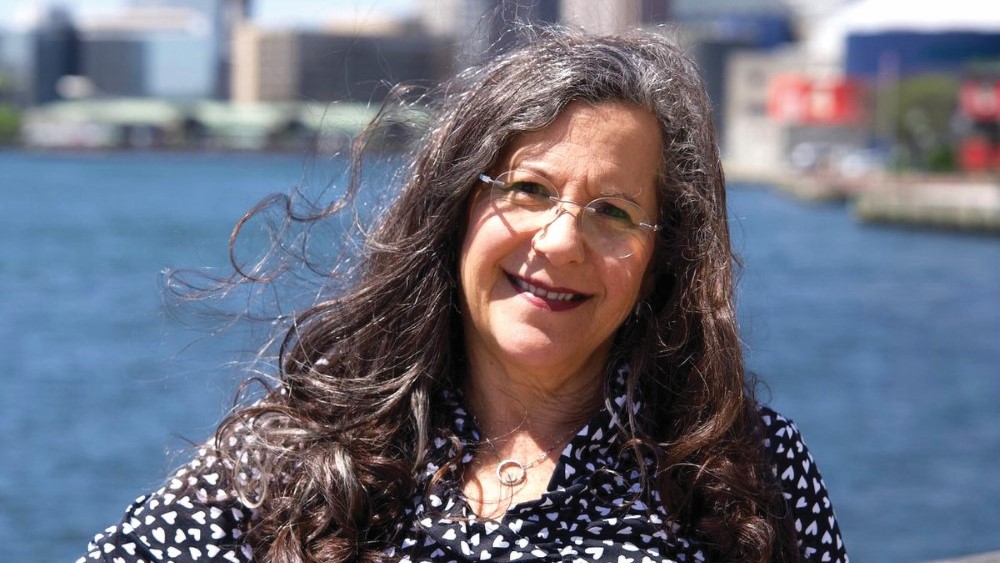
You could say that Laurie Schwartz has the Patapsco River running through her veins.
Since 2010, Schwartz has served as president of Waterfront Partnership of Baltimore, a nonprofit dedicated to improving Charm City’s waterfront areas.
She previously served for 15 years as president of Downtown Partnership, a nonprofit working to strengthen the economic vitality of the Baltimore metropolitan region.
Jmore recently spoke with Schwartz, 71, a New York native who lives in Roland Park, about what’s bringing people back to the harbor, new parks at the waterfront, and a certain giant friendly trash interceptor with googly eyes.
Jmore: What is Waterfront Partnership’s goal of bringing together Baltimore’s best and brightest to create an accessible, engaging and charming urban waterfront?
It means creating an accessible, inviting place that people want to go to. The water is always captivating for people. So we start with a beautiful water area. It’s so important for it to be beautiful and clean, and be a place where people feel they can get away from the hubbub of daily life.
And then we add events on top of that to create more reasons to draw people to the harbor.
What’s unique about the Inner Harbor?
One thing is the physical layout and shape of it. Many other cities have rivers or border rivers, and their waterfront is very linear. Ours is like a C-shape where people can experience a more intimate environment, where you can be at the National Aquarium and look over at Harborplace or the Maryland Science Center and see how walkable it is.
Do you try to appeal more to tourists or locals?
Our first commitment is to really make the Inner Harbor and waterfront a place for Baltimoreans and locals. And the more they enjoy it, the more they talk about it. Others will want to be here through word of mouth.
MCB [Real Estate] is moving ahead with filling the space in Harborplace with entrepreneurs and small businesses, which are exactly what we hear from locals that they want — local businesses, self-made entrepreneurs, makers, artists and not the kind of chains that you see in the suburbs.
The word is that tourists want to be where locals are.
What are some of your fondest memories of the harbor?
I have plunged three times in the harbor. About 12 of us did it last September. We all had life vests on and we swam. It was a blast. It was so much fun to do something that hadn’t been done in decades.
You can see so much deeper into the water now than years ago when it was more polluted. It’s so much cleaner than it was.
Speaking of your work creating a cleaner harbor, what’s the deal with Mr. Trash Wheel?
Mr. Trash wheel and his family have helped clean up the trash from the Inner Harbor and the waterfront.
It was invented by John Kellett, a local who often saw the trash and litter in the water and thought there had to be a way to remove it.
It really didn’t take as Mr. Trash Wheel until the googly eyes were put on it, and then interest exploded! And that by itself is exciting.
But what’s really useful is we can use that to educate the public about clean water and being more mindful of how you recycle and deal with your trash. So we have kids and classrooms every day coming down and being educated next to the trash wheel. It’s been a great opportunity to educate the public.
What’s going on with the Rash Field Park redevelopment?
Phase One opened in November 2021. We’re about to break ground on Phase Two in the fall. So within a year or so, we will have a brand-new, seven-acre park on the south side of the Inner Harbor.
Rash Field Park has attracted so many families, especially from Federal Hill and South Baltimore. People can walk there, bring their kids in strollers. I felt like we needed a stroller parking lot [because] there were so many strollers there. And we see a reflection of Baltimore’s diversity in the park.
Children play. People sit and read and just enjoy the atmosphere. And that is probably the most heartening thing I can think of experiencing at the harbor.
The other park that we built is a smaller park called Pierce’s Park on the north side of the harbor.
Having a hand in both of those new park destinations makes me see that Waterfront Partnership is making a very positive contribution to life in the city.
Anna Lippe is a freelance writer based in Washington, D.C.
A Norfolk native, Frankle worked at Sinai Hospital, Camp Airy and privately for five decades.
Esther Greenberg, Leora Match, Kathlleen St. Villier Hill and Ben Gershowitz will be recognized for the contributions to the community.
For more than five decades, Dr. Rosenstein was known by local families as a trusted and caring physician for their children.
Jewish Community Services' upcoming "Future-Ready Workplace" event will feature a keynote address from workplace expert and bestselling author Liz Fosslien.