

More than a year later, people are still struggling to wrap their heads around the atrocities that took place in Israel on Oct. 7, 2023, and how history will view this watershed moment in the Middle East.
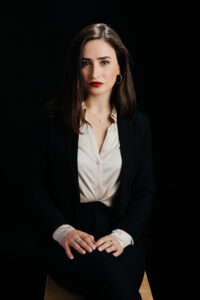
Lee Yaron wanted to understand and reveal the human dimensions of the massacre. An acclaimed Israeli investigative journalist, Yaron is the author of “10/7: 100 Human Stories” (St. Martin’s Press), which explores the stories of more than 100 survivors, the bereaved, first-responders in Israel and others.
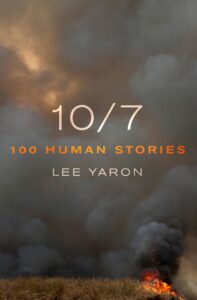
While the Jerusalem Post called the book “the most expansive account yet of the day,” American journalist Bari Weiss wrote that “10/7” is “not about politics. It’s not about military strategy. It’s about the people who Hamas erased. For people looking for a way to commemorate this horrible day.”
On Monday, Dec. 16, from 6:30-8 p.m., Yaron will speak at Pikesville’s Beth El Congregation, 8101 Park Heights Avenue, about her book. The presentation will be sponsored by The Associated: Jewish Federation of Baltimore, the Baltimore Jewish Council, Beth El and Hadassah Greater Baltimore
Jmore recently spoke with Yaron, a writer for the Israeli newspaper Haaretz, about “10/7.”
What inspired you to write a book about the human dimensions of the massacre?
I started writing this book right after Oct. 7th when I was still deep in grief. I felt I had to do something for these victims, to keep their memory alive. As a writer, I knew the best way I could do that was through telling their stories.
I’ve spent years at Haaretz writing about regular people — refugees, survivors of violence, people struggling to get by. One thing I’ve learned: the real story isn’t in fancy political speeches. It’s in people’s lives.
What we’ve witnessed since Oct. 7th reinforces this truth. The flood of competing narratives often drowns out the human reality at the heart of this tragedy. While personal accounts occasionally break through, they’re frequently reduced to brief snapshots that strip away crucial context.
That’s why I wrote this book differently. Instead of another top-down view, I went straight to the people. I interviewed hundreds of civilians who lived along the Gaza border — regular families, parents, kids.
By delving into the lives of 100 civilians along the Gaza border, I’m seeking to illuminate the human fabric of this region — not just their final moments but their dreams, their daily lives, their family histories stretching back generations.
Through hundreds of interviews, I traced family stories back to the 1940s and ‘50s, examining how decades of conflict, failed peace initiatives and political decisions shaped these communities long before Oct. 7th. These aren’t just victims in a news headline — they’re mothers, fathers and children whose lives were deeply intertwined with the region’s complex history.
By weaving together personal narratives with broader historical context, I hope to offer readers something beyond statistics and political analysis — a ground-level view that reveals how grand political decisions ripple through real lives and communities
I wrote a book about their lives, not just their death.
Where were you when you first heard about the tragedy?
On Oct. 7th, I was glued to the news like everyone else, but it was also personal for me. My aunt from my Turkish side and my uncle, son of Moroccan immigrants, live in Ofakim, one of the small towns attacked by Hamas terrorists.
That morning of 10/7, more than 20 Hamas terrorists besieged Ofakim. They targeted Mishor Hagafen, the poorest neighborhood in the town. Many homes there don’t have shelters or safe rooms, and the people ran to public shelters in the streets for safety. So when the sirens were activated, people thought it was just another rocket attack and ran outside — something they’re used to since 2001, while the second intifada terror groups from Gaza started launching missiles on the cities. But this morning of 10/7, it made them easy targets to terrorists shooting in the streets.
My aunt and uncle live where the worst happened, but they were saved because they decided to stay home and not run outside. Forty-seven civilians and six police officers from Ofakim were murdered.
What did you find in your interviews with survivors, family members and first-responders that surprised you about that day?
Writing this book showed me something deep – Oct. 7th isn’t just about Israel. It’s part of the larger Jewish story.
In my research, I discovered how many families of the massacre’s victims were themselves refugees. Their parents or grandparents had survived the Holocaust, fled pogroms in different countries and came to Israel seeking safety.
When those fences broke on Oct. 7th, something bigger shattered. It wasn’t just an attack on buildings. It broke a dream carried through generations.
I heard this same pain from every survivor I interviewed. Whether their families had escaped Arab countries or Europe, they all felt it. This wasn’t just about one day. It was about the promise of safety finally being broken. The very thing their families had fled from generations ago had found them again.
What stories in particular touched you?
The most overlooked story might be that of the Ukrainian refugees in Israel — 50,000 people who’ve become victims of two wars. They fled Putin’s rockets in February 2022, only to flee Hamas rockets a year later. I’m telling the incredible story of Eitan, an orphan boy from Odessa, whose new home in Ashkelon was destroyed by rockets, forcing him to start over for the third time in just one year.
Then there’s Sojod, a 20-year-old Israeli Palestinian Bedouin woman. Nine months pregnant, she went into labor on Oct. 7th. En route to the hospital, Hamas terrorists stopped her car. Despite her visible pregnancy and despite her hijab, they shot her in the womb. Her 10-hour-old baby, who suffered two bullet wounds while shielding her mother, became the youngest victim of the attack.
Was it emotionally draining for you to spend so much time focused on that day and talking to people who have suffered so much?
I was interviewing a mother who lost her son and daughter-in-law, leaving her to raise their little girls alone. That’s when I got the news — my dear friend Gal Eizenkot had been killed in Gaza during a hostage rescue mission. I wasn’t just the writer documenting grief. I was living it, too.
Writing this book was one of the hardest things I’ve ever done. Sitting with hundreds of people during their darkest hours, hearing their stories — some days it felt impossible to go on.
But in a way, this work also saved me. It gave me a mission — to make sure these voices wouldn’t be forgotten. To give the victims what they deserve most: to have their stories told, their memories honored.
I’m inspired by the Jewish tradition of Yizkor books, or ‘memorial books.’ This tradition dates back centuries, with one of the earliest surviving examples being the Nuremberg community’s book from 1296 to 1392.
These books recorded community names, testimonials of persecutions and lists of victims to be read in synagogues during memorial services.My book is an heir to these Yizkor books. It aims to reclaim the dead of Oct. 7th from numeric anonymity and political exploitation, presenting them as individuals with stories, dreams and lives cut short.
People still can’t comprehend how Israel, with all of its security and intelligence, was so vulnerable that day. Your thoughts on that subject?
The hard truth is that Israel’s over-reliance on advanced technology and sophisticated security systems became its weakness. We put so much faith in high-tech sensors and intelligence systems that we ignored the most basic form of security — human observation.
Here’s the tragic irony: the only ones who saw it coming were young female soldiers stationed at the Gaza border. They’re called ‘tazpaniyot,’ spotters. While everyone else trusted in fancy technology, these women spent hours watching, observing, noticing the small details.
Months before Oct. 7th, they reported suspicious Hamas activity. But in a military system dominated by male officers, their warnings were brushed aside. They were told, ‘You’re just the eyes, not the brain.’
The price of ignoring these women was devastating. On Oct. 7th, 16 spotters were killed. Seven were taken hostage. These women, whose warnings could have prevented the massacre, became its victims.
Like the Yom Kippur War of 1973, Oct. 7th was a result of arrogance. The security leadership was trapped in their own misconceptions about Hamas. They were so convinced of their superiority that they dismissed crucial warnings,especially when those warnings came from young women soldiers.
From your perspective, how has Oct. 7th transformed Israel and the Middle East in general?
First, we’re seeing deep changes within Israeli society. Before Oct. 7th, Israel was already experiencing internal tensions. While the initial shock of the attack brought temporary unity, new divisions have emerged, particularly around the hostage crisis, Ultra-Orthodox not serving in the IDF, and the future of Gaza. These internal debates about Israel’s future have become more intense, not less.
Second, there’s a concerning trend of young Israelis leaving the country. Between July and October of 2023, over 34,500 Israelis left and hadn’t returned by May 2024, double the previous year’s figures. At the same time, we’re seeing increased interest from Jews abroad wanting to move to Israel, especially from North America.
Third, there’s been a dramatic shift in how Israelis think about security. The traditional reliance on technology and military strength is being questioned. We’re seeing changes in everything from civilian gun ownership to how security forces operate. The attack has forced us to rethink basic assumptions about safety and defense.
Do you still believe that some kind of peace process or two-state solution is possible?
I opened the introduction with the Jewish tradition of “sitting shiva.” Shiva is an ancient mourning ritual dating back to the Bible, of mourning a dead person for seven days after the burial.
During this time, the daily routine is forbidden: A mourner is not allowed to work or cook or clean. They must remain in the home of the deceased, sitting as close to the ground as possible, showing the lowness of their sorrow. They must tear their clothes to demonstrate the rip in their souls. One of the most interesting rules of shiva is that mourners are forbidden to say שלום, the Hebrew and Arabic word for peace — and also a common greeting. The tradition recognizes that no peace is possible during the mourning period.
After the shiva is over, the mourners must rise and go back to their homes and their routines.
There are no religious instructions for how to sit shiva for an event like 10/7 — shiva b’October in Hebrew. How are you supposed to mourn if you’ve lost your son, daughter, mother and husband all on the same day? Should you mourn them collectively, or is there a certain order? What do you do without a body to bury? Or if the body is being held hostage? And how to mark shiva’s end if you have no home to return to?
My fear is that in Israel — and in the entire Middle East — we’re all stuck in this constant shiva, a shiva that never ends — so we’ll never be able to say Shalom.
I hope this book can help those who wish to mourn, but I also hope it can help those who want to get up, who want to rise again, to dream of peace again.
What are the takeaways that you hope readers gain from this book?
I hope this book helps readers see beyond the headlines and numbers to the real human stories beneath them. These days, when the news turns people into statistics and social media pushes everyone to take extreme sides, we need to remember the actual lives touched by these events. Every person in this book had a family, dreams, and a unique story that deserves to be told.
What struck me most while writing was how many of the victims — especially in the kibbutzim — spent their lives trying to build connections between communities. They believed that understanding each other’s stories could lead to positive change. Their loss makes this message even more powerful.
Through these personal stories, I want to show that acknowledging each other’s humanity isn’t a sign of weakness — it’s the foundation for any real understanding. If we can’t see the human beings behind the politics, we’ll never move forward.
For information about Lee Yaron’s talk at Beth El, visit events.idonate.com/100humanstories.
The new exhibition revisits and updates a previous show about ritual hair covering in the observant community.
The Pikesville resident's latest offering "There's a Dragon in the Tree House and He Won't Come out!" was co-written with her grandsons.
A new biography captures the intensity and magic of the musical theater giant, writes Michael Olesker.
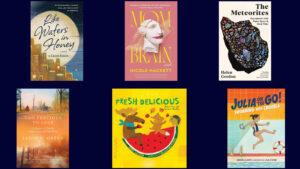
Emma Snyder, owner of The Ivy Bookshop, offers recommendations for must-read titles for adults and children.