
By Joanna Nissim
This story originally appeared on The Nosher.
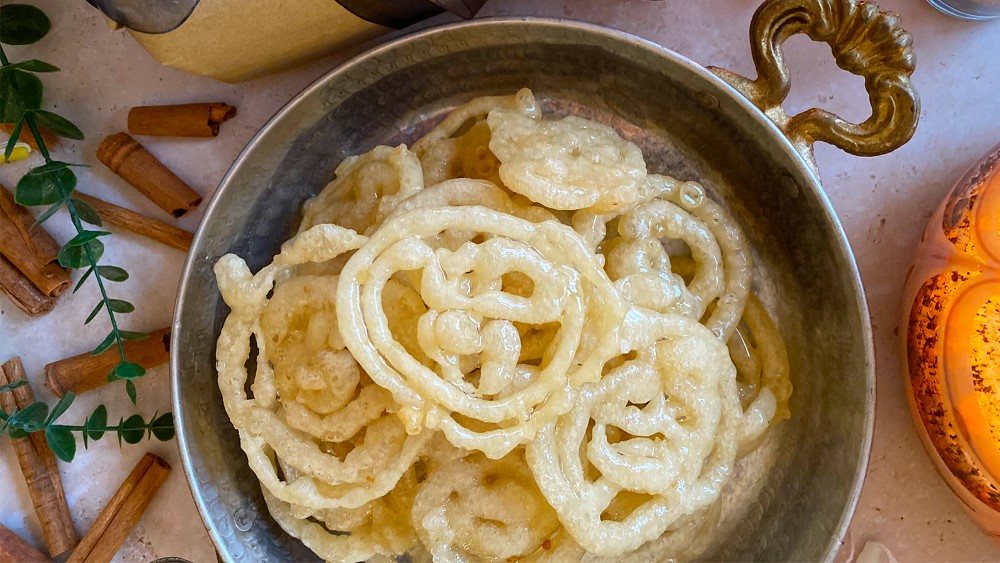
The thing that I love about Jewish food is that across our wonderful and diverse communities, we often eat pretty much the same dishes, with slight variations in name, flavor and technique. For example, the typical Iraqi Chanukah sweet zalabia — a delicious fried, yeasted funnel cake soaked in a sticky and intensely sweet syrup — is essentially the same as Syrian zalabiah (although theirs is a different shape) and Indian jalebi, both also eaten on Chanukah.
This makes perfect sense, as Jews who originated from Spain spread across the world after the Inquisition, taking their recipes with them across the Middle East. There are documented recipes for zalabia in a 10th-century Arabic cookbook, which was originally made by pouring the batter through a coconut shell. The recipes were slightly adapted according to their new surroundings, including zalabia. Indian Jews, for instance, use ghee and turmeric, two very common ingredients in Indian cooking; Syrian Jews use orange blossom water as the main flavor of their syrup for similar reasons.
Our family makes Iraqi zalabia, and very little has changed through the ages. I love the nostalgia that Chanuakh holds for so many of us; the memories of watching parents and grandparents frying treats — be they zalabia, sfenj, latkes or any of the other delicacies Jews enjoy at this time of year — waiting for the chance to taste them.
This year, my 5-year-old son stands next to me as I fry the zalabia — he is responsible for dunking them into the syrup, licking his sugary fingers as he goes, I’m sure, and admiring his handy work at the end.
In these troubled times, it brings me reassurance to think of the culinary traditions that have stood the test of time, through wars and atrocities. I am comforted that, like the Chanukah story itself, we will come out the other side victorious — perhaps with a new festival or culinary traditions to celebrate the time in 2023 when Hamas attempted, and failed, to slay the Jewish people.
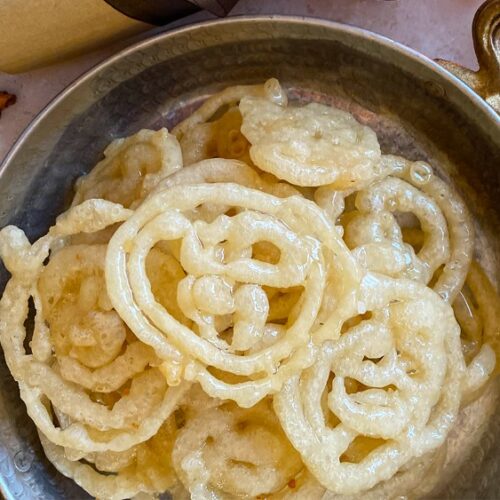
Zalabia (Iraqi Funnel Cake)

Equipment
- kitchen funnel
- squeezy bottle with a nozzle top
Ingredients
For the batter:
- 2 teaspoons dried yeast
- 2 cups warm water, divided
- 1 teaspoon sugar
- 1 pinch salt and pepper to taste
- 2 cups plain flour
- Neutral oil, enough oil to fill a pan, 4-5 inches deep
For the syrup:
- 3 cups sugar
- 1 cup water
- 1 teaspoon lemon juice
Instructions
- Start by making the batter. Mix the yeast, 1 cup warm water, sugar and salt, and leave for 15 minutes until it foams on top.
- Add 2 cups flour and the remaining 1 cup water to the yeast mixture and mix well.
- Leave in a warm place for 2 hours until the mixture is bubbling and smells yeasty.
- Whilst the mixture is fermenting, make the syrup: Mix the sugar and water together in a pan and bring to the boil. Once boiled, let it simmer until it thickens for approximately 7-8 minutes and coats the back of a spoon. Turn it off the heat and let it cool down while you finish the zalabia.
- Once the zalabia batter is ready and has bubbled, using a kitchen funnel, pour the mixture into a squeezy bottle with nozzle top.
- Heat the oil until it is shimmering. Once it shimmers, squeeze the mixture from the squeezy bottle into the hot oil creating a spiral shape, approximately 3 inches wide. Do not overcrowd the pan while frying, as the zalabia will turn soggy.
- Once the zalabia puff up and slightly change colour, flip them over. Cook for another few minutes, when they begin to firm up and become slightly golden. Remove from the pan and drain on kitchen paper.
- While still warm, take each zalabia and drop into the warm syrup quickly, but ensuring the fritter is completely coated. Remove with a fork, shaking off the excess syrup. Serve warm or at room temperature.
Notes:
You will need: a kitchen funnel and a squeezy bottle with a nozzle top.
Joanna Nissim is a London-based wife, mom and passionate foodie.
Stuffed vegetables invite creativity, but there are some "rules" when it comes to cooking. Vered Guttman shares six veggie-stuffing tips.

On this episode of "The Food Enthusiast," Dara Bunjon talks with Anne-Marie Bonneau, author of "The Zero-Waste Chef."
This roasted eggplant recipe from Elite Jakob is easy, quick and delicious, perfect as a side dish, for brunch or next to fish or chicken or meat dishes.

Dara Bunjon talks with wine aficionado Zena Polin, proprietor of Beauty Champagne and Sugar Boutique and co-host of the "When You Just Want a Glass of Wine" podcast.