
By Harry D. Wall
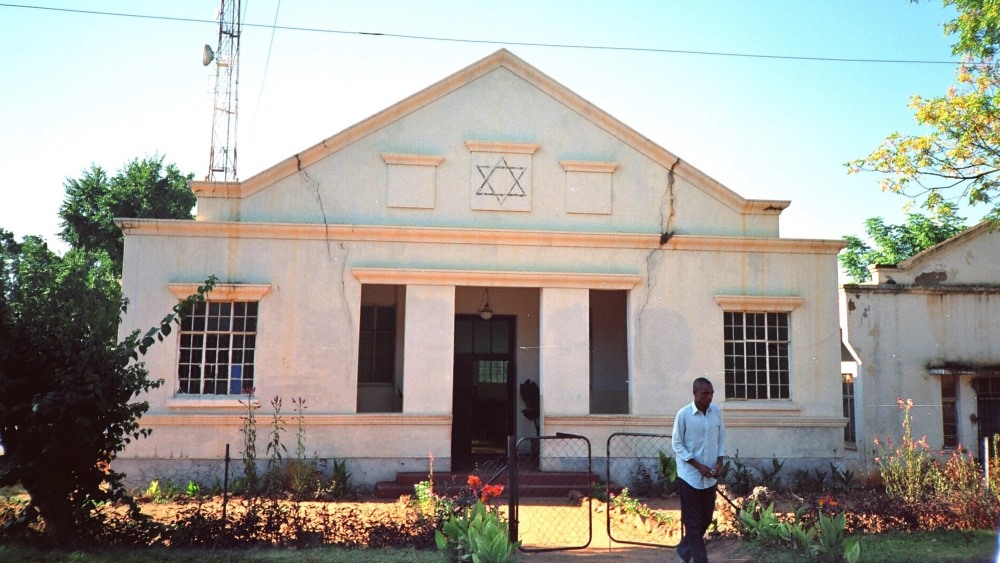
On the outskirts of Livingstone, a Zambian frontier town seven miles from spectacular Victoria Falls, a wooden building marked “Gateway Jewish Museum” stands among century-old steam locomotives and vintage coaches showcasing the central African nation’s railway legacy.
There’s no doubt railways were key to the development of landlocked Zambia. But Jews?
“A tiny population influential beyond its numbers” is how Oxford historian Hugh Macmillan described Zambia’s Jewish community, which at its postwar peak numbered no more than 1,200.
“Jews have played an important part in Zambian history, especially in commercial business but also in the country’s political and intellectual life,” said Macmillan, co-author of the 1999 book “Zion in Africa: The Jews of Zambia.”
Today, only a handful of Jews live in Zambia, a nation of about 20 million. But the influence of their historic presence continues to shape the developing nation.
European Jews first came to the country in the late 19th century, when Zambia was still known as Northern Rhodesia. Most were from Eastern Europe, poor Yiddish-speaking emigrants seeking a better life. They started as peddlers, traders and shopkeepers. Over the next few decades, they diversified into farming, cattle ranching, timber and mining.
In the 1920s, about 100 Jews lived in the country, nearly half of them in Livingstone, then Zambia’s capital. The second wave of Jewish immigration occurred in the late 1930s, when some 300 Jews from Germany and Austria — along with others from Latvia, Lithuania and Rhodes — received visas from the British colonial regime. Many more, fleeing Nazi persecution, were denied entry.
As Zambia developed its copper mines in the north, the Jewish population swelled; communities began popping up in the “Copperbelt” towns of Kitwe, Ndola, Mufulira and Lusaka, the new capital. Each town had its own synagogue and Jewish cemetery.
“We were a small but very cohesive community,” recalled Aviva Ron, 81, who grew up in Ndola and has lived in Israel since 1960. “We had services every Friday night. Bar mitzvahs were prepared by a ba’al tefillah, and the mohel was the local dentist.”
After Zambia’s independence in October of 1964, many Jews left after the country’s new leader declared only native Zambians could acquire work permits, forbidding foreigners to work in positions Zambians could fill.
But Zambian Jews generally enjoyed good relations with their countrymen, Ron said. “We weren’t like South African Jews who had nannies and houseboys,” she said. “When my father’s Indian and Black workers came to the house, they waited in the living room, not the backsteps. Their children were my friends.”
According to historian Macmillan, “Jews and Africans were both the objects of differing degrees of racism. It was endemic among white settlers in southern Africa. … There was fear that Jews in the frontier might become too familiar with Africans and undermine the deference toward whites, which was seen as essential to their security.”
One Zambian Jew, Simon Zukas, played a key role in the independence struggle in the 1950s and was exiled by the colonial government. After independence, he became a government minister. When Zukas died in October in 2021, the government declared a day of national mourning.
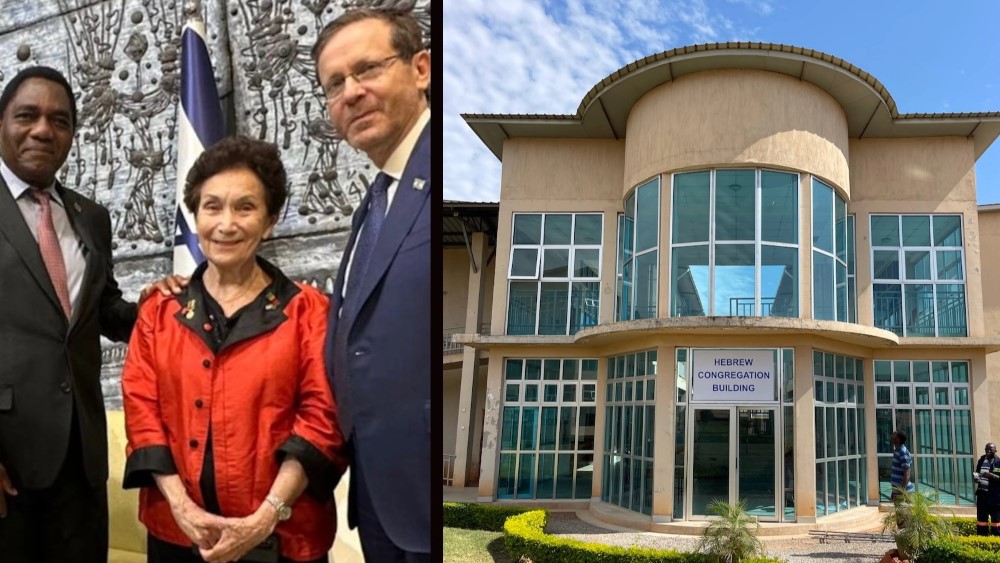
Today, Zambia is home to only about 11 Jews, not counting those staying temporarily.
Livingstone’s Gateway Jewish Museum was established with donations from David Sussman, a descendant of Zambian Jewish pioneers, and others from the community. Its panels and glass cases highlight the 130-year history of Zambian Jewry, with text, photos, letters and ritual objects.
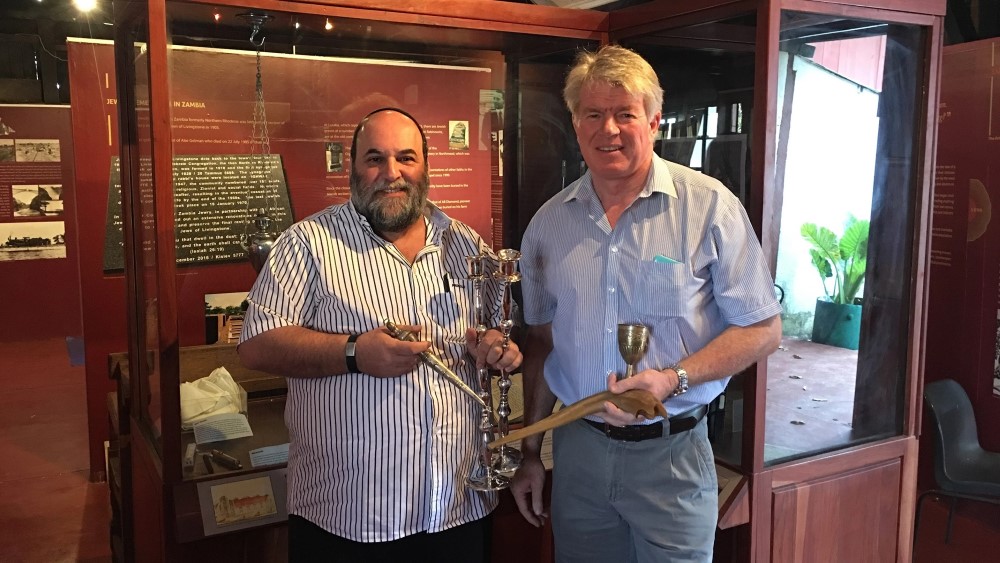
Zambia’s Ministry of Education includes Jewish heritage in its curriculum, with schools bringing students to the museum. Located on the grounds of the Railway Museum, it is administered by the city.
Walking tours of “Jewish Livingstone” also can be arranged with a local historian and volunteer, Peter Jones.
Overseeing the pastoral needs of Zambia’s Jews — as well as those in eight other southern African countries — is Rabbi Moshe Silberhaft of the African Jewish Congress. The Johannesburg-based Silberhaft visits Zambia often, bringing kosher products, officiating at lifecycle events and ensuring Jewish cemeteries are maintained.
“Our mission is to respect and record the contributions of once-proud, vibrant Jewish communities in southern Africa,” he said. “We are here to support the few Jews left and preserve the memory of those who once lived here.”
Harry D. Wall wrote this article for the JTA global Jewish news source.

A former college campus activist, Veksler will speak at Chizuk Amuno on June 8 at the Ruth and Jay Lenrow Visiting Scholar-in-Residence for Combating Antisemitism.

Spending on "hasbara" should be “like investing in jets, bombs and missile interceptors,” argues Israel’s foreign minister.

Israeli-Americans Rachel Goldberg-Polin and Jon Polin talked about the pain of losing their 23-year-old son, who was kidnapped and later murdered in the Oct. 7th tragedy.
The remaining 6,000 members of the community are expected to immigrate by 2030.