

As even the most diehard fans of “The Bard” will admit, “The Merchant of Venice” is, shall we say, problematic.
First published in 1600, Shakespeare’s comedy-drama is about a merchant named Antonio who takes a large loan from a Jewish moneylender named Shylock. When Antonio is unable to pay back the loan, Shylock famously demands a “pound of flesh.”
A miserly and merciless businessman, Shylock exemplifies many of the persistent antisemitic tropes that persist to this day.
In her 2018 play “Everything That Never Happened,” Jewish playwright Sarah Mantell asks, “What if Shakespeare got it all wrong?” The play makes its East Coast premiere this Thursday night, Feb. 13, and will run through Sunday, Mar. 9, at Baltimore Center Stage, 700 N. Calvert Street
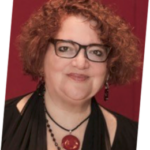
Jmore recently spoke with Jessica Kubzansky, the play’s Jewish director, about the production.
Tell us about ‘Everything That Never Happened.’
I love this play so much. The minute I met it, I fell in passionate love with it. I am a bit of a Shakespeare freak but I have always wrestled mightily with the antisemitism, racism and misogyny inherent in the heart of “The Merchant of Venice.”
‘Everything That Never Happened’ answered some of the burning questions I’ve always had about ‘Merchant.’ It introduces Shylock, Jessica, Lorenzo and Gobbo as richly three-dimensional human beings. I’m unutterably moved by the brilliantly flawed humanity at the at the heart of this story about a young Jewish woman who falls in love with a Christian man, and then leaves both her culture and the father she loves behind. In Sarah’s play, there is such deep complexity at the heart of every character’s actions.
Is this the first time you’ve directed this play?
No, I am an artistic director at a theater in southern California called Boston Court, Pasadena, which is a theater that does a lot of risky, adventurous new work. In 2017 or 2018, somebody from the Yale School of Drama reached out to me and asked if I would be willing to have a meeting with a playwright who had just graduated and was taking a series of West Coast meetings. So Sarah walked into my office and they said they were writing a play in response to ‘The Merchant of Venice.’ And I held up a New Yorker article I had literally been reading that day about ‘The Merchant of Venice.’ I said, ‘I’m interested in that. Please tell me more.’ And we had a great conversation.
I read the play that night; I fell in love with its incredible poetry and the amazingness of the play itself. I called my co-artistic director the next morning and I said, ‘I think I found my 2018 play.’
Will this production be different than the original?
First of all, every time you do a next production, it is of course brand new. I do have a couple of actors who were in the original, and I have a one designer who actually did the world premiere. Everybody else is new to me. Designers I’ve never worked with before and new actors as well.
In fact, Sarah did a significant rewrite between the first production and this one. Also, our space configurations are very different so there are a variety of solutions that have to be new. More profoundly, time changes plays and plays change with time. And the world of 2018 and the world of today are very different places.

What’s it like to do this play now, given the political climate and rise in antisemitism?
I’m really gobsmacked by the deeper cultural waters that Sarah is swimming in because the play is making a commentary on our society both then and now. It is technically set in 1596, but the language is entirely modern and there is some time bending that happens in the play.
The play is talking about the ancestral memory of all other groups on privilege and pain and passing. It’s asking so many important questions like, ‘What does it mean to be the other? How do we internalize self-hatred? If we throw away our cultural identities, do we find freedom? Is it worth it? Who will we be once we have assimilated? What does it mean to be a woman in a world of men who believe that women are not quite human or are certainly second-class citizens? How do we become the best version of ourselves despite the roles that society has assigned us?
I’m sad to say that it is still screamingly relevant and speaking to our time now more than ever.
Is it hard to make art right now?
In a strange way, it feels like it’s one of the only places where we can actually reach for our common humanity. What I love about plays is they’re frequently about a very specific group of people, but the humanity is so universal.
The characters in this play are deeply flawed, and they are all good people who do some pretty terrible things for love, or because they believe they need [to do them] in order to survive. I think [every] human can relate to that. We’re talking about a lot of deep things, but this play is also brilliantly funny.
What’s it been like to work with Center Stage?
First of all, I have an astonishing cast. I have amazing designers. My stage management team is incredible. It’s a beautiful group of people running Baltimore Center Stage. Every department is incredible.
I’ve had the privilege of working in theaters around the country and Baltimore Center Stage is a place of radical joy. Given all the challenges currently in the world, to work at a place that centers radical joy is beautiful.
For information, visit centerstage.org.

The Jerusalem Orchestra East & West, which arranged the program for young musicians, blends Western orchestral music with Middle Eastern traditions.

Pikesville resident and entrepreneur Luna Rosendorff discusses what she's seeing these days in the world of contemporary interior design.
Jewish Community Services' upcoming "Future-Ready Workplace" event will feature a keynote address from workplace expert and bestselling author Liz Fosslien.
The BCO, founded in 1984, will perform the works of Frank Zappa, Beethoven, Mason Bates and Karena Ingram.