

Earlier this week, Sen. Chuck Schumer (D-New York) was scheduled to speak at Baltimore’s Enoch Pratt Free Library to promote his new book, “Antisemitism for America: A Warning” (Grand Central Publishing).
Instead, the Senate minority leader’s Mar. 17 talk at the Pratt was cancelled due to a planned protest organized by the local chapter of the anti-Zionist group Jewish Voice for Peace.
Due to security concerns, Schumer, 74, also cancelled appearances in Manhattan, Philadelphia and Washington, D.C.
Last Sunday, The New York Times published a multipart interview with Schumer covering everything from the future of the Democratic Party to his anxieties about antisemitism and how Oct. 7 changed the landscape for American Jewry.

The interview was published just days after the Brooklyn-born Schumer helped push through a Republican-led funding resolution that averted a government shutdown, igniting the wrath of many of his Democratic colleagues.
Here are nine highlights from the interview. (Lulu Garcia-Navarro, the journalist who interviewed Schumer, did not ask him about President Donald Trump repeatedly calling him a “Palestinian” and “not Jewish anymore.”)
On the surge in antisemitism in recent years:
It began changing in the beginning of the 21st century. And what I’ve written in the book is, when things get a little rough, that’s when antisemitism bubbles up. … But it was Oct. 7 that changed it all. And all of a sudden, antisemitism explodes in ways we’ve never seen, and overt antisemitism. Jewish bakeries being called Zionist bakeries and rocks thrown through their windows. People who wore yarmulkes or Jewish stars being screamed at, vilified, even punched. And it shocked us.
For the first time, Jews I know started saying, ‘Oh, God, maybe it could happen here.’
On whether he has faced antisemitism in Congress:
There was some. One of the senior guys when I got on the Judiciary Committee said, ‘Schumer, welcome to the Jew-diciary Committee.’ So there was some of that.
On whether Jews will keep voting for Democrats:
There are different polling numbers, but most of them show a very high percentage of the Jews voted Democratic. Some of the more vocal people are on the right, and the Republican Party has made an attempt to make Israel and even antisemitism a political issue, which is horrible for Israel.
I told that to [Israeli Prime Minister Benjamin] Netanyahu actually years ago, not to make it a political issue, but he did. He embraced Trump and did it. But I do think the progressive values of the Jewish people, the fact that we’ve been oppressed for so long, we’ve always had a sympathy for the underdog, that doesn’t go away.
I think that basically, the rank-and-file Jewish person, who is not that political, no more than anybody else, is fundamentally a Democrat and will stay that way.
On the accusation that Israel is committing genocide in Gaza:
Criticism of Israel and how it conducted the war is not antisemitic. But it begins to shade over. … And a lot of the slogans that people use either are or slide into antisemitism. The one that bothers me the most is genocide.
Genocide is described as a country or some group tries to wipe out a whole race of people, a whole nationality of people. So if Israel was not provoked and just invaded Gaza and shot at random Palestinians, Gazans, that would be genocide. That’s not what happened. In fact, the opposite happened. And Hamas is much closer to genocidal than Israel.
On the Trump administration pulling funding from Columbia University over campus antisemitism:
Columbia did not do enough. … I started my career protesting the Vietnam War. … So I get that, and I love it, and it’s about America. But when it shades over to violence and antisemitism, the colleges had to do something, and a lot of them didn’t do enough. …
So what did they do? They took away $400 million. I’m trying to find out what they took away. Are they taking away money from cancer research, or Alzheimer’s? What is the $400 million? It could be hurting all students. Students who go there who have nothing to do with the protest, students who might have protested peacefully, or Jewish students who were victims of some of those protests.
On the ICE arrest of Palestinian protester Mahmoud Khalil at Columbia University:
If he broke the law, he should be deported. If he didn’t break the law and just peacefully protested, he should not be deported. …
Look, I get protests in front of my house all the time, but they have to have a permit and they have to obey certain rules. There are rules. But the bottom line is we have courts, and Khalil will go to court. And I have a lot of faith that the judge will give a fair ruling. It’s not the Trump administration, it’s an independent federal judge.
On where Democrats went wrong in the 2024 election:
We just assumed we were on the side of working people, so they would naturally assume it, and it didn’t happen. We lost them because they didn’t think we cared about them enough. We always did care about them, but we didn’t convey it. So now … we’re learning to convey in different ways.
On whether Republicans will break with Trump:
The Republicans would like to have some freedom from Trump, but they won’t until we bring him down in popularity. That happened with Bush in 2005. It happened with Trump in 2017. When it happens, I am hopeful that our Republican colleagues will resume working with us.
And I talk to them. One of the places is in the gym. When you’re on that bike in your shorts, panting away next to a Republican, a lot of the inhibitions come off.
On whether he should step down after voting for a Republican proposal to fund the government:
Let me say this: There is spirited disagreement on which was the right vote. But as I said, I think we have mutual respect in our caucus, and we are all united, no matter how people voted on this vote, to continue fighting Trump.
Ben Sales writes for the JTA global Jewish news source.

One of the most competitive local races for public office this political season is for Baltimore County Executive. Jmore recently spoke with four of the candidates about their views on how they hope to enhance life in the county.

The Pikesville resident's latest offering "There's a Dragon in the Tree House and He Won't Come out!" was co-written with her grandsons.
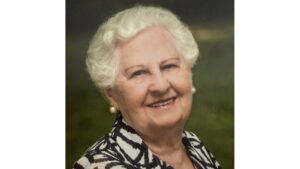
A native of Poland who lived in Baltimore since 2010, Pancerman passed away a day after her birthday.
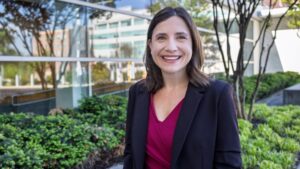
Leslie Simmons, executive vice president and chief operating officer of LifeBridge Health, will serve as interim president of Sinai and Grace Medical while a national search is conducted for Shlossman’s successor.