

By Asaf Elia-Shalev
After running as a candidate last time, New York-based Jewish activist Abraham Silberstein will not even be voting in this year’s World Zionist Congress election.
In 2020, Silberstein joined a liberal slate from the United States vying for representation in the Congress, a unique legislative body that lets Jews from all over the world have a say in Israeli affairs.
Founded by Theodor Herzl 128 years ago, the Congress has influence over Israeli policy on immigration, land use and religious affairs through its control of institutions such as the Jewish Agency and the Jewish National Fund. It also distributes about $1 billion annually to Jewish causes.
A critic of Israel, Silberstein agreed to join the Reform movement’s list of candidates. Given his position near the bottom of the list of candidates, he knew he had no chance of being elected. But his willingness to participate was an expression of his progressive Zionist politics at the time.
The war in Gaza has changed that outlook and his approach to the current election, which remains open for voting through May 4.
“I have in general become disillusioned with progressive Zionism since Oct. 7,” said Silberstein, a doctoral student in modern Jewish history at New York University
Silberstein vehemently objects to Israel’s conduct in the war and no longer believes in the possibility of changing Zionism from within.
Even if he did, he said he can no longer ethically participate in the election. That’s because voters are required to say they accept the “Jerusalem Program,” an evolving set of principles that serves as the official platform of the Zionist movement.
Silberstein refuses to accept the platform’s final clause identifying service in the Israeli military and support for the military as a fundamental Zionist value. It was added after the last election, amid debates in Israel about whether haredim (ultra-Orthodox Jews) should continue to be exempt from service, and during a global surge in criticism of the Israeli military.
“If I claimed to uphold the ‘Jerusalem Program’ today, I would be lying, and that would be plainly unethical,” Silberstein said.
Silberstein is not alone in reconsidering his position on the Congress. As the 21 slates running this year ramp up their campaigns and election administrators tout record turnout during the first week of voting, American Jews at different fringes of the community are debating whether to participate.
Silberstein is part of the conversation taking place on the far left. Meanwhile, Haredim are also divided over whether to turn out and vote for a slate promising to represent their interests.
A Bitter Pill
For nearly all of Zionist history, there was no haredi slate. In Israel and in the U.S., haredi rabbis have historically regarded Zionism as a secular movement clashing with traditional notions of God’s role in restoring Jews to the Land of Israel.
They’ve allowed participation in Israeli democracy for the protection of their religious rights and state services but viewed support for the Congress as a capitulation to secularism.
But a rebel faction emerged ahead of the 2020 election with the creation of a slate called Eretz Hakodesh, meaning “the holy land.” Championing “classical Jewish values of Torah,” the slate shocked the Zionist world by placing third out of 15 slates with about 20,000 votes.
Many voters, it turned out, were willing to swallow the bitter pill of voting in their fight for haredi interests.
Eretz Hakodesh’s success came without any backing from Agudath Israel, the most prominent haredi umbrella organization in the U.S. A few months after the election, when the slate signed a coalition deal with right-wing non-Orthodox parties, Agudath Israel issued a rebuke.
“Any suggestion that the ideology of Zionism is compatible with [Haredi] Jewry’s fundamental beliefs has no basis and must be rejected,” the October 2020 statement reads.
The statement condemned the slate’s move, citing a rabbinic ruling against bringing Orthodox and non-Orthodox Jewry into coalition.
“What happened last week at the World Zionist Congress transgresses the spirit of that ruling, and represents a departure from accepted [Haredi] norms,” the statement reads. “Whatever financial benefits may accrue to worthy institutions as a result of this coalition agreement, they do not justify the abandonment of principle.”
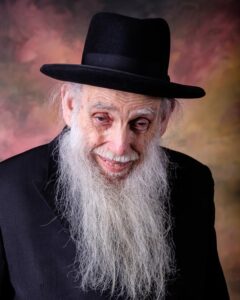
The most thorough repudiation of Eretz Hakodesh by a high-profile Orthodox rabbi was penned in 2022 by Rabbi Aharon Feldman, rosh hayeshiva, or dean, of Northwest Baltimore’s Ner Israel Rabbinical College.
And in the lead-up to this year’s election, Rabbi Dov Landau, the influential head of the Slabodka yeshiva in Israel, defended the traditional shunning of Zionist institutions.
On the other side of the debate, the leader of the Gateshead yeshiva in northeast England, Rabbi Avrohom Gurwicz, recently endorsed Eretz Hakodesh, saying that haredim have an obligation to advocate for their religious values in the halls of power.
‘Rabbi Jill’
Perhaps the most incendiary case for haredi voting came recently in an essay by a rabbi named Yair Hoffman in a haredi publication about a purportedly fictional “Rabbi Jill,” a woman rabbi who represents “the dangerous threat of Reform Judaism, Wokism in Eretz Yisroel, and all the other apikorsisha (heretical) ‘isms.” Rabbi Jill wants to take control of the Western Wall from the Orthodox, Rabbi Hoffman writes.
Acknowledging traditional haredi rulings against participating in the Zionist institutions, Rabbi Hoffman cites the principle of pikuach nefesh, which says that violating Jewish law is required when acting to save a life.
In this case, it’s the lives of children that are in spiritual danger, due to the so-called Rabbi Jill’s influence on the public school curriculum.
Rabbi Hoffman cites what he considers a parallel situation from hundreds of years ago that’s discussed in Jewish law: When children were kidnapped, it was permitted to raise money for their ransom during the Sabbath even if their lives were not in danger. Pikuach nefesh applied because of the risk that Jewish children would be raised without Judaism.
The essay also suggests voting doesn’t require haredim who reject the principles of the Jerusalem Program to lie about their personal views when they cast their votes.
“With due respect, this author believes that a careful reading of the acceptance of the Jerusalem Program merely states that this is what some of the proponents of Zionism believe — which is, in fact, true,” the essay states.
Ethical Dimension
“Rabbi Jill” may represent a haredi boogeyman, but three real-life “Rabbi Jills” are running on liberal slates in the election.
The fourth-ranked candidate on the progressive Hatikvah slate, Rabbi Jill Jacobs, is executive director of T’ruah, a New York-based human rights group for rabbis and cantors.
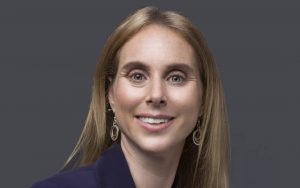
For Rabbi Jacobs, the “Rabbi Jill” essay should galvanize liberals who are on the fence about voting.
“Supporters of Eretz Hakodesh are saying, ‘We know you don’t believe in the Jerusalem Program, you have to vote in order to prevent the liberals from gaining power.’ That’s not insignificant,” Rabbi Jacobs said. “I would not ask anybody to lie but I think that if you can look at that list of principles — not fixate on every word — and generally affirm them, then I think it makes sense to vote.”
Rabbi Jacobs considers the Congress a relic that should have been structured differently in fairness to Palestinians. “But I’m not going to sit home and not vote when it comes to elections because the system is unjust,” she said.
The ethical dimension of voting in the election recently came up for debate in a Facebook community called “A group for Zionists to ask questions of Jewish non-Zionists.”
Eliana Fishman, a resident of Washington, D.C., is the group’s founder. She notes that her late grandfather. Rabbi Hertzel Fishman, was an ardent Zionist. He was named after modern Zionism’s founder and fought in the Haganah, the Zionist militia that won Israel’s war of independence.
But Fishman herself is an anti-Zionist and argues that her politics preclude voting if there are pragmatic reasons to do so.
“It’s an integrity issue,” Fishman said. “In order to vote in the World Zionist Congress, I would have to lie because I disagree with multiple components of the Jerusalem Program.”
Dr. Samuel Fleischacker, a philosophy professor at the University of Illinois Chicago, doesn’t spend much time on social media and didn’t participate in the Facebook debate. But he has a different view from Fishman’s, while sharing some of her dislike for the “Jerusalem Program.”
Fleischacker said he declined a request to join the Hatikvah slate and considered not voting, in particular because the program calls for “settling the country,” which he thought sounded like an endorsement of Israeli expansion in the West Bank.
He ultimately decided to take a narrower view and interpret the language as support for establishing new Jewish communities within Israel proper. But Fleischacker’s decision was driven less by this rationalization than by political pragmatism.
“I came to think it’s more important that an organization like Hatikvah be in the WZO than that people like me fuss too much about exactly what we’re signing on to,” he said.
Asaf Elia-Shalev wrote this article for the JTA global Jewish news source.

Spending on "hasbara" should be “like investing in jets, bombs and missile interceptors,” argues Israel’s foreign minister.
Israeli-Americans Rachel Goldberg-Polin and Jon Polin talked about the pain of losing their 23-year-old son, who was kidnapped and later murdered in the Oct. 7th tragedy.

The remaining 6,000 members of the community are expected to immigrate by 2030.

Israel is increasingly reliant on foreign workers, hundreds of whom moved into the dilapidated building during the Iran war.