

By Grace Gilson
With sirens sounding across the country on Friday, Israel was the first target of retaliatory attacks by Iran after the Jewish state launched a massive military campaign against its nuclear program.
But security officials are warning that Israelis and Jews abroad could also face consequences from the beleaguered regime.
Iran has a long track record of sowing violence against Jewish and Israeli targets abroad, including over the last two years as its proxies in the Middle East have battled Israel on the ground.
Among the many examples: Swedish teens who tried to attack the Israeli embassy in Stockholm last year were acting on Iranian instructions, Swedish police said, while authorities cited Iran links in a shooting at a German synagogue and planned attacks at Jewish sites in Cyprus in recent years.
On Thursday, as the Iran attack began, Jewish security groups immediately began reiterating calls for vigilance, while emphasizing that they did not have information about specific threats.
And Jewish sites including schools and synagogues were once again shoring up and adjusting their security plans to reflect the heightened risk, even as uncertainty prevailed over Iran’s remaining capacity to guide attacks abroad.
The Secure Community Network urged Jewish communities in North America to “remain on heightened alert and maintain robust security measures” in a post on X.
“SCN stresses that, while there is currently no credible or specific threat against the Jewish community, this development occurs amid an already intensified threat environment,” the post read.
“This environment is fueled in part by Iranian-linked actors, designated foreign terrorist organizations, violent extremists, and politically motivated groups — entities which continue to incite violence globally, including against Jewish civilians and communal facilities, often under the pretext of perceived grievances related to Israel’s war with Hamas and related military or political developments,” the post continued.
The Community Security Service also called on the U.S. Jewish community to increase “situational awareness,” “report any suspicious behavior to law enforcement,” “consider connecting with law enforcement” and review security protocols ahead of events in a post on X.
In an email, Andrew Cushnir, president and CEO of The Associated: Jewish Federation of Baltimore, wrote, “As we enter Shabbat, our hearts are with our friends and family in Israel. The news last night stirred a wave of emotions as uncertainty and concern for our beloved Israel continues to grow. We stand in solidarity with the people of Israel and remain fully committed to their care and support as this evolving situation unfolds. We are praying for a swift and peaceful resolution to the conflict with Iran.
“We have been in touch with our friends in Ashkelon and partner organizations throughout the country to express our support, offering to assist them as needed in the days and weeks ahead. As sirens were heard across the country and many spent the night in bomb shelters, they appreciate knowing that their family across the ocean is with them in spirit.
“We will continue to keep you informed as we learn more and will let you know if there are ways for you to help. In the meantime, please reach out to your friends and family in Israel to let them know you are thinking of them, light Shabbat candles to honor the hostages and pray for peace in the region.
“We are also closely monitoring security in our own community, and at this time there are no known threats. We urge you to continue to be vigilant and notify the police of anything suspicious. You can report any antisemitic incidents here.”
In a statement, the Baltimore Jewish Council posted that it “stands with Israel and its precise, defensive actions against Iran’s nuclear and ballistic missile programs and other threats posed by the Iranian regime. Iran’s support of worldwide terrorism is well-documented, including its financial and material support for terrorist groups waging war on Israel. We pray for the safety, strength, and well-being of our brothers and sisters in Israel, as well as all of the members of the IDF and Mossad, as they prepare for responses from Iran and its terrorist proxies. We also continue to pray for the well-being and safe release of the hostages who have been held by Hamas in Gaza for more than 600 days.
“The Baltimore Jewish Council stands in solidarity with Israel and Israel’s right to defend itself. Am Yisrael Chai.”
Iran has a particular track record of exacting revenge on Jewish targets abroad after suffering military setbacks on its home turf.
In one of the most searing examples, after Israel assassinated the secretary-general of Hezbollah, an Iranian proxy in Lebanon, in early 1992, Hezbollah responded by bombing the Israeli embassy in Buenos Aires the next month, killing 29.
Two years later, 84 people died when the AMIA Jewish community center in Buenos Aires was bombed, in an attack also attributed to Hezbollah with Iran’s backing. (In a twist, Argentina’s current president, Javier Milei, has pushed to hold Iran responsible and is in Israel now after receiving an award in part for those efforts.)
Iran was seen as having stepped up its targeting of Israeli sites abroad after the 2020 assassination of Mohsen Fakhrizadeh, the nuclear scientist that western intelligence agencies believed to be behind Iran’s nuclear weapons program, in a daring operation widely attributed to Israel.
In 2023, the Jewish Chronicle of London reported that a source had conveyed that Iranian officials had begun “mapping” Jewish targets abroad to prepare for potential attacks. (The report came from a Jewish woman who claimed to have infiltrated the Iranian regime and has not been matched by other publications.)
Iran’s strategies have shifted over time. Last year, the International Centre for Counter-Terrorism reported that Iran had begun using existing criminal networks rather than developing its own terror cells abroad. In one case, German media reported that a drug trafficker wanted in Europe had been given sanctuary in Iran — in return for helping plan attacks on Jewish and Israeli targets.
The attacks abroad were seen as falling under the mandate of Iran’s Islamic Revolutionary Guard Corps, a military division that the United States considers a terrorist group. The IRGC regularly calls for Israel’s destruction, and it backs terrorist groups and insurgents around the world with money, training and guidance.
The IRGC’s leader for the last six years, Hossein Salami, was among the Iranian officials killed in the first wave of Israel’s attack on Friday morning.
Grace Gilson wrote this article for the JTA global Jewish news source. Jmore staff contributed to this report.
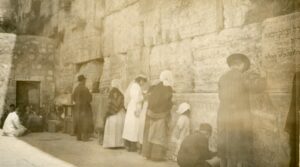
The Tower of David Jerusalem Museum is collecting photographs of the Western Wall ahead of an exhibition next year marking the 60th anniversary of the Six Day War.

Baltimore native Susan Landsman recently celebrated her rite of passage surrounded by family, friends, fellow residents and staff.

Founded by Marci Yankelov, Julie Kichline, Elizabeth Miller and Lila Perilloux, the Bmore Community Fridge Network serves a crucial role in feeding the hungry.
The German-born rabbi, scholar and activist, who served Temple Emanuel from 1963 to 2000 , was a prominent figure in the local Jewish community for more than six decades.