

Even though it’s technically a part-time position, Baltimore County Councilman Israel C. “Izzy” Patoka (D-2nd) says the job generally requires working at least 60 hours in the community each week.
Not that he’s complaining. As folks in these parts know, Patoka clearly loves his job.
A Northwest Baltimore native, Patoka was first elected to the council in 2018 and is now serving his second term. A former planner for both the city and county, he earned a bachelor’s degree and a master’s degree in geography and environmental planning from Towson University.
Jmore recently caught up with Patoka, who lives with his wife, Denise, and son, Rory, in Pikesville’s historic Sudbrook Park community and belongs to Baltimore Hebrew Congregation.
From your vantage point, what impact has the Trump administration had on Baltimore County so far?
Baltimore County is the headquarters for both the Social Security Administration and the Centers for Medicare and Medicaid Service. These two institutions have been pathways to the middle-class in Baltimore County. The downsizing of Social Security and CMS is a real threat to our economy.
Now, some people come to community meetings saying, ‘We need you to help us. I go to the grocery store and can’t afford what I used to be able to buy there. At home, when I get my mail, my gas and electric bills are way more than I can afford.’
Some others say, ‘I’m afraid that my Social Security payments will go away. Can you tell us what to do?’
I don’t have great answers for them. We double-down on local resources to address some of their social needs through counseling, and we’re ramping up our ability to support pantries and food distribution efforts.
It’s really a challenging time.
What is the county’s fiscal condition at this time
We do not have a deficit. Our budget has always been balanced. In fact, we are one of only 2 percent of counties in the nation that maintain a AAA-bond rating from all three rating services — Moody’s, Fitch and S&P Global Ratings.
Having said that, we still have a number of budget management challenges. For example, unions of teachers, bus drivers, cafeteria employees and other qualified workers want an annual increase of $11 million for salaries. We funded that last year. This year, because of fiscal constraints, the budget did not include that level of funding.
What are your top legislative priorities?
My top priority is infrastructure in inner-beltway neighborhoods, from the city center to the suburbs of Baltimore County. We do not have enough rec centers, some commercial areas are deteriorating and some roads are crumbling.
And here’s something I’m told all the time: ‘My neighborhood is not a raceway.’ People are speeding through neighborhoods, and it’s changing the quality of life for residents who live in my district. We need more traffic-calming measures, including speed cameras. They are a priority.
The environment is another top priority. For example, I was the lead sponsor of the “Bring Your Own Bag” bill to reduce plastic bag pollution. Now, people who choose not to bring their own bag have to pay for a paper or plastic bag. We have changed people’s behavior when they go to the supermarket and do other shopping.
Streams used to be full of plastic bags. Now, we don’t see that anymore. This is really important for our environment and for our wildlife. Reducing plastic bag pollution is making a difference, and it’s one of the things I’m really proud of.
What about crime?
Our overall crime level is lower, but we’ve had an uptick in homicides unfortunately, and most of it is domestic-related.
How do you envision the county growing?
It’s important that we maintain our urban, suburban and rural character. In Baltimore County, we have a line called the Urban Rural Demarcation Line. Inside the URDL is high density and outside the URDL is lower density, more rural.
I think we grow inside the URDL in two ways. One way is we grow vertically by implementing zoning that has higher-rise buildings. The second way is a mixed-use overlay district which allows for, let’s say, the redevelopment of a shopping center developed 40 or more years ago that doesn’t have the vitality it once had.
So we create a new environment where we have retail, but we also allow for office and residential, stacking again and lowering the parking requirements. We use parking for the offices from 9 to 5 and residential after 5. We also maximize the use of mass transit, buses and light rail lines.
Why is the county adding two districts to a total of nine?
In 1956, there were 250,000 people in Baltimore County and seven Council members to represent them. Now, there are almost 850,000 residents but still seven council members. So I sponsored a bill to increase the number of council members to nine in 2026.
This is a perfect storm for women and people of color to run for council membership. Soon, the County Council will have a chance to reflect the demographics of Baltimore County.
At the same time, public financing of campaigns will go into place. Residents can become candidates for the council and, for the first time, use public funds for their campaigns. Or they can fundraise on their own.
How do Jewish values influence your work?
Both of my parents have passed. They were Holocaust survivors, so I wear my Jewish heritage on my sleeve. I want to make my parents proud.
I’m also the only Jewish council member, so it’s important to me that our needs are addressed.
For example, when I first came into office, I requested sidewalks where we have a large Orthodox Jewish community. The Department of Public Works said they’d already done pedestrian counts in those areas, and they don’t have the level of pedestrian activity that would warrant sidewalks.
But I learned they did their pedestrian counts on a Wednesday. I said, ‘That might work in every other district, but it won’t work in District 2. Do it on a Saturday.’ They relented, did a Saturday count and concluded, ‘On Saturday, you’re right. There is significant pedestrian activity in these communities.’ I try to assure that members of our community have things they need.
For another example, the Pikesville Library is now open on Sundays so members of the Orthodox Jewish community can use the library that day.
Also, we are taught to welcome the stranger, so we need to treat immigrants well. A good percentage of people in my district are of Hispanic heritage. I think it’s important that we are cognizant of the issues those people are facing right now. Some of these families are afraid to go to public events or get assistance from any government agency for fear a family member might not come home.
I have an Hispanic outreach component and a colleague, [legislative aide] Carlos Gonzalez, who helps me address the needs of the Hispanic community. One of the ways we engage this community is to go to their churches. Carlos and I speak regularly at a very large Hispanic church and we try to address some of the issues, to let people know they have an elected official who’s looking out for them.
Peter Arnold is a local freelance writer.
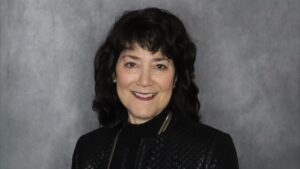
Esther Greenberg, Leora Match, Kathlleen St. Villier Hill and Ben Gershowitz will be recognized for the contributions to the community.
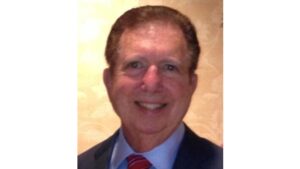
For more than five decades, Dr. Rosenstein was known by local families as a trusted and caring physician for their children.
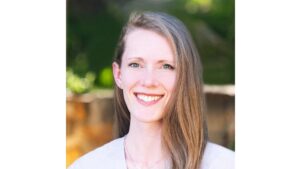
Jewish Community Services' upcoming "Future-Ready Workplace" event will feature a keynote address from workplace expert and bestselling author Liz Fosslien.
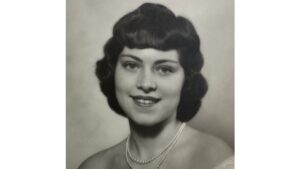
A Baltimore native, Sweren was a collector of artists' books whose own works were displayed in national galleries.